After serving in World War I, John Worrell graduated from law school and became the El Paso County judge and the Colorado City Attorney.

Sponsored by:

John
Mayes
Worrell

May 24, 1892
–
April 4, 1977
Cemetery:
Trinity Memorial Park
Awards Received
-

Distinguished Service Cross
-
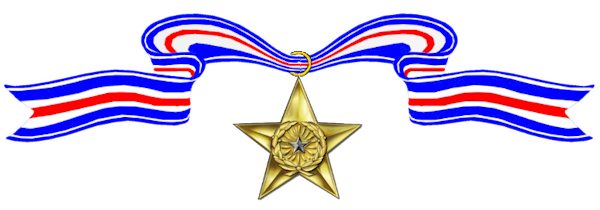
Silver Star
-
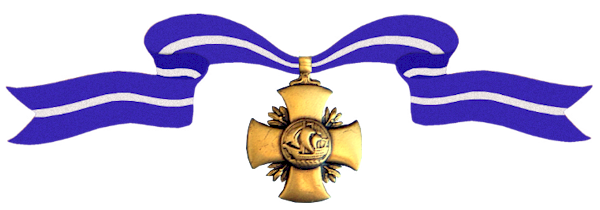
Navy Cross
-
Distinguished Service Cross
Service:
United States Marine CorpsRank:
PrivateRegiment:
Sixth Regiment (Marines)Division:
2d Division, American Expeditionary ForcesAction Date:
June 6, 1918
War Department, General Orders No. 110 (1918)The President of the United States of America, authorized by Act of Congress, July 9, 1918, takes pleasure in presenting the Distinguished Service Cross to Private John Mayes Worrell (MCSN: 93384), United States Marine Corps, for extraordinary heroism while serving with the Ninety-Seventh Company, Sixth Regiment (Marines), 2d Division, A.E.F., in action at Bouresches, France, on 6 June 1918. Private Worrell voluntarily obtained permission to leave shelter and fearlessly went into heavy fire in order to rescue wounded from a field, then under artillery and machine-gun bombardment, continuing his heroic work until he was himself wounded.
-
Silver Star
Service:
United States Marine CorpsRank:
PrivateRegiment:
Sixth Regiment (Marines)Division:
2d Division, American Expeditionary ForcesAction Date:
June 6 – July 10, 1918
Citation Orders, 2d Division, American Expeditionary ForcesBy direction of the President, under the provisions of the act of Congress approved July 9, 1918 (Bul. No. 43, W.D., 1918), Private John M. Worrell (MCSN: 93384), United States Marine Corps, is cited by the Commanding General, SECOND Division, American Expeditionary Forces, for gallantry in action and a silver star may be placed upon the ribbon of the Victory Medals awarded him. Private Worrell distinguished himself while serving with the 97th Company, Sixth Regiment (Marines), 2d Division, American Expeditionary Forces at Chateau-Thierry, France, 6 June – 10 July 1918.
-
Navy Cross
Service:
United States Marine CorpsRank:
PrivateRegiment:
Sixth Regiment (Marines)Division:
2d Division, American Expeditionary ForcesAction Date:
June 6, 1918
The President of the United States of America takes pleasure in presenting the Navy Cross to Private John M. Worrell (MCSN: 93384), United States Marine Corps, for extraordinary heroism while serving with the 97th Company, 6th Regiment (Marines), 2d Division, A.E.F. in action at Bouresches, France, on 6 June 1918. Private Worrell voluntarily obtained permission to leave shelter and fearlessly went into heavy fire in order to rescue wounded from a field, then under artillery and machine-gun bombardment, continuing his heroic work until he was himself wounded.