Samuel Ham graduated from the U.S. Military Academy at West Point, Class of 1892. He retired as a U.S. Army Colonel.

Sponsored by:

Samuel
Vinton
Ham
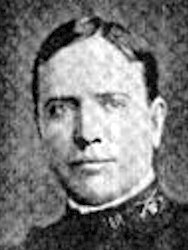
December 25, 1867
–
August 21, 1924
Cemetery:
Glen Cove Cemetery
Awards Received
-

Silver Star
-

Army Distinguished Service Medal
-

Distinguished Service Cross
-
Silver Star
Service:
United States ArmyRank:
First Lieutenant (Infantry)Action Date:
1906
U.S. Military Academy Register of GraduatesFirst Lieutenant (Infantry) Samuel Vinton Ham, United States Army, was cited for gallantry in action during the Philippine Insurrection, for action against Pulajanes in 1906.
-
Army Distinguished Service Medal
Service:
United States ArmyRank:
Colonel (Infantry)Regiment:
109th Infantry RegimentDivision:
28th Division, American Expeditionary ForcesAction Date:
World War I
War Department, General Orders No. 13 (1923)The President of the United States of America, authorized by Act of Congress, July 9, 1918, takes pleasure in presenting the Army Distinguished Service Medal to Colonel (Infantry) Samuel Vinton Ham, United States Army, for exceptionally meritorious and distinguished services to the Government of the United States, in a duty of great responsibility during World War I. As Commanding Officer, 109th Infantry, 28th Division, Colonel Ham displayed in combat rare qualities of leadership, unusual tactical judgment, and devotion to duty. Severely wounded in action he returned to duty as Commanding Officer of troops at Is-sur-Tille, a position of great responsibility, in which he acquitted himself with great credit, contributing materially to the proper functioning of the Services of Supply, American Expeditionary Forces.
-
Distinguished Service Cross
Service:
United States ArmyRank:
Colonel (Infantry)Regiment:
109th Infantry RegimentDivision:
28th Division, American Expeditionary ForcesAction Date:
September 6, 1918
War Department, General Orders No. 128 (1918)The President of the United States of America, authorized by Act of Congress, July 9, 1918, takes pleasure in presenting the Distinguished Service Cross to Colonel (Infantry) Samuel Vinton Ham, United States Army, for extraordinary heroism in action while Commanding the 109th Infantry Regiment, 28th Division, American Expeditionary Forces, near Magneux, France, 6 September 1918. By courageously leading his firing line in the advance across the Vesle River from Magneux toward Muscourt, Colonel Ham exemplified the greatest heroism and truest leadership, instilling in his men confidence in their undertaking. Having been severely wounded, and unable to move, he remained for ten hours on the field of battle, directing the attack, and refused to be evacuated or receive medical attention until his men had been cared for.