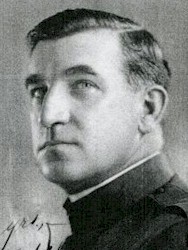
Growing up in Cohes, New York, Francis Kelly and his family attended Saint BernardÕs Parish, where he was baptized and served as an alter boy. He graduated from Saint BernardÕs Academy (later Keveny) in 1904. He began preparing for the priesthood and, following graduation from Niagara University, he was ordained a Catholic Priest in 1914. In 1916 he was commissioned as a chaplain in the New York National Guard and served on the Mexican border. When World War I began he was assigned to the 27th Division, which was raised almost exclusively from members of the New York National Guard. Ministering in combat in France, he not only received the Distinguished Service Cross, but also the British Military Cross. After returning home to a heroÕs welcome, he accompanied Governor Al Smith to Albany, where he addressed a joint session of the Legislature. At their first annual convention in November, 1919, the American Legion elected him National Chaplin and in November 1921, he was selected to perform the rituals of the Catholic Church at the burial of the body of the Unknown Soldier in Arlington National Cemetery. As a result of being gassed in the war, he contracted tuberculosis and, in 1923 he spent time in the Adirondacks seeking a cure. He was subsequently assigned to rural parishes. While serving at Sacred Heart in Cairo, he died in 1931.

Sponsored by:

–
Cemetery:
Awards Received
-
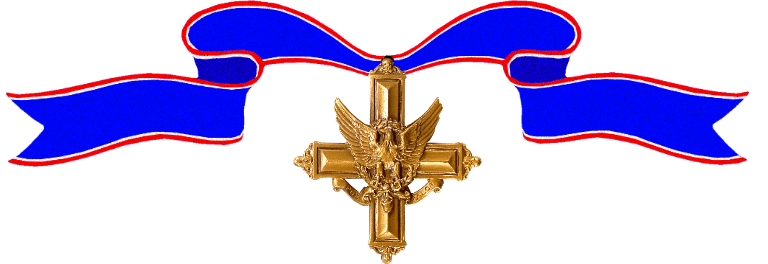
Distinguished Service Cross
-
Distinguished Service Cross
Service:
United States ArmyRank:
First Lieutenant (Chaplain’s Corps)Batallion:
104th Machine-Gun BattalionDivision:
27th Division, American Expeditionary ForcesAction Date:
September 26 – 30 & October 13 – 20, 1918
War Department, General Orders No. 143 (1918)The President of the United States of America, authorized by Act of Congress, July 9, 1918, takes pleasure in presenting the Distinguished Service Cross to First Lieutenant (Chaplain’s Corps) Francis Alphonsus Kelly, United States Army, for repeated acts of extraordinary heroism in action while serving with 104th Machine-Gun Battalion, 27th Division, American Expeditionary Forces, near Ronssoy, France, September 26 – 30, 1918, and east of the LeSelle River, France, 13 – 20 October 1918. During the operations of his regiment against the Hindenburg line and later east of the LeSelle River, Chaplain Kelly was constantly at the front, caring for the-wounded and supervising the burial of the dead, often under heavy shell and machine-gun fire. His fearless conduct afforded an inspiring example to the combat troops.