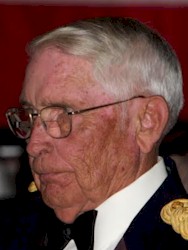
Jimmy Young grew up in Green County, Missouri, and enlisted in Navy in 1952. He was honorably discharged in 1955 and worked in the private sector in Maryland and South Carolina, before advancing his education at Missouri State University and Saint Paul School of Theology, and receiving ordination as a Methodist minister. While pastoring the Saint Paul United Methodist Church in Joplin, Missouri, in 1959, he joined the Missouri Army National Guard, serving as chaplain to the 23d Armor Battalion, until he entered active duty in 1969. He was deployed to Vietnam where he earned a Silver Star in 1971. He subsequently served as Division Chaplain for the 24th Infantry Division (Mechanized), Command Chaplain for the U.S. THIRD Army, and Command Chaplain for the U.S. Central Command. He retired as a colonel in 1991 after 25 years of military service. In retirement he pastored the Ozark United Methodist Church until his retirement from ministry in 1998.

Sponsored by:

–
Born:
,
Home:
,
Awards Received
-
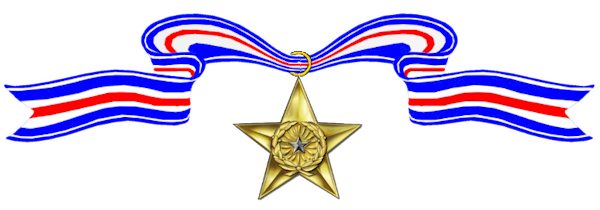
Silver Star
-
Silver Star
Service:
United States ArmyRank:
Captain (Chaplain’s Corps)Batallion:
1st BattalionRegiment:
502d Infantry Regiment, 1st BrigadeDivision:
101st Airborne DivisionAction Date:
May 21, 1971
The President of the United States of America, authorized by Act of Congress July 9, 1918 (amended by an act of July 25, 1963), takes pleasure in presenting the Silver Star to Captain (Chaplain’s Corps) Jimmy L. Young, United States Army, for gallantry in action against the enemy while serving as Chaplain with the 1st Battalion, 502d Infantry Regiment, 1st Brigade, 101st Airborne Division, In action against enemy forces in the Republic of Vietnam, on 21 May 1971. Chaplain Young weas serving with two platoons from the 1/501st Infantry Regiment and the 326th Engineer Battalion that were constructing a new firebase to protect a road in the valley between Hue and Da Nang. On 21 May 1971, Firebase RIFLE came under attack by a large North Vietnamese Army force, which greatly outnumbered their meager defenses. Chaplain Young saw a wounded soldier limping toward him with blood rushing from his face, back, and arms. He put the wounded man on the ground beneath the protection of the steel bed of a five-ton truck and rushed off to help the others. The Communist gunners were firing mortars into the base and sappers were advancing up the mountainside, tossing grenades and satchel charges. Chaplain Young dived after the explosives and threw each of them back down the mountain, some blowing up only seconds after leaving his hands. He hurried back and forth carrying wounded G.I.s to safety under the bed of the truck. He was about ready to drop from exhaustion himself, but before he had a chance to rest a soldier screamed out, “They’re in the bunkers, they’re in the bunkers,” and Chaplain Young ran back toward the bunkers. He picked up three soldiers on the way and asked them to go with him from bunker to bunker to clear out the Communists. He told one soldier to crouch at the front of a bunker with an M-16 while he and another soldier covered the back, directing a repulse of the enemy. When the fighting ended, Chaplain Young helped the wounded soldiers aboard medical evacuation helicopters. Although wounded in action, Chaplain Young demonstrated great bravery and heroism under fire. The gallant actions and dedicated devotion to duty demonstrated by Chaplain Young, without regard for his own life, were in keeping with the highest traditions of military service and reflect great credit upon himself and the United States Army.