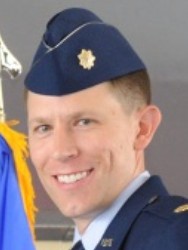
Philip Bryant graduated from the graduated from the U.S. Air Force Academy at Colorado Springs, Colorado, Class of 2001, one year ahead of his childhood friend Captain Joshua Hallada. (The fathers of both men were also Air Force Academy Graduates, Class of 1975.) The two lifetime friends became HH-60G Pavehawk rescue helicopters pilots, and earned the Silver Star in Afghanistan on the same day, in the same mission, in which Hallada served as Flight Lead and Bryant served as his wingman.

Sponsored by:

Philip
Andrew
Bryant
Home:
Colorado Springs
,
Colorado
Awards Received
-
Silver Star
-
Silver Star
Service:
United States Air ForceRank:
CaptainBatallion:
83d Expeditionary Rescue SquadronAction Date:
April 23, 2011
The President of the United States of America, authorized by Act of Congress July 9, 1918 (amended by an act of July 25, 1963), takes pleasure in presenting the Silver Star to Captain Philip Andrew Bryant, United States Air Force, for gallantry in connection with military operations against an opposing armed force near Bagram Airfield, Afghanistan, on 23 April 2011. On that date as Aircraft Commander of Pedro 84, 83d Expeditionary Rescue Squadron, chalk two in a formation of HH-60G Pavehawk Helicopters, Major Bryant led his crew in the recovery of two United States Army pilots downed in the Allasay Valley, an enemy controlled area east of Bagram. During the initial 180 foot hoist insertion of team members at the crash site, his aircraft was engaged by a volley of enemy fire, that caused severe damage to flight control systems and seriously wounded his flight engineer. Major Bryant maneuvered to escape the hot recovery zone and assessed the injury and immediately directed his aircraft back to base. After delivering his engineer to life saving medical care, he obtained a replacement crew member to continue the flight. Major Bryant rejoined his flight and attempted a hoist extraction of one of the isolated pilots and team, now pinned down by enemy fire. While in a hover, his aircraft was engaged from both sides, sending rounds striking two of his crew members and missing his own head by inches. After the lead aircraft was forced to depart for fuel, he recognized the dire situation that the enemy presented to the isolated team, and coordinated with AH-64D Attack Weapons Teams to cover a single ship rescue. His aircraft was once again targeted and received enemy rounds but finally forced to abort when engaged by heavy enemy fire at the crash site. Major Bryant rejoined with his flight lead and commanded his aircraft five more times into enemy fire, which ultimately recovered the downed pilots, his teams, and a Soldier critically wounded in the effort. By his gallantry and devotion to duty, Major Bryant has reflected great credit upon himself and the United States Air Force.