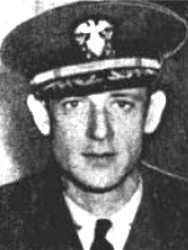
William Ellis graduated from the U.S. Naval Academy at Annapolis, Class of 1930. He retired as a U.S. Navy Vice Admiral.

Sponsored by:

William
Edward
Ellis
Home:
Burlington
,
North Carolina
Awards Received
-
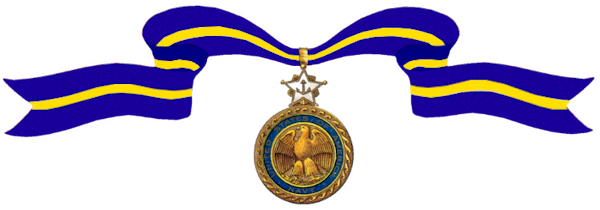
Navy Distinguished Service Medal
-

Distinguished Flying Cross
-
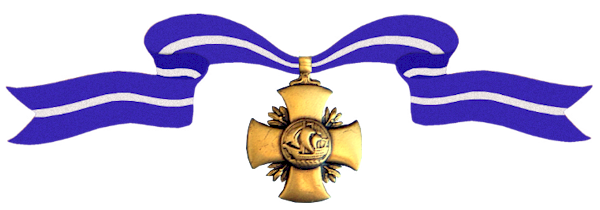
Navy Cross
-
Navy Distinguished Service Medal
-
Navy Distinguished Service Medal
The President of the United States of America takes pleasure in presenting a Gold Star in lieu of a Second Award of the Navy Distinguished Service Medal to Vice Admiral William Edward Ellis (NSN: 0-63180), United States Navy, for exceptionally meritorious and distinguished service in a position of great responsibility to the Government of the United States as Chief of Staff to the Supreme Allied Commander, Atlantic, from May 1966 to September 1968. During this period, Vice Admiral Ellis participated in and directed the planning which resulted int eh multinational North Atlantic Treaty Organization (NATO) Standing Naval Force Atlantic; in the development of new concepts for the employment of maritime forces in support of the military strategy of NATO; and in a variety of activities, the sum of which has brought about a new awareness on the part of NATO of the growing dependence of the Warsaw Pact Nations on a maritime strategy. As Chief of Staff during a time in which NATO has seen many significant challenges and organizational changes, he applied his exceptional talents in the field of politico-military interrelationships so as to effectively support he Command, the Alliance it serves, and the policies of the United States. The singularly distinctive accomplishments of Vice Admiral Ellis and his dedicated contributions in the service of his country reflect the highest credit upon himself and the United States Naval Service.
-
Distinguished Flying Cross
The President of the United States of America takes pleasure in presenting the Distinguished Flying Cross to Commander William Edward Ellis (NSN: 0-63180), United States Navy, for extraordinary achievement while participating in aerial flight while acting as target coordinator of a strike composed of planes from carrier air groups, against enemy airfields in the vicinity of the Philippine Islands, 18 October 1944. After swiftly surveying assigned targets, and finding them unprobitable, he scouted islands north of Luzon and spotted four large enemy transports hidden in a bay of one of the islands. Leaving two divisions to take care of the airfields, he directed the remainder of the flight to the bay and skillfully assigned specific targets to the divisions as they arrived. Within half-an-hour a 10,000-tonner was burning furiously, a 9,000-tonner was beached and burning; one 7,000-tonner was on the bottom of the bay; another 7,000-tonner had disappeared in a terrific explosion; and there were hundreds of Japanese milling around in the water. By sheer initiative, aggressiveness and personal resourcefulness he transformed what had every indication of being a wasted, unproductive mission, into a devastating blow against enemy shipping. His courage and skill were at all times inspiring and were in keeping with the highest traditions of the United States Naval Service.
-
Navy Cross
Service:
United States NavyRank:
CommanderRegiment:
Air Group 18 (AG-18)Division:
U.S.S. Intrepid (CV-11)Action Date:
October 24 – 26, 1944
Bureau of Naval Personnel Information Bulletin No. 342 (September 1945)The President of the United States of America takes pleasure in presenting the Navy Cross to Commander William Edward Ellis (NSN: 0-63180), United States Navy, for extraordinary heroism in operations against the enemy while serving as Pilot of a carrier-based Navy Combat Plane and Commanding Officer of Air Group EIGHTEEN (AG-18), attached to the U.S.S. INTREPID (CV-11), in action against major units of the Japanese Fleet in the vicinity of the Philippine Islands 24 – 26 October 1944. Commander Ellis led his Air Group on the first strike by allied forces against the largest of the enemy’s battleship task forces in the Sibuyan Sea. Acting as target coordinator, oblivious of great personal risk he circled within range of terrific enemy anti-aircraft fire, deliberately and coolly directing the attacks of our airmen on the enemy warships. Thereafter, flying as much as ten hours a day for three days, he led and coordinated strikes against this force and the enemy carrier task fore to the north, attacks that resulted in the sinking of all four carriers of the latter force, and the sinking or damaging of other warships of both forces. His fearless and relentless leadership and his indomitable direction of the attacks counted heavily in this irreparable blow to the enemy. His courage and skill were at all times in keeping with the highest traditions of the United States Naval Service.
-
Navy Distinguished Service Medal
All Hands (May 1967)The President of the United States of America takes pleasure in presenting the Navy Distinguished Service Medal to Vice Admiral William Edward Ellis (NSN: 0-63180), United States Navy, for exceptionally meritorious and distinguished service in a position of great responsibility to the Government of the United States as Commander SIXTH Fleet, from May 1964 to May 1966. Under his command, the responsiveness, training and morale of his forces were refined and enhanced despite increased difficulties in the logistic, personnel and material areas, as shown by the rapid reaction and efficiency with which he responded to the request for Navy assistance in the recovery of a bomb lost off the coast of Spain.