Robert Clark graduated from the U.S. Air Force Academy at Colorado Springs, Colorado, Class of 1964. He retired in 1991 as a U.S. Air Force Colonel.

Sponsored by:

Robert
David
Clark
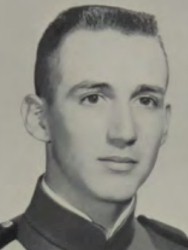
June 3, 1942
–
Home:
Anchorage
,
Alaska
Awards Received
-
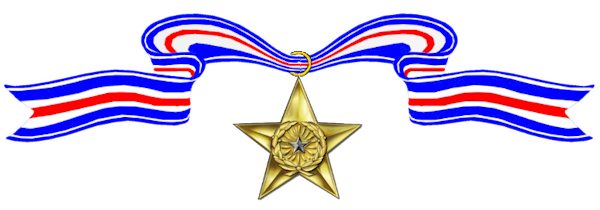
Silver Star
-
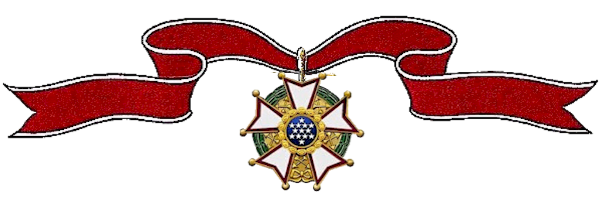
Legion of Merit
-
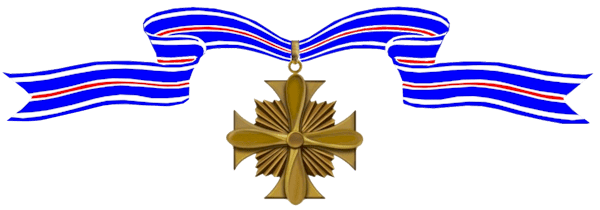
Distinguished Flying Cross
-
Distinguished Flying Cross
-
Silver Star
Service:
United States Air ForceRank:
CaptainBatallion:
11th Tactical Air Support SquadronDivision:
Udorn Royal Thai Air Force Base, ThailandAction Date:
January 5, 1958
Headquarters, 7th Air Force, Special Orders G-914 (March 27, 1968)The President of the United States of America, authorized by Act of Congress July 9, 1918 (amended by an act of July 25, 1963), takes pleasure in presenting the Silver Star to Captain Robert David Clark, United States Air Force, for gallantry in action while engaged in military operations involving conflict with an armed hostile force as an RF-4C Pilot Systems Operator of the 11th Tactical Air Support Squadron, Udorn Royal Thai Air Force Base, Thailand, in action over North Vietnam on 5 January 1968. On that date, Captain Clark displayed outstanding aerial competence and courageous professionalism in the aggressive pursuance and acquisition of the assigned targets. The tenacity of this officer to attain the objective against formidable defenses is in accord with the highest military standards. By his gallantry and devotion to duty, Captain Clark has reflected great credit upon himself and upheld the highest traditions of the United States Air Force.
-
Legion of Merit
Service:
United States Air ForceRank:
ColonelAction Date:
July 30, 1988 – January 11, 1991
The President of the United States of America, authorized by Act of Congress, 20 July 1942, takes pleasure in presenting the Legion of Merit to Colonel Robert David Clark, United States Air Force, for exceptionally meritorious conduct in the performance of outstanding services to the Government of the United States as Vice Commander, Alaskan Air Command and ELEVENTH Air Force, Elmendorf Air Force Base, Alaska, from 30 July 1988 to 11 January 1991. During this period, Colonel Clark’s superior leadership resulted in significant contributions to the combat capability of the Alaskan Air Command, ELEVENTH Air Force, and the Alaskan North American Aerospace Defense Command Region. He served as the Air Component Commander for Pacific Exercise 1989 and Bring Frost 1989, two major joint service exercises in which simulated combat operations were conduced safely and successfully under the most demanding of arctic conditions. As a Battle Commander, he directed numerous real world intercepts of Soviet aircraft, and his application of the Rules of Engagement were integral to the Region’s receiving a second unprecedented “Outstanding” rating. Colonel Clark also provided senior oversight in the evolution of operations and intelligence data in the joint arena. Throughout his tour at Elmendorf, he brought the staff together into an efficient, directed, positive instrument for the execution of command policies. The singularly distinctive accomplishments of Colonel Clark culminate a long and distinguished career in the service of his and reflect the highest credit upon himself and the United States Air Force.
-
Distinguished Flying Cross
Service:
United States Air ForceRank:
First LieutenantBatallion:
16th Tactical Reconnaissance SquadronDivision:
Tan Son Nhut Air Base, South VietnamAction Date:
July 15, 1966
Headquarters, 7th Air Force, Special Orders G-487 (April 5, 1967)The President of the United States of America, authorized by Act of Congress, July 2, 1926, takes pleasure in presenting the Distinguished Flying Cross to First Lieutenant Robert David Clark, United States Air Force, for extraordinary achievement while participating in aerial flight as an RF-4C Pilot of the 17th Tactical Reconnaissance Squadron, Tan Son Nhut Air Base, South Vietnam, in action near Dong Hoi, North Vietnam, on 15 July 1966. On that date, while piloting an unarmed RF-4C reconnaissance aircraft through hostile ground fire, he provided reconnaissance photography which provided guidance for devastating air strikes. These air strikes directly resulted in suppressing a North Vietnamese offensive before it could be initiated and thus deprived the adversary of a large portion of his war-making potential. The professional competence, aerial skill and devotion to duty displayed by Lieutenant Clark reflect great credit upon himself and upheld the highest traditions of the United States Air Force.
-
Distinguished Flying Cross
Service:
United States Air ForceRank:
CaptainBatallion:
11th Tactical Reconnaissance SquadronDivision:
Udorn Royal Thai Air Force Base, ThailandAction Date:
January 16, 1968
Headquarters, 7th Air Force, Special Orders G-1465 (May 17, 1968)The President of the United States of America, authorized by Act of Congress, July 2, 1926, takes pleasure in presenting a Bronze Oak Leaf Cluster in lieu of a Second Award of the Distinguished Flying Cross to Captain Robert David Clark, United States Air Force, for extraordinary achievement while participating in aerial flight as an RF-4C Aircraft Commander of the 11th Tactical Reconnaissance Squadron, Udorn Royal Thai Air Force Base, Thailand, in action over North Vietnam, on 16 January 1968. On that date, Captain Clark’s skill and persistence were paramount in obtaining the assigned military objective in the presence of hostile action. To successfully accomplish the objective, he was subjected to continuous hostile antiaircraft missile and MiG threats through the most heavily defended area yet encountered in aerial combat. The professional competence, aerial skill and devotion to duty displayed by Captain Clark reflect great credit upon himself and upheld the highest traditions of the United States Air Force.