Walter Stischer was interned as a Prisoner of War in North Vietnam after he was shot down on April 13, 1968, and was held until his release on March 28, 1973.

Sponsored by:

Walter
Morris
Stischer
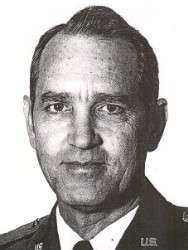
POW (RVN)
September 27, 1930
–
Born:
San Antonio
,
Texas
Home:
San Antonio
,
Texas
Awards Received
-
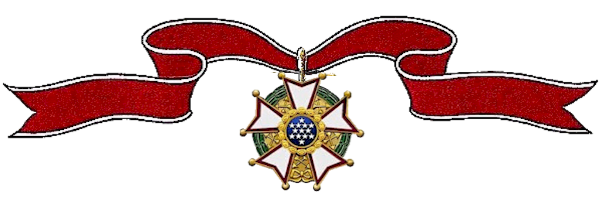
Legion of Merit
-

Prisoner of War Medal
-

Silver Star
-
Legion of Merit
-
Legion of Merit
-

Distinguished Flying Cross
-
Legion of Merit
(Citation Needed) – SYNOPSIS: The President of the United States of America, authorized by Act of Congress, 20 July 1942, takes pleasure in presenting a Second Bronze Oak Leaf Cluster in lieu of a Third Award of the Legion of Merit to Colonel Walter Morris Stischer (AFSN: AO-3021363/FR-56576), United States Air Force, for exceptionally meritorious conduct in the performance of outstanding services to the Government of the United States. The singularly distinctive accomplishments of Colonel Stischer culminate a long and distinguished career in the service of his and reflect the highest credit upon himself and the United States Air Force.
-
Prisoner of War Medal
Service:
United States Air ForceRank:
Lieutenant ColonelDivision:
Prisoner of War (North Vietnam)Action Date:
April 13, 1968 – March 28, 1973
Lieutenant Colonel Walter Morris Stischer, United States Air Force, was held as a Prisoner of War in North Vietnam from April 13, 1968 until his release on March 28, 1973.
-
Silver Star
Service:
United States Air ForceRank:
MajorBatallion:
12th Tactical Reconnaissance SquadronDivision:
Tan Son Nhut Air Base, VietnamAction Date:
April 7, 1968
The President of the United States of America, authorized by Act of Congress July 9, 1918 (amended by an act of July 25, 1963), takes pleasure in presenting the Silver Star to Major Walter Morris Stischer (AFSN: AO-3021363/FR-56576), United States Air Force, for gallantry in connection with military operations against an opposing armed force while serving with the 12th Tactical Reconnaissance Squadron, Tan Son Nhut Air Base, Vietnam, in Southeast Asia on 7 April 1968. On that date, Major Stischer flew an unarmed and unescorted reconnaissance mission into unfriendly territory to obtain visual and photographic data on a heavily defended surface-to-air missile site and an airfield. Hampered by poor weather conditions, he penetrated extremely accurate and intense ground fire, completely disregarding his own safety, in order to obtain complete photo coverage of the assigned targets. As a result of Major Stischer’s valiant efforts, invaluable data, concerning the activities of hostile forces was provided to the forces allied to the Republic of Vietnam. This information greatly facilitated allied efforts in this area. By his gallantry and devotion to duty, Major Stischer has reflected great credit upon himself and the United States Air Force.
-
Legion of Merit
Service:
United States Air ForceRank:
Lieutenant ColonelDivision:
Prisoner of War (North Vietnam)Action Date:
July 8, 1971 – December 27, 1972
The President of the United States of America, authorized by Act of Congress, 20 July 1942, takes pleasure in presenting a Bronze Oak Leaf Cluster in lieu of a Second Award of the Legion of Merit to Lieutenant Colonel Walter Morris Stischer (AFSN: AO-3021363/FR-56576), United States Air Force, for exceptionally meritorious conduct in the performance of outstanding services to the Government of the United States while interned as a Prisoner of War in North Vietnam from 8 July 1971 to 27 December 1972. Demonstrating professional competence and unusual ingenuity under the most adverse conditions, Colonel Stischer effectively established a communication system within his prison that was a vital part of the resistance program to every attempt by the Communist captors to break down morale and the unified resistance of all American prisoners. The singularly distinctive accomplishment of Colonel Stischer reflects great credit upon himself and the United States Air Force.
-
Legion of Merit
Service:
United States Air ForceRank:
Lieutenant ColonelDivision:
Prisoner of War (North Vietnam)Action Date:
April 1968 – March 1973
The President of the United States of America, authorized by Act of Congress, 20 July 1942, takes pleasure in presenting the Legion of Merit to Lieutenant Colonel Walter Morris Stischer (AFSN: AO-3021363/FR-56576), United States Air Force, for exceptionally meritorious conduct in the performance of outstanding services to the Government of the United States as a Prisoner of War in North Vietnam from April 1968 to March 1973. His ceaseless efforts, by a continuous showing of resistance to an enemy who ignored all international agreements on treatment of Prisoners of War, in the extremely adverse conditions of the communist prisons of North Vietnam, demonstrated his professional competence, unwavering devotion, and loyalty to his country. Despite the harsh treatment through his long years of incarceration, he continued to perform his duties in a clearly exceptional manner which reflected great credit upon himself and the United States Air Force.
-
Distinguished Flying Cross
The President of the United States of America, authorized by Act of Congress, July 2, 1926, takes pleasure in presenting the Distinguished Flying Cross to Major Walter Morris Stischer (AFSN: AO-3021363/FR-56576), United States Air Force, for extraordinary achievement while participating in aerial flight as an RF-4C Aircraft Commander in Southeast Asia on 10 April 1968. On that date, Major Stischer flew a night reconnaissance mission to detect hostile supply movements and to locate an unfriendly base camp. Despite accurate and intense anti-aircraft fire and hazardous mountain terrain, Major Stischer was able to direct his aircraft over the assigned targets. His acts of heroism enabled the allies of the Republic of Vietnam to obtain valuable intelligence of hostile force supply activities and the location of an unfriendly base camp. The professional competence, aerial skill and devotion to duty displayed by Major Stischer reflect great credit upon himself and the United States Air Force.