Carl Lasiter was interned as a Prisoner of War in North Vietnam after he was shot down on February 5, 1968, and was held until his release on March 14, 1973.

Sponsored by:

Carl
William
Lasiter
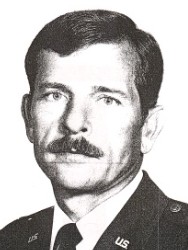
POW (RVN)
April 11, 1934
–
Born:
Grand Forks
,
North Dakota
Home:
Grand Forks
,
North Dakota
Awards Received
-
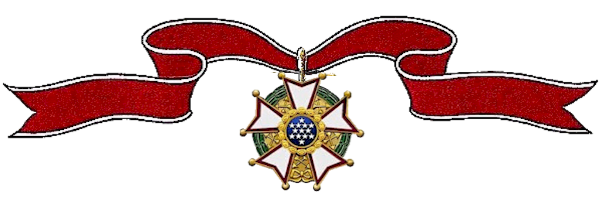
Legion of Merit
-
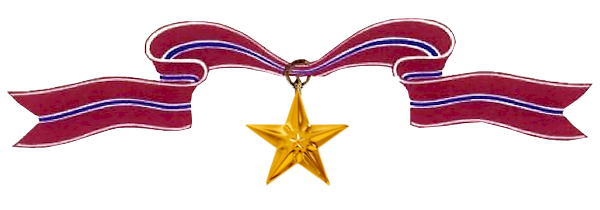
Bronze Star Medal
-

Prisoner of War Medal
-
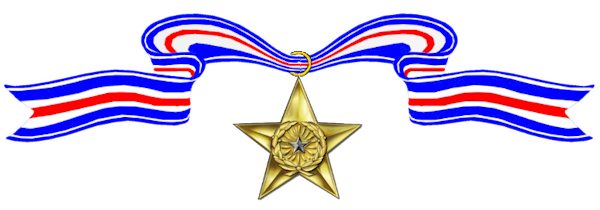
Silver Star
-
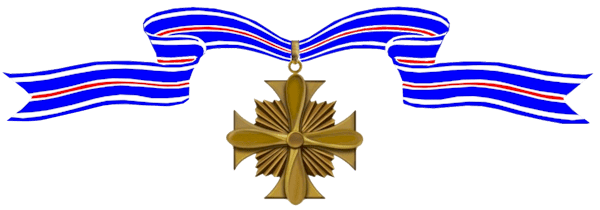
Distinguished Flying Cross
-
Silver Star
-
Distinguished Flying Cross
-
Distinguished Flying Cross
-
Legion of Merit
Service:
United States Air ForceRank:
Lieutenant ColonelDivision:
Prisoner of War (North Vietnam)Action Date:
February 1978 – March 1972
The President of the United States of America, authorized by Act of Congress, 20 July 1942, takes pleasure in presenting the Legion of Merit to Lieutenant Colonel Carl William Lasiter (AFSN: AO-3070414/FR-66064A), United States Air Force, for exceptionally meritorious conduct in the performance of outstanding services to the Government of the United States as a Prisoner of War in North Vietnam from February 1978 to March 1972. His ceaseless efforts, by a continuous showing of resistance to an enemy who ignored all international agreements on treatment of Prisoners of War, in the extremely adverse conditions of the communist prisons of North Vietnam, demonstrated his professional competence, unwavering devotion, and loyalty to his country. Despite the harsh treatment through his long years of incarceration, he continued to perform his duties in a clearly exceptional manner which reflected great credit upon himself and the United States Air Force.
-
Bronze Star Medal
Service:
United States Air ForceRank:
Lieutenant ColonelDivision:
Prisoner of War (North Vietnam)Action Date:
April 1969
The President of the United States of America, authorized by Executive Order 11046, 24 August 1962, takes pleasure in presenting the Bronze Star Medal with Combat “V” to Lieutenant Colonel Carl William Lasiter (AFSN: AO-3070414/FR-66064A), United States Air Force, for heroic achievement as a Prisoner of War while engaged in operations against an opposing armed force in North Vietnam during April 1969. In an atmosphere of enemy harassment and brutal treatment, he continued to establish and maintain communications through unusual and ingenious methods, which resulted in American and Allied prisoners presenting a posture of increased resistance to the enemy’s wishes, and, at the same time, improving prisoner morale. By his heroic endeavors and devotion to duty under adverse conditions of his environment, he reflected great credit upon himself and upheld the highest traditions of the United States Air Force.
-
Prisoner of War Medal
Service:
United States Air ForceRank:
Lieutenant ColonelDivision:
Prisoner of War (North Vietnam)Action Date:
February 5, 1968 – March 14, 1973
Lieutenant Colonel Carl William Lasiter (AFSN: AO-3070414/FR-66064A), United States Air Force, was held as a Prisoner of War in North Vietnam from February 5, 1968 until his release on March 14, 1973.
-
Silver Star
The President of the United States of America, authorized by Act of Congress July 9, 1918 (amended by an act of July 25, 1963), takes pleasure in presenting the Silver Star to Captain Carl William Lasiter (AFSN: AO-3070414/FR-66064A), United States Air Force, for gallantry in connection with military operations against an opposing armed force over North Vietnam on 5 November 1967. On that date, Captain Lasiter braved extremely heavy anti-aircraft fire to silence an entrenched gun battery. In so doing, he aided in the successful completion of an important combat operation. After completing his assigned mission, Captain Lasiter returned to hostile territory and, in spite of an attack by unfriendly aircraft, assisted in the rescue of a downed pilot. By his gallantry and devotion to duty, Captain Lasiter has reflected great credit upon himself and the United States Air Force.
-
Distinguished Flying Cross
The President of the United States of America, authorized by Act of Congress, July 2, 1926, takes pleasure in presenting a Bronze Oak Leaf Cluster in lieu of a Second Award of the Distinguished Flying Cross to Captain Carl William Lasiter (AFSN: AO-3070414/FR-66064A), United States Air Force, for extraordinary achievement while participating in aerial flight as an F-105 pilot over North Vietnam on 7 November 1967. On that date, Captain Lasiter was personally responsible for suppressing numerous anti-aircraft gun positions in support of a fighter bomber force attacking a heavily defended military target in North Vietnam. His unwavering determination and complete disregard for personal safety in penetrating formidable defenses and then returning to the target area in an effort to effect the rescue of a downed pilot, exemplify the highest degree of professional airmanship. The professional competence, aerial skill and devotion to duty displayed by Captain Lasiter reflect great credit upon himself and the United States Air Force.
-
Silver Star
Service:
United States Air ForceRank:
Lieutenant ColonelDivision:
Prisoner of War (North Vietnam)Action Date:
March 1, 1968
The President of the United States of America, authorized by Act of Congress July 9, 1918 (amended by an act of July 25, 1963), takes pleasure in presenting a Bronze Oak Leaf Cluster in lieu of a Second Award of the Silver Star to Lieutenant Colonel Carl William Lasiter (AFSN: AO-3070414/FR-66064A), United States Air Force, for conspicuous gallantry and intrepidity in connection with military operations against an opposing armed force on 1 March 1968 while a Prisoner of War in North Vietnam. Ignoring international agreements on treatment of prisoners of war, the enemy resorted to mental and physical cruelties to obtain information, confessions and propaganda materials. Colonel Lasiter resisted their demands by calling upon his deepest inner strengths in a manner which reflected his devotion to duty and great credit upon himself and the United States Air Force.
-
Distinguished Flying Cross
The President of the United States of America, authorized by Act of Congress, July 2, 1926, takes pleasure in presenting a Second Bronze Oak Leaf Cluster in lieu of a Third Award of the Distinguished Flying Cross to Captain Carl William Lasiter (AFSN: AO-3070414/FR-66064A), United States Air Force, for extraordinary achievement while participating in aerial flight as an F-105 Pilot over North Vietnam on 31 December 1967. On that date, Captain Lasiter was a member of a flight consisting of two F-105 aircraft directed to strike a cave that the hostile forces were using as a storage facility. Despite the smoke and dust which obscured the cave entrance by exploding bombs from an earlier flight, Captain Lasiter, using only dead reckoning, released his ordnance with unerring accuracy directly on the target, resulting in a secondary explosion. The professional competence, aerial skill and devotion to duty displayed by Captain Lasiter reflect great credit upon himself and the United States Air Force.
-
Distinguished Flying Cross
The President of the United States of America, authorized by Act of Congress, July 2, 1926, takes pleasure in presenting the Distinguished Flying Cross with Combat “V” to Captain Carl William Lasiter (AFSN: AO-3070414/FR-66064A), United States Air Force, for heroism while participating in aerial flight as an F-105 pilot over North Vietnam on 5 January 1968. On that date, Captain Lasiter delivered his ordnance with devastating accuracy during an attack on a vital airfield of the hostile forces. Only through sheer determination and complete disregard for his personal safety was he able to successfully attack one of the most heavily defended targets in North Vietnam. The outstanding heroism and selfless devotion to duty displayed by Captain Lasiter reflect great credit upon himself and the United States Air Force.