Frederick Lewis graduated from the U.S. Naval Academy at Annapolis, Class of 1961. He retired as a U.S. Marine Corps Lieutenant Colonel.

Sponsored by:

Frederick
Earl
Lewis

September 19, 1936
–
August 31, 2008
Home:
Denville
,
New Jersey
Awards Received
-
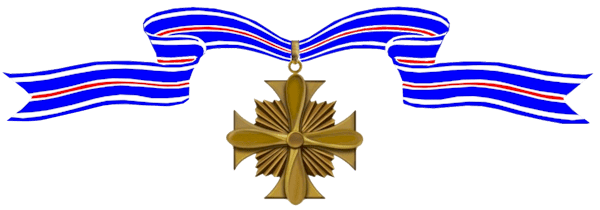
Distinguished Flying Cross
-
Distinguished Flying Cross
-
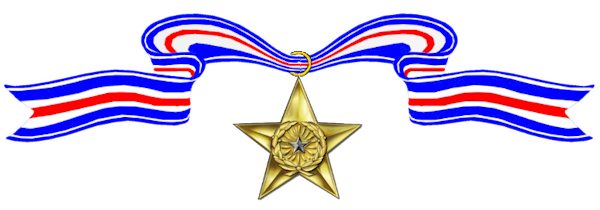
Silver Star
-
Distinguished Flying Cross
Service:
United States Marine CorpsRank:
MajorBatallion:
Headquarters & Maintenance Squadron 11Action Date:
July 31, 1970
The President of the United States of America takes pleasure in presenting a Gold Star in lieu of a Second Award of the Distinguished Flying Cross to Major Frederick Earl Lewis (MCSN: 0-81635), United States Marine Corps, for heroism while participating in aerial flight as a Pilot with Headquarters and Maintenance Squadron ELEVEN, Marine Aircraft Group ELEVEN, FIRST Marine Aircraft Wing, in connection with combat operations against the enemy in the Republic of Vietnam. On the afternoon of 31 July 1970, Major Lewis launched as Aircraft Commander of a TA-4 Skyhawk aircraft assigned to interdict hostile firing emplacements which had been discovered deep in enemy-controlled territory. Arriving over the designated area, he established contact with the Tactical Air Controller (Airborne) on station and was given a target brief on the weapons emplacements which had been precisely located. Undaunted by the extremely heavy volume of hostile fire directed at his aircraft and the adverse weather over the rugged terrain, Major Lewis resourcefully utilized the rain showers in the area to mask his approach as he boldly maneuvered his Skyhawk on repeated rocket and strafing runs and delivered all of his ordnance upon the target with pinpoint accuracy. As a result of the devastating attacks, all the enemy firing positions were destroyed. Major Lewis’ courage, superior airmanship, and unwavering devotion to duty in the face of great personal danger were instrumental in accomplishing the hazardous mission and were in keeping with the highest traditions of the Marine Corps and of the United States Naval Service.
-
Distinguished Flying Cross
Service:
United States Marine CorpsRank:
CaptainBatallion:
Marine Fighter-Attack Squadron 542Action Date:
January 26, 1967
The President of the United States of America takes pleasure in presenting the Distinguished Flying Cross to Captain Frederick Earl Lewis (MCSN: 0-81635), United States Marine Corps, for heroism and extraordinary achievement in aerial flight while serving as a Pilot with Marine Fighter-Attack Squadron FIVE HUNDRED FORTY-TWO (VMFA-542), Marine Aircraft Group Thirteen, FIRST Marine Aircraft Wing, in connection with operations against the enemy in the Republic of Vietnam. On the night of 26 January 1967, Captain Lewis launched as Section Leader of a flight of two F-4 Phantom aircraft assigned to provide close air support for a Marine reconnaissance patrol which was surrounded by a numerically superior enemy force northwest of Khe Sanh. Two Marine helicopters had been shot down by enemy ground fire in the area and another had crashed after colliding with trees while attempting to land near the beleaguered team. Arriving over the designated area, he was briefed on the friendly and enemy situation by the Tactical Air Controller (Airborne) and unhesitatingly commenced his attack, despite adverse weather conditions. Although his aircraft immediately came under intense enemy anti-aircraft fire, Captain Lewis fearlessly continued his attack and delivered his ordnance with unerring accuracy on the hostile positions. His superb airmanship and determined efforts were an inspiration to all who served with him and were instrumental in the subsequent safe extraction of the besieged Marines. Captain Lewis’ courage, exceptional aeronautical ability and unwavering devotion to duty at great personal risk contributed significantly to the accomplishment of the hazardous mission and were in keeping with the highest traditions of the Marine Corps and of the United States Naval Service.
-
Silver Star
Service:
United States Marine CorpsRank:
MajorBatallion:
Headquarters & Maintenance Squadron 11Regiment:
Marine Aircraft Group 11Division:
1st Marine Aircraft WingAction Date:
December 27, 1969
The President of the United States of America takes pleasure in presenting the Silver Star to Major Frederick Earl Lewis (MCSN: 0-81635), United States Marine Corps, for conspicuous gallantry and intrepidity in action while serving with Headquarters and Maintenance Squadron ELEVEN, Marine Aircraft Group ELEVEN, FIRST Marine Aircraft Wing, in connection with combat operations against the enemy in the Republic of Vietnam. On the afternoon of 27 December 1969, Major Lewis launched as Pilot of an A-4 Skyhawk aircraft assigned the mission of conducting reconnaissance over enemy-controlled territory and, as he maneuvered low over suspected hostile positions, his aircraft was extensively damaged by a heavy volume of anti-aircraft fire. With his aircraft’s vital systems inoperable, he was unable to control the spiraling aircraft and, quickly apprising the copilot of the critical situation, activated the ejection mechanism. As the copilot left the aircraft, he suffered a dislocated knee and, upon reaching the ground, was barely able to drag himself to a covered location in the tall elephant grass. Coming down one hundred meters from his copilot, Major Lewis quickly concealed himself in the grass and, utilizing his survival radio, transmitted both his and his copilot’s positions and a request for assistance. When supporting aircraft arrived overhead, he skillfully guided them toward the anti-aircraft guns which he could hear firing in the vicinity. Subsequently, it became apparent that extraction would be impossible that night and he was advised to escape from the hazardous area by a safe route to the west. Unwilling to leave his helpless companion behind, Major Lewis sought sanctuary in an abandoned gun emplacement and, throughout the night, maintained complete silence as enemy soldiers deployed through the area, seeking to harass him into revealing his position. At first light, supporting aircraft again appeared overhead and advised him of the location of his copilot. Although fully aware of the possibility of detection and capture, Major Lewis nevertheless fearlessly crawled across the hazardous terrain to the side of his stricken comrade and, after rendering first aid again utilized his radio to pinpoint the hostile gun positions for the supporting aircraft. On one occasion, he boldly moved from his covered position to retrieve the copilot’s parachute which he had used to mark their location. Throughout the day, he continued skillfully to transmit guidance and directions to pilots which enabled them to silence a sufficient number of anti-aircraft guns to permit a safe extraction. His heroic and determined actions were an inspiration to all who served with him and were instrumental in saving the life of a fellow Marine. By his courage, valiant initiative, and selfless devotion to duty in the face of grave personal danger, Major Lewis upheld the highest traditions of the Marine Corps and of the United States Naval Service.