The President of the United States of America takes pleasure in presenting a Gold Star in lieu of a Second Award of the Distinguished Flying Cross to First Lieutenant Dan M. Tennent, United States Marine Corps, for heroism and extraordinary achievement in aerial flight while serving with Marine Medium Helicopter Squadron THREE HUNDRED SIXTY-FOUR (HMM-364), Marine Aircraft Group Sixteen, First Marine Aircraft Wing in connection with combat operations against the enemy in the Republic of Vietnam. On the morning of 8 January 1971, First Lieutenant Tennent launched as Section Leader of a flight of two CH-46 transport helicopters assigned the emergency extraction of a seven man Marine reconnaissance team which was heavily engaged in combat with a numerically superior hostile force in the Que Son Mountains in Quang Nam Province. Arriving over the designated area, he established an orbit while a Bronco aircraft and two Cobra gunships on station attacked the enemy positions. While in orbit, he was informed that the beleaguered patrol was pinned down by intense hostile automatic weapons and small arms fire in a bomb crater at the end of a ridge with tall trees on two sides, steep slopes on the other two sides, and the enemy fire coming from positions which cut off all possible avenues of escape. After directing the gunships to lay down a smoke screen, First Lieutenant Tennent, undaunted by the heavy volume of hostile fire directed at his aircraft, coordinated his approach with the covering fire of the Cobras and skillfully maneuvered to a partial hover with the nose wheel and one main mount touching the ground in the crater. Despite a strong tail wind, enemy rounds impacting around his helicopter, and smoke which soon engulfed the area and severely restricted visibility, he held his transport in its precarious position until all of the Marines had embarked and then lifted out of the area and proceeded to Landing Zone Baldy. First Lieutenant Tennent’s courage, superior airmanship, and unwavering devotion to duty in the face of great personal danger were instrumental in accomplishing the hazardous mission and were in keeping with the highest traditions of the Marine Corps and of the United States Naval Service.

Sponsored by:


Awards Received
-
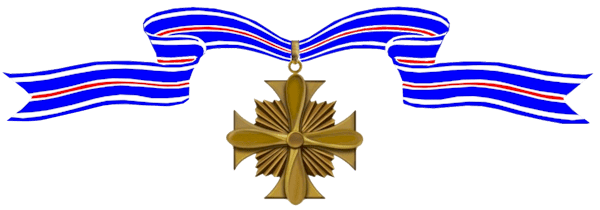
Distinguished Flying Cross
-
Distinguished Flying Cross
-
Distinguished Flying Cross
Service:
United States Marine CorpsRank:
First LieutenantBatallion:
Marine Medium Helicopter Squadron 364 (HMM-364)Regiment:
Marine Aircraft Group 36Division:
1st Marine Aircraft WingAction Date:
January 8, 1971
-
Distinguished Flying Cross
Service:
United States Marine CorpsRank:
First LieutenantBatallion:
Marine Medium Helicopter Squadron 364 (HMM-364)Regiment:
Marine Aircraft Group 36Division:
1st Marine Aircraft WingAction Date:
December 8, 1970
The President of the United States of America takes pleasure in presenting the Distinguished Flying Cross to First Lieutenant Dan M. Tennent, United States Marine Corps, for heroism and extraordinary achievement in aerial flight while serving as a Pilot with Marine Medium Helicopter Squadron THREE HUNDRED SIXTY-FOUR (HMM-364), Marine Aircraft Group Sixteen, First Marine Aircraft Wing in connection with combat operations against the enemy in the Republic of Vietnam. On the afternoon of 8 December 1970, First Lieutenant Tennent launched as Aircraft Commander of a CH-46 transport helicopter assigned the emergency medical evacuation of seven casualties from a Marine unit which was conducting operations in the vicinity of Hill 52 at Charlie Ridge in Quang Nam Province. Because of severe weather conditions, he elected to proceed on the mission without a wingman and accompanied only by a single gunship. Arriving over the designated area, he found that the extraction site was located on a steep hillside at an altitude of 1,100 feet and was covered with tall trees and boulders. Undaunted by the constant threat of hostile fire, a sheer cliff on one side of the pick-up site, and the difficulty of maintaining a hover in winds which gusted to forty-five knots, First Lieutenant Tennent expertly maintained a relatively steady hover for one hour and fifteen minutes while a jungle penetrator and an extraction litter were lowed to the ground and seven wounded Marines were safely hoisted aboard. After transporting the casualties to a hospital ship offshore and returning to his base to refuel his aircraft, he received an urgent request for the emergency medical evacuation of four casualties from an Army of the Republic of Vietnam unit operating in a densely-jungled mountainous area southwest of An Hoa. Forced to maintain low altitude below a heavy overcast while en route to the designated area, he came under intense enemy automatic weapons fire which seriously damaged both his helicopter and the escorting gunship. After assessing the damage sustained and realizing the urgency of extracting the casualties, First Lieutenant Tennent resolutely elected to continue his mission and proceeded to the extraction site. With exceptional skill, he maneuvered his aircraft to a two-wheel landing in the confined area and maintained a partial hover while the four wounded Vietnamese were embarked. Although he encountered an extremely heavy volume of hostile automatic weapons fire while departing the area, he boldly continued his flight at low level to the hospital at DaNang. First Lieutenant Tennent’s courage, superior airmanship, and unwavering devotion to duty in the face of great personal danger were in keeping with the highest traditions of the Marine Corps and of the United States Naval Service.