Captain William F. Andrews, United States Air Force, was captured after he was shot down over Iraq on 27 March 1991 and was held as a Prisoner of War until his release on 5 March 1991.

Sponsored by:


Awards Received
-
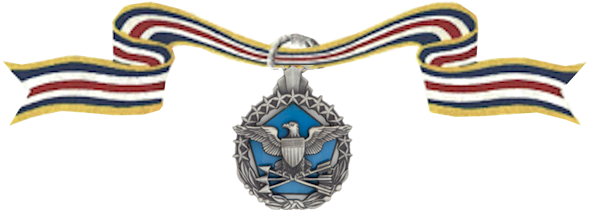
Defense Superior Service Medal
-
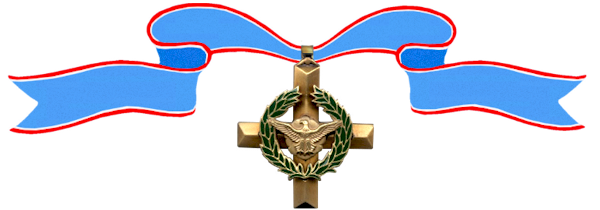
Air Force Cross
-
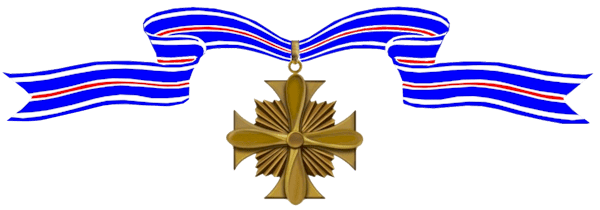
Distinguished Flying Cross
-
Distinguished Flying Cross
-
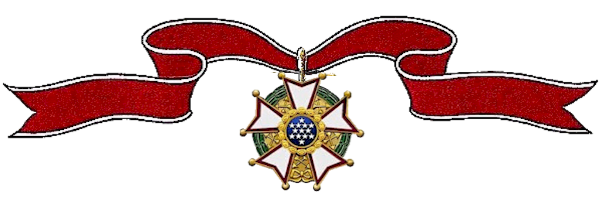
Legion of Merit
-
Defense Superior Service Medal
Under the provisions of Department of Defense 1348.33-M, the Secretary of Defense has awarded the Defense Superior Service Medal to Colonel William Francis Andrews, United States Air Force, for exceptionally superior service to the Department of Defense. The distinctive accomplishments of Colonel Andrews reflect great credit upon himself, the United States Air Force, and the Department of Defense.
-
Air Force Cross
Service:
United States Air ForceRank:
CaptainBatallion:
10th Tactical Fighter SquadronDivision:
Hahn Air Base, GermanyAction Date:
February 27, 1991
The President of the United States of America, authorized by Title 10, Section 8742, United States Code, takes pleasure in presenting the Air Force Cross to Captain William Francis Andrews, United States Air Force, for extraordinary heroism in connection with military operations against the armed forces of the Republic of Iraq, while serving as a Pilot with the 10th Tactical Fighter Squadron, Hahn Air Base, Germany, in action approximately 30 miles northwest of Basra, Iraq, on 27 February 1991, during Operation DESERT STORM. On that date, while leading an F-16 flight against heavily defended armor and mechanized forces, Captain Andrews’ F-16 suffered major damage from enemy air defenses forcing him to eject in enemy territory. While in the parachute descent, he made contact with his flight using his survival radio and, despite being fired upon by enemy forces while in the parachute descent, provided an area description and direction to his flight. After landing, at which point he broke his leg, Captain Andrews made numerous threat calls and directed members of his flight to execute a break turn and to initiate decoy flares in response to surface-to-air missile launches. Shortly thereafter, he was in radio contact with NAIL 51, an OA-10 in the area, and twice directed the pilot to break and expend decoy flares when he saw missile launches. In both cases, the pilots indicated that they would have suffered direct hits from enemy infrared seeking missiles had Captain Andrews not made the threat calls from the ground. Captain Andrews provided the support despite the fact that he had just suffered a broken leg and could not move, was exposed in the open, and was being fired upon by enemy forces. Through his extraordinary heroism, superb airmanship, and aggressiveness in the face of the enemy, Captain Andrews reflected the highest credit upon himself and the United States Air Force.
-
Distinguished Flying Cross
The President of the United States of America, authorized by Act of Congress, July 2, 1926, takes pleasure in presenting the Distinguished Flying Cross with Combat “V” to Captain William F. Andrews, United States Air Force, for heroism while participating in aerial flight during military operations against the armed forces of the Republic of Iraq, Baghdad, on 23 January 1991. On that date, while acting as the package commander of a composite force strike package targeted against the Fallujah SCUD surface-to-surface assembly missile plant and Habbaniyah Military Product Facility located 25 nautical miles southwest of Baghdad, Captain Andrews successfully coordinated and directed the package attack and employed his F-16 to destroy or heavily damage elements of this vital military industrial complex. With complete disregard for his personal safety, Captain Andrews attacked his assigned target which was defended by heavy anti-aircraft artillery fire as well as surface-to-air missiles. During the target area ingress no less than six surface-to-air missiles were launched at the strike package. This courageous attack reduced Iraq’s capability to produce and launch SCUT surface-to-air missiles toward Israel and Saudi Arabia. The outstanding heroism and selfless devotion to duty displayed by Captain Andrews reflect great credit upon himself and the United States Air Force.
-
Distinguished Flying Cross
The President of the United States of America, authorized by Act of Congress, July 2, 1926, takes pleasure in presenting a Bronze Oak Leaf Cluster in lieu of a Second Award of the Distinguished Flying Cross with Combat “V” to Captain William F. Andrews, United States Air Force, for heroism while participating in aerial flight during military operations against the armed forces of the Republic of Iraq, on 24 February 1991. On that date, while leading an F-16 flight that was diverted over 100 nautical miles to an emergency close air support mission, Captain Andrews successfully directed his flight and employed his F-16 to support a United States Army Special Forces team that had been detected while operating deep into enemy territory. With complete disregard for his own personal safety, Captain Andrews attacked the enemy force that had encircled the Special Forces Team despite heavy anti-aircraft fire. The mission was complicated by very low sun angles just prior to sunset and poor visibility from smoke and dust that made target and friendly identification very difficult. Despite these problems, Captain Andrews delivered his cluster bomb ordnance within 200 meters of the friendly position while coordinating with the Special Forces Team on the UHF emergency “GUARD” frequency. As a direct result of his action, the enemy force withdrew and the Special Forces Team was successfully extracted without casualties. The outstanding heroism and selfless devotion to duty displayed by Captain Andrews reflect credit upon himself and the United States Air Force.
-
Legion of Merit
Service:
United States Air ForceRank:
ColonelAction Date:
August 10, 2000 – August 16, 2002
The President of the United States of America, authorized by Act of Congress, 20 July 1942, takes pleasure in presenting the Legion of Merit to Colonel William F. Andrews, United States Air Force, for exceptionally meritorious conduct in the performance of outstanding services to the Government of the United States as Commander, 366th Operations Group, 366th Wing, Mountain Home Air Force Base, Idaho, from 10 August 2000 to 16 August 2002. During this period, Colonel Andrews decisively led Air Combat Command’s largest and most diverse operations group that delivered devastating combat air power across the entire spectrum of modern day combat. He oversaw the flawless closeout of the third largest annual Flying Hour Program in Air Combat Command, zeroing 21,750 hours under a 128 million dollar cost cap. During his command, he led the lightening-fast response to Operations NOBLE EAGLE and ENDURING FREEDOM. For Operation NOBLE EAGLE, his air control squadron provided twenty-four-hour-a-day, seven-day-a-week radar coverage for the western United States for 170 consecutive days. His F-15C fighters flew 532 hours of combat air patrols supporting the Vice President of the United States and the 2002 Olympics held in Salt Lake City, Utah. In Operation ENDURING FREEDOM, he trained and deployed the B-1B, F-15E, and F-16CJ squadrons that delivered over 7.6 million pounds of munitions against targets in Afghanistan. The superior initiative, outstanding leadership, and personal endeavor displayed by Colonel Andrews reflect great credit upon himself and the United States Air Force.