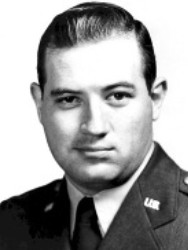
Howard Cody attended the University of Southern Mississippi before enlisting in the Air Force Aviation Cadet Program. Before Vietnam he served with the 53d Aerospace Rescue Squadron at Keflavik Airport, Iceland, flying rescue missions in the SC-54, during which he was awarded the Norwegian Medal of Heroism for helping to rescue the motor ship Polar Bjorn off the coast of Greenland. During the Vietnam War, First Lieutenant Atis Lielmanis, navigator on Captain Cody’s B-26, also received a posthumous Air Force Cross for this mission. Captain Richard L. Whitesides, an L-19 Pilot acting as a Forward Air Controller was the only of the THREE men subsequently awarded the Air Force Cross to survive. Sadly, Whitesides was lost during a mission near Khe Sanh on March 26, 1964, before the award could be presented. Captain Cody’s (and his comrades) action was the first action of the Vietnam War to merit award of the Air Force Cross. He was missing in action as a result of this mission and his remains have never been recovered.

Sponsored by:

–
Cemetery:
Awards Received
-
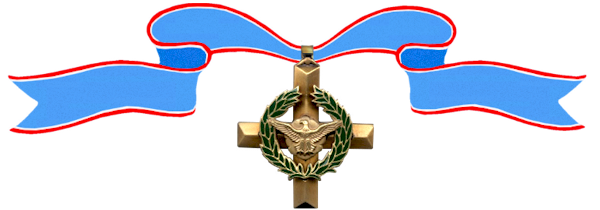
Air Force Cross
-
Air Force Cross
Service:
United States Air ForceRank:
CaptainBatallion:
1st Air Commando SquadronRegiment:
34th Tactical GroupDivision:
Bien Hoa Air Base, VietnamAction Date:
November 24, 1963
The President of the United States of America, authorized by Title 10, Section 8742, United States Code, takes pride in presenting the Air Force Cross (Posthumously) to Captain Howard Rudolph Cody (AFSN: 3040275), United States Air Force (Reserve), for extraordinary heroism in connection with military operations against an opposing armed force as an Advisor-Pilot of a B-26B aircraft in the 1st Air Commando Squadron, 34th Tactical Group, Bien Hoa Air Base, Vietnam, in action on 24 November 1963 in the Republic of Vietnam. On that date, Captain Cody voluntarily exposed himself and his aircraft during a low-level flight near hidden Viet Cong machine gun installations. This forced the Viet Cong to reveal their position which led to their destruction by cover aircraft. In this action, Captain Cody’s aircraft was badly damaged by machine gun fire and he never gained control of his aircraft. Through his extraordinary heroism, superb airmanship, and aggressiveness in the face of hostile forces, Captain Cody reflected the highest credit upon himself and the United States Air Force.