The President of the United States of America, authorized by Title 10, Section 8742, United States Code, takes pleasure in presenting the Air Force Cross to Lieutenant Colonel William Boyd, Jr. (AFSN: 0-16690), United States Air Force, for extraordinary heroism in military operations against an opposing armed force as a C-130 pilot of the 50th Tactical Airlift Squadron, 314th Tactical Airlift Wing, Ching Chuan Kang Air Base, Taiwan, in action at Kham Duc, Republic of Vietnam on 12 May 1968. On that date, Colonel Boyd flew an emergency evacuation mission into Kham Duc Airfield as it was being overrun by hostile forces. Realizing that the friendly ground forces and Vietnamese civilians remaining at Kham Duc had virtually no chance for survival except evacuation by his aircraft, Colonel Boyd, without regard for his personal safety, flew through a veritable hail of hostile fire into the besieged field and successfully evacuated more than one hundred troops and civilians. Through his extraordinary heroism, superb airmanship, and aggressiveness in the face of hostile forces, Lieutenant Colonel Boyd reflected the highest credit upon himself and the United States Air Force.

Sponsored by:


Awards Received
-
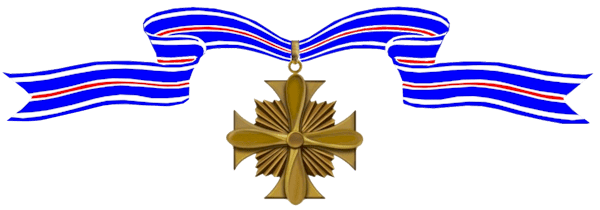
Distinguished Flying Cross
-
Distinguished Flying Cross
Service:
United States Air ForceRank:
Lieutenant ColonelBatallion:
50th Tactical Airlift SquadronRegiment:
314th Tactical Airlift WingDivision:
Ching Chuan Kang Air Base, TaiwanAction Date:
February 22, 1968
The President of the United States of America, authorized by Act of Congress, July 2, 1926, takes pleasure in presenting the Distinguished Flying Cross to Lieutenant Colonel William Boyd, Jr. (AFSN: 0-16690), United States Air Force, for extraordinary achievement while participating in aerial flight as a C-130E Pilot, at a drop zone near Camp Evans, Republic of Vietnam on 22 February 1968. On that date, during the TET Offensive, he successfully completed two drop missions, delivering desperately needed ammunition. Weather conditions were marginal for both drops, and there was intense hostile ground fire in the area. During the first drop, the aircraft received five hits in the left wing, and returned to the base with fuel running out of the holes. Temporary repairs were made on the fuel tank, the aircraft was again loaded, and he completed the second drop, receiving another hit in the left wing. The professional competence, aerial skill, and devotion to duty displayed by Colonel Boyd reflect great credit upon himself and the United States Air Force.