The President of the United States of America, authorized by Act of Congress July 9, 1918 (amended by an act of July 25, 1963), takes pleasure in presenting the Silver Star to Sergeant First Class William K. Beaver, United States Army, for conspicuous gallantry and intrepidity in action against the enemy while serving with a Military Transition Team, 1st Brigade, 1st Infantry Division, in action against enemy forces in support of Operation IRAQI FREEDOM, on 3 January 2008. After suffering severe wounds, Sergeant First Class Beaver not only continued to engage the enemy from an exposed position, he also coordinated efforts to aid and evacuate fellow soldiers. His actions saved the lives of not just other American soldiers but also Iraqi soldiers accompanying his patrol. His leadership skills, personal courage, and self discipline bring great credit upon him, MiTT 0511, and the United States Army.
NARRATIVE TO ACCOMPANY AWARD:
While conducting a combat patrol on 3 January 2008, Military Transition Team 0511 witnessed a car erratically leave the town of Sayyid Ibraham and crash into a nearby ditch. As the team’s first vehicle approached the site, Major Olmsted, the team chief, dismounted vehicle 05166 with an interpreter and fired warning shots. He jumped over the ditch and through the wood line into a field on the opposite side. He was then struck by sniper fire. The driver of vehicle 05166, Captain Thompson, moved the truck to the other side of the ditch and wood line so Sergeant First Class Beaver, the M-2 gunner, had clear fields of fire on the field. Upon entering the field one of the dismounts surrendered. Sergeant First Class Beaver observed two of the fleeing dismounts raise AK-47s. He fired on them and killed them both. Sergeant First Class Beaver was then struck by sniper fire in the ear and neck. Maintaining situational awareness, he began to perform first aid on his own wounds. While performing first aid, he moved to the TC seat and sent a Troops in Contact report and MEDEVAC request on Blue Force Tracker. Sergeant First Class Beaver then observed Master Sergeant McDuffie taking fire from a sniper. The sniper fire struck Master Sergeant McDuffie’s weapon disarming him and pinning him in a ditch. In spite of his blood loss–which was causing him to feel faint–and with great risk to himself, Sergeant First Class Beaver remounted the position where he had just been struck and killed the sniper firing on Master Sergeant McDuffie. Master Sergeant McDuffie remounted his vehicle, 05117, and moved towards Major Olmsted with an Iraqi Army Badger. The sniper fire continued and at least three rounds entered the Iraqi Army vehicle through the small gun ports. Throughout the engagement–and despite the severity of his own wounds–Sergeant First Class Beaver stayed in his exposed position firing suppressive fire in the vicinity of the sniper fire to allow the Iraqi Army to dismount and evacuate Major Olmsted. As the team rallied near the wrecked car they discovered that Captain Casey had been hit and was lying next to his truck on the TC side. His truck, 05115 had lost communications. Master Sergeant McDuffie was communicating to the IA to move their Badger to block the sniper fire for MEDEVAC. The crew of 05115 could not hear the plan because they had no functioning radios. Specialist First Class Beaver was increasingly light-headed from blood loss, but he continued to expose himself as he leaned out of the turret to inform the crew of 05115 of the sniper threat and to inform them of the plan to block enemy fire during the evacuation. The crew then waited for the protection of the Badger. Even after the casualties were evacuated by ground and MiTT 0511 broke contact with the enemy, Sergeant First Class Beaver continued to work at a high level and coordinated with MEDEVAC for an LZ. In sum, after suffering severe wounds at the outset of a firefight Sergeant First Class Beaver not only continued to engage the enemy, he killed a sniper who was engaging Master Sergeant McDuffie, called in the Troops in Contact Report, maintained continual suppressive fire from an exposed position, exposed himself further to direct Sergeant First Class Flores’ attempts to aid Captain Casey, and even continued to function after MiTT 0511 broke contact. He did all these things while bleeding from wounds to the neck and head. Sergeant First Class Beaver’s timely reporting and coordination, as well as his bravery and skill after taking fire allowed the team to quickly evacuate casualties and saved the lives of Master Sergeant McDuffie, Sergeant First Class Flores, as well as many Iraqi soldiers.

Sponsored by:

William
K.
Beaver
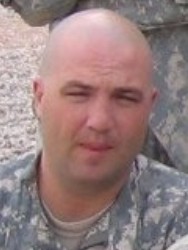
February 11, 1977
–
Awards Received
-
Silver Star
-
Silver Star
Service:
United States ArmyRank:
Sergeant First ClassRegiment:
Military Transition Team, 1st BrigadeDivision:
1st Infantry DivisionAction Date:
January 3, 2008