Private First Class Young was seriously wounded while fighting the enemy in South Korea on September 14, 1950 and returned to duty on September 22, 1950. On October 9, 1950, he received multiple wounds as he while participating in the attack on enemy positions that earned him the Medal of Honor. Refusing medical aid he fired on the enemy killing 5 and directed friendly tank fire, until he lost consciousness. He died of those wounds on November 5, 1950.

Sponsored by:

Robert
Harley
Young
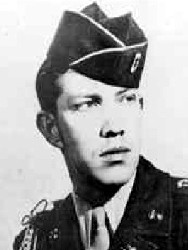
KIA (Korea)
March 4, 1929
–
November 5, 1950
Cemetery:
Golden Gate National Cemetery
Awards Received
-

Medal of Honor
-
Medal of Honor
Service:
United States ArmyRank:
Private First ClassRegiment:
8th Cavalry RegimentDivision:
1st Cavalry DivisionAction Date:
October 9, 1950
Department of the Army, General Orders No. 65 (August 2, 1951)The President of the United States of America, in the name of Congress, takes pride in presenting the Medal of Honor (Posthumously) to Private First Class Robert Harley Young (ASN: 19255270), United States Army, for conspicuous gallantry and intrepidity above and beyond the call of duty while serving with Company E, 8th Cavalry Regiment, 1st Cavalry Division, in action against enemy aggressor forces at Kaesong, Korea, on 9 October 1950. Private First Class Young’s company, spearheading a battalion drive deep in enemy territory, suddenly came under a devastating barrage of enemy mortar and automatic weapons crossfire which inflicted heavy casualties among his comrades and wounded him in the face and shoulder. Refusing to be evacuated, Private First Class Young remained in position and continued to fire at the enemy until wounded a second time. As he awaited first aid near the company command post the enemy attempted an enveloping movement. Disregarding medical treatment he took an exposed position and firing with deadly accuracy killed five of the enemy. During this action he was again hit by hostile fire which knocked him to the ground and destroyed his helmet. Later when supporting tanks moved forward, Private First Class Young, his wounds still unattended, directed tank fire which destroyed three enemy gun positions and enabled the company to advance. Wounded again by an enemy mortar burst, and while aiding several of his injured comrades, he demanded that all others be evacuated first. Throughout the course of this action the leadership and combative instinct displayed by Private First Class Young exerted a profound influence on the conduct of the company. His aggressive example affected the whole course of the action and was responsible for its success. Private First Class Young’s dauntless courage and intrepidity reflect the highest credit upon himself and uphold the esteemed traditions of the U.S. Army.