Charles Anderson graduated from the U.S. Military Academy at West Point, Class of 1932. He retired in 1967 as a U.S. Air Force Major General.

Sponsored by:

Charles
Hardin
Anderson
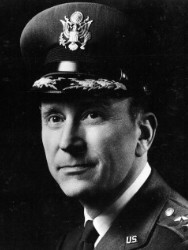
1907
–
May 27, 1971
Cemetery:
Arlington National Cemetery
Awards Received
-

Distinguished Flying Cross
-
Legion of Merit
-

Air Force Distinguished Service Medal
-
Legion of Merit
-
Distinguished Flying Cross
Service:
United States Army Air ForcesRank:
Colonel (Air Corps)Regiment:
Air Task ForceDivision:
China-Burma-India TheaterAction Date:
World War II
Headquarters, Army Air Forces I.B.T., General Orders No. 99 (April 26, 1945(Citation Needed) – SYNOPSIS: Colonel (Air Corps) Charles Hardin Anderson (ASN: 0-18785), United States Army Air Forces, was awarded the Distinguished Flying Cross for extraordinary achievement while participating in aerial flight while serving as Chief of Staff of an Air Task Force supporting the British FOURTEENTH Army in the China-Burma-India Theater, during World War II. The skillful and zealous manner in which he has sought out the enemy and destroyed him, his devotion to duty and courage under all conditions serve as an inspiration to his fellow flyers. His actions on all these occasions reflect the highest credit upon himself and the Armed Forces of the United States.
-
Legion of Merit
Service:
United States Army Air ForcesRank:
Colonel (Air Corps)Regiment:
Air Task ForceDivision:
China-Burma-India TheaterAction Date:
1944 – 1945
United States Military Academy Register of Graduates(Citation Needed) – SYNOPSIS: Colonel (Air Corps) Charles Hardin Anderson (ASN: 0-18785), United States Army Air Forces, was awarded a Bronze Oak Leaf Cluster in lieu of a Second Award of the Legion of Merit for exceptionally meritorious conduct in the performance of outstanding services to the Government of the United States as Chief of Staff of an Air Task Force supporting the British FOURTEENTH Army in the China-Burma-India Theater, from 1944 – 1945. The singularly distinctive accomplishments of Colonel Anderson and his dedicated contributions in the service of his country reflect the highest credit upon himself and the United States Army Air Forces.
-
Air Force Distinguished Service Medal
Service:
United States Air ForceRank:
Major GeneralAction Date:
August 25, 1955 – July 16, 1958
Department of the Air Force, General Orders No. 43 (July 28, 1958The President of the United States of America, authorized by Act of Congress July 9, 1918, takes pleasure in presenting the Air Force Distinguished Service Medal (Army Design) to Major General Charles Hardin Anderson (ASN: 0-18785), United States Air Force, for exceptionally meritorious and distinguished service in a position of great responsibility to the Government of the United States from 25 August 1955 to 16 July 1958, as Director of Air Operations, Office of the Air Deputy, and assistant Chief of Staff, Air and Special Operations, Supreme Headquarters Allied Powers, Europe. During this period, General Anderson’s dynamic leadership and extensive professional ability effected new and improved organizational concepts and systems, including the development and implementation of the Atomic Strike Plan for Allied Command Europe. By his personal initiative, tact and knowledge he was able to further the harmonious and friendly relations existing between the nations of the North Atlantic Treaty Organization. By his distinctive leadership, judgment, organizational and professional competence, Major General Anderson has reflected great credit upon himself and the United States Air Force.
-
Legion of Merit
Service:
United States Army Air ForcesRank:
Colonel (Air Corps)Division:
Air Corps Advanced Flight Training SchoolAction Date:
April 26, 1941 – February 5, 1944
War Department General Orders No. 5 (1945)The President of the United States of America, authorized by Act of Congress, 20 July 1942, takes pleasure in presenting the Legion of Merit to Colonel (Air Corps) Charles Hardin Anderson (ASN: 0-18785), United States Army Air Forces, for exceptionally meritorious conduct in the performance of outstanding services to the Government of the United States as Director of Training and Executive Officer, Army Air Forces Pilot School (Advanced-Single Engine), Craig Field, Alabama, from 16 April 1941 to 1 January 1943, and as Commanding Officer of that station from 1 January 1943 to 5 February 1944. Assigned the task of developing the flying department within a minimum length of time in order to train urgently needed pilots, his swift decisive planning made it possible for pilots to begin training on schedule despite a highly accelerated program incurred by the rapid expansion of the Army Air Forces. Through executive ability, versatility and resourcefulness, he was responsible for the introduction of many new training methods later adopted as standard procedures in fighter transition, night transition and night navigation training. He quickly developed the school into such an efficient and smoothly running organization that it was selected as one of the stations to be used in the British Pilot Training program, and later in the flying training program of the French Military Mission. The assimilation of British flight students into the standard program was performed by him in a most creditable manner and with utmost tact and diplomacy. The French program, rendered difficult because of the many problems presented by language differences, was handled with equal diplomacy and careful management, resulting in its complete integration as a part of the total mission of the school. His display of professional ability, resourcefulness and superior leadership contributed greatly to the success of the Training Command.