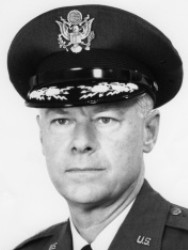
After serving in the Army Air Forces in World War II, Richard Ellis transferred to the U.S. Air Force when it became a separate branch of service in 1947. He retired in 1972 as a U.S. Air Force Brigadier General.

Sponsored by:

Richard
Nat
Ellis
May 19, 1916
–
June 28, 2000
Cemetery:
Barrancas National Cemetery
Awards Received
-

Air Force Distinguished Service Medal
-

Distinguished Flying Cross
-
Distinguished Flying Cross
-

Legion of Merit
-
Legion of Merit
-
Legion of Merit
-
Distinguished Flying Cross
-

Silver Star
-
Distinguished Flying Cross
-
Air Force Distinguished Service Medal
Service:
United States Air ForceRank:
Brigadier GeneralDivision:
Civil Air PatrolAction Date:
November 1, 1969 – October 31, 1972
The President of the United States of America, authorized by Act of Congress, July 9, 1918, takes pleasure in presenting the Air Force Distinguished Service Medal to Brigadier General Richard Nat Ellis (AFSN: FR-4001/0-396426), United States Air Force, for exceptionally meritorious and distinguished service in a position of great responsibility to the Government of the United States. General Ellis distinguished himself as National Commander, Civil Air Patrol, from 1 November 1969 to 31 October 1972. In this important assignment, the forceful leadership, and the outstanding and dedicated efforts of General Ellis were significantly displayed in the direction of the Civil Air Patrol, official Auxiliary of the United States Air Force. The singularly distinctive accomplishments of General Ellis culminate a long and distinguished career in the service of his country and reflect the highest credit upon himself and the United States Air Force.
-
Distinguished Flying Cross
Service:
United States Air ForceRank:
ColonelRegiment:
49th Bomber GroupDivision:
5th Air ForceAction Date:
March 9, 1953
The President of the United States of America, authorized by Act of Congress, July 2, 1926, takes pleasure in presenting the Distinguished Flying Cross to Colonel Richard Nat Ellis (AFSN: FR-4001/0-396426), United States Air Force, for extraordinary achievement while participating in aerial flight as Group Leader of three flights of F-84 type aircraft of the 49th Bomber Group, FIFTH Air Force on 9 March 1953. Colonel Ellis was pre-briefed to attack an important rail-bridge on the main supply route of the enemy located two miles south of Nuichon, Korea. Through precision navigation Colonel Ellis led his Group directly to the target. Colonel Ellis immediately identified the target, established him bomb- run, and then proceeded to lead his Group on the bomb-run. Despite the intense and very accurate anti-aircraft fire from the automatic weapons positions, Colonel Ellis released his bombs and placed them directly on the bridge. Through the excellent placement of his bombs, Colonel Ellis not only contributed greatly to the destruction of this bridge but also positively marked the target for the others in the Group. Despite the evasive action taken, the intense anti-aircraft fire made a direct hit on a member of the Group. Colonel Ellis immediately orbited the target area in order to determine whether any aid could be given to the downed pilot and continued to do so until it could be seen that no further aid could be given, and thereby subjecting himself to further ground fire and possible destruction. Without further incident, Colonel Ellis reformed his Group and led them safely back to their home base. By his calm courage, daring leadership, and extreme devotion to duty, Colonel Ellis has brought great credit to himself and the United States Air Force.
-
Distinguished Flying Cross
The President of the United States of America, authorized by Act of Congress, July 2, 1926, takes pleasure in presenting a Third Bronze Oak Leaf Cluster in lieu of a Fourth Award of the Distinguished Flying Cross to Colonel Richard Nat Ellis (AFSN: FR-4001/0-396426), United States Air Force, for extraordinary achievement while participating in aerial flight as Flight Leader of Operation POWER DRILL on 17 August 1944. On this date he was the leader of twelve 4-84F aircraft that accompanied the first successful non-stop mass flight of single-engine jet fighter aircraft from England to Bergstrom Air Force Base in Austin, Texas. The flight traveled a distance of 5,118 miles in 10 hours and 43 minutes, thus setting two new records in aviation. The flight utilized multiple in-flight refueling operations which required highly skilled pilot technique to insure successful completion of the mission. The hazards involved in this unprecedented and history-making flight demanded the finest precision flying, exceptional aerial discipline, and thorough knowledge of the aircraft. The extraordinary flying skill, precise teamwork, sound judgment, and devotion to duty displayed by Colonel Ellis were determining factors in the success of this outstanding accomplishment. By successfully completing this extremely difficult operation, Colonel Ellis has reflected the highest credit upon himself, the 27th Strategic Fighter Wing, the Strategic Air Command, and the United States Air Force.
-
Legion of Merit
Service:
United States Air ForceRank:
Brigadier GeneralAction Date:
September 2, 1964 – June 28, 1966
Department of the Air Force, Special Order GB-291 (September 26, 1966)The President of the United States of America, authorized by Act of Congress, 20 July 1942, takes pleasure in presenting a Bronze Oak Leaf Cluster in lieu of a Second Award of the Legion of Merit to Brigadier General Richard Nat Ellis (AFSN: FR-4001/0-396426), United States Air Force, for exceptionally meritorious conduct in the performance of outstanding services to the Government of the United States as Commander, 17th Strategic Aerospace Division, Strategic Air Command, Whitman Air Force Base, Missouri, from 2 September 1964 to 28 June 1966. During this period, General Ellis’ exceptional managerial ability and dynamic leadership achieved unparalleled missile operational ready rates and performance of the Minuteman Intercontinental Ballistic Missile. His outstanding organizational ability, brilliant technical direction, and his faculty for obtaining maximum performance from subordinates contributed significantly to the security of the United States and the free world. The superior initiative, outstanding leadership and personal endeavor displayed by General Ellis reflect great credit upon himself and the United States Air Force.
-
Legion of Merit
Service:
United States Air ForceRank:
Brigadier GeneralAction Date:
June 23, 1967 – July 1, 1969
The President of the United States of America, authorized by Act of Congress, 20 July 1942, takes pleasure in presenting a Second Bronze Oak Leaf Cluster in lieu of a Third Award of the Legion of Merit to Brigadier General Richard Nat Ellis (AFSN: FR-4001/0-396426), United States Air Force, for exceptionally meritorious conduct in the performance of outstanding services to the Government of the United States as Commander, Headquarters 86th Air Division, from 23 June 1967 to 14 November 1968, and as Vice Commander, Headquarters SEVENTEENTH Air Force, Ramstein Air Base, Germany, from 15 November 1968 to 1 July 1969. During this period, General Ellis’ outstanding achievements, dynamic leadership, and initiative resulted in the development of air defense, tactical and reconnaissance warfare concepts systems specifically tailored to the European requirements of the Air Force. The singularly distinctive accomplishments of General Ellis and his dedicated contributions in the service of his country reflect the highest credit upon himself and the United States Air Force.
-
Legion of Merit
The President of the United States of America, authorized by Act of Congress, 20 July 1942, takes pleasure in presenting the Legion of Merit to Colonel Richard Nat Ellis (AFSN: FR-4001/0-396426), United States Air Force, for exceptionally meritorious conduct in the performance of outstanding services to the Government of the United States as Commander, 27th Strategic Fighter Wing, Bergstrom Air Force Base, California, from 3 August 1954 to 1 June 1957. During this period, Colonel Ellis initiated a dynamic training program, efficient maintenance procedures, and sound management practices to overcome the extreme difficulties encountered with a new type of aircraft, untrained personnel, and an inexperienced staff. This program resulted in the 27th Strategic Fighter Wing reaching a standard which had never been attained before by a similar Strategic Fighter Wing. The outstanding devotion to duty and unswerving efforts to create an outstanding organization displayed by Colonel Ellis, have been an increasing source of inspiration and dedication to every officer and airman under his command. The superior manner in which Colonel Ellis discharged his responsibilities reflect great credit upon himself and the United States Air Force.
-
Distinguished Flying Cross
Service:
United States Air ForceRank:
ColonelRegiment:
49th Fighter-Bomber WingDivision:
5th Air ForceAction Date:
March 31, 1953
The President of the United States of America, authorized by Act of Congress, July 2, 1926, takes pleasure in presenting a Second Bronze Oak Leaf Cluster in lieu of a Third Award of the Distinguished Flying Cross to Colonel Richard Nat Ellis (AFSN: FR-4001/0-396426), United States Air Force, for extraordinary achievement while participating in aerial flight against the enemy on 31 March 1953. This flight was a single ship night mission pre-briefed to perform armed and visual reconnaissance near the Sinanju, Korea area. Flying the entire route in heavy night instrument weather, Colonel Ellis’ exceptional ability as a fighter pilot enabled him to let down out of the overcast over the target area exactly at the time required. Spotting a locomotive with eight boxcars attached, Colonel Ellis immediately made last minute calculations and dived to the most effective bombing altitude, releasing his two five-hundred-pound General Purpose bombs. Pulling off the target and while climbing out on course, he looked back into the target area and observed his bombs exploding in the immediate area of the locomotive and the eight attached boxcars. Back again on course, Colonel Ellis noticed five vehicles heading north, and he then dived onto them firing his six fifty-caliber guns and causing great damage to each of the five vehicles. Continuing on his homeward course he again spotted vehicles traveling on a route leading into the Pyongyang area. Once more he dived onto the vehicles, strafing them, and inflicted maximum damage to three vehicles. Without further incident, Colonel Ellis returned to his home base after having caused an assessed damage to one locomotive, five boxcars, and eight vehicles. Through his skill, courage and devotion to duty, Colonel Ellis has brought great credit upon himself and the United States Air Force.
-
Silver Star
Service:
United States Air ForceRank:
ColonelRegiment:
49th Fighter-Bomber GroupDivision:
5th Air ForceAction Date:
March 3, 1953
Headquarters, Far East Air Forces, General Orders No. 315 (July 13, 1953)The President of the United States of America, authorized by Act of Congress, July 9, 1918, takes pleasure in presenting the Silver Star to Colonel Richard Nat Ellis (AFSN: FR-4001/0-396426), United States Air Force, for gallantry in action against an enemy of the United Nations, while serving as Pilot of an F-84 Fighter Airplane of the 49th Fighter-Bomber Group, FIFTH Air Force, and as Group Leader of twelve F-84 type aircraft, in action on 3 March 1953. The mission had been ordered to attack and destroy an important target near Manpojin, Korea, two hundred and fifteen miles behind enemy lines, almost on the Manchurian border. The target area was known to be defended by thirty-five heavy and numerous automatic weapon gun positions. During the course of the mission, Colonel Ellis became aware that his left tip tank was not feeding. He used every known procedure to correct this serious malfunction, but to no avail. Realizing the imminent danger of exhausting his fuel supply, he elected to press on and lead his group to the target. Although the target area was almost obscured, Colonel Ellis pin-pointed it and led his group in to attack. Further handicaps imperiled his position as his bombing sight failed; however, Colonel Ellis dived on the target in a faultless maneuver releasing his bombs at the minimum safe altitude, scoring direct hits in the center of the target. Warned by his escort cover that enemy MiGs were approaching, Colonel Ellis led seven highly effective strafing attacks against vehicles and trains accounting for five vehicles damaged, and several boxcars damaged. The unusual success of this hazardous long-range mission attested to the courage, exceptional airmanship, and leadership of Colonel Ellis whose valor reflected great credit upon himself, the FAR EAST Air Forces, and the United States Air Force.
-
Distinguished Flying Cross
Service:
United States Air ForceRank:
ColonelRegiment:
49th Fighter-Bomber WingDivision:
5th Air ForceAction Date:
February 27, 1953
The President of the United States of America, authorized by Act of Congress, July 2, 1926, takes pleasure in presenting a Bronze Oak Leaf Cluster in lieu of a Second Award of the Distinguished Flying Cross to Colonel Richard Nat Ellis (AFSN: FR-4001/0-396426), United States Air Force, for extraordinary achievement and extraordinary gallantry in action while participating in aerial flight against the communist’s forces while leading an aerial flight of the 49th Fighter-Bomber Wing, FIFTH Air Force, on 27 February 1953. Colonel Ellis as the Flight Leader of a flight of four F-84 type aircraft was pre-briefed to attack the important rail-bridges in the center of Pyongyang, Korea. Colonel Ellis led his flight directly to the target, and courageously initiated the attack. Colonel Ellis’ two one-thousand-pound bombs made direct hits in the center of the bridge he was attacking and so damaged the bridge as to deny the use of this key communist transportation facility for some time. Although one of the aircraft was badly damaged by flak, Colonel Ellis re-grouped his flight and then led them safely to their home base. The total assessed damage was one complete bridge span destroyed and one complete cut in the south-end of bridge number two. By his courage and devotion to duty, Colonel Ellis has brought great credit upon himself and the United States Air Force.