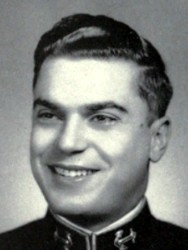
Leo Hyatt graduated from the U.S. Naval Academy at Annapolis, Class of 1957. He was interned as a Prisoner of War in North Vietnam after he was shot down on August 13, 1967, and was held until his release on March 14, 1973.

Sponsored by:

Leo
Gregory
Hyatt
POW (RVN)
April 29, 1934
–
Awards Received
-
Legion of Merit
-

Distinguished Flying Cross
-

Silver Star
-

Prisoner of War Medal
-
Bronze Star Medal
-
Bronze Star Medal
-
Legion of Merit
Service:
United States NavyRank:
CommanderDivision:
Prisoner of War (North Vietnam)Action Date:
August 1967 – March 1973
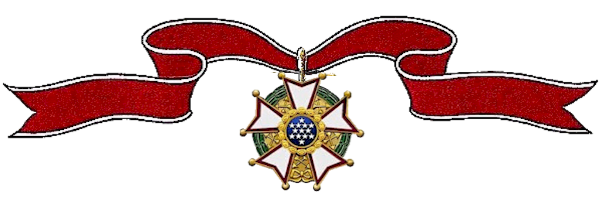
The President of the United States of America takes pleasure in presenting the Legion of Merit with Combat “V” to Commander Leo Gregory Hyatt, United States Navy, for exceptionally meritorious conduct in the performance of outstanding services to the Government of the United States as a Prisoner of War in North Vietnam from August 1967 to March 1973. Under the most adverse of conditions, he resisted all attempts by the North Vietnamese to use him in causes detrimental to the United States, never wavering in his devotion and loyalty to the United States. In an outstanding and tireless fashion he served as an entertainer to provide diversion and constructive rehabilitative thinking to his fellow prisoners during their long internment. Despite harsh treatment and a lack of material aids, he devoted long hours toward improving their morale and well-being. His extraordinary skill, resourcefulness, and dedication to duty throughout his lengthy confinement reflected great credit upon himself and upheld the highest traditions of the Naval Service and the United States Armed Forces. (Commander Hyatt is authorized to wear the Combat “V”.)
-
Distinguished Flying Cross
Service:
United States NavyRank:
Commander [then Lieutenant Commander]Batallion:
Reconnaissance Attack Squadron 12 (VA(R)-12)Division:
U.S.S. Constellation (CVA-64)Action Date:
July 2, 1967
The President of the United States of America takes pleasure in presenting the Distinguished Flying Cross to Commander [then Lieutenant Commander] Leo Gregory Hyatt, United States Navy, for heroism and extraordinary achievement while participating in aerial flight on 2 July 1967 as a Pilot in Reconnaissance Attack Squadron TWELVE (VA(R)-12), embarked in U.S.S. CONSTELLATION (CVA-64). As the pilot of an unarmed RA-5C Vigilante aircraft, Commander Hyatt conducted a highly successful reconnaissance mission to obtain urgently needed bomb damage assessment photography of the Ngoc Kuyet railroad siding located in one of the most heavily defended areas of North Vietnam. Although under heavy anti-aircraft fire and repeated surface-to-air missile attacks, he skillfully maneuvered through the heavy flak to obtain outstanding photographic coverage of the target area, thereby confirming the success of previous strikes. Through his professional planning, skillful airmanship and courageous actions, Commander Hyatt upheld the highest traditions of the United States Naval Service.
-
Silver Star
Service:
United States NavyRank:
CommanderDivision:
Prisoner of War (North Vietnam)Action Date:
August 13, 1967
The President of the United States of America takes pleasure in presenting the Silver Star to Commander Leo Gregory Hyatt, United States Navy, for conspicuous gallantry and intrepidity while interned as a Prisoner of War in North Vietnam on 13 August 1967. Commander Hyatt’s captors, completely ignoring international agreements, subjected him to extreme mental and physical cruelties in an attempt to obtain military information and false confessions for propaganda purposes. Through his resistance to those brutalities, he contributed significantly toward the eventual abandonment of harsh treatment by the North Vietnamese, which was attracting international attention. By his determination, courage, resourcefulness, and devotion, Commander Hyatt reflected great credit upon himself and upheld the highest traditions of the Naval Service and the United States Armed Forces.
-
Prisoner of War Medal
Service:
United States NavyRank:
CommanderDivision:
Prisoner of War (North Vietnam)Action Date:
August 13, 1967 – March 14, 1973
Commander Leo Gregory Hyatt, United States Navy, was held as a Prisoner of War in North Vietnam from August 13, 1967 until his release on March 14, 1973.
-
Bronze Star Medal
Service:
United States NavyRank:
CommanderDivision:
Prisoner of War (North Vietnam)Action Date:
September 1968
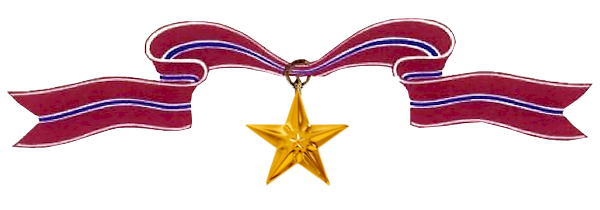
The President of the United States of America takes pleasure in presenting the Bronze Star Medal with Combat “V” to Commander Leo Gregory Hyatt, United States Navy, for meritorious achievement as a Prisoner of War in North Vietnam in the Fall of 1968. With complete disregard for his own safety and personal welfare in a period of severe enemy harassment, he voluntarily took complete care of a seriously wounded fellow prisoner who was not receiving any treatment from the North Vietnamese. By his courageous actions and humanitarian regard for his fellowman, he reflected great credit upon himself and upheld the highest traditions of the Naval Service and the United States Armed Forces. [The Combat Distinguishing Device is authorized.]
-
Bronze Star Medal
Service:
United States NavyRank:
CommanderDivision:
Prisoner of War (North Vietnam)Action Date:
April 1968 – February 1972
The President of the United States of America takes pleasure in presenting a Gold Star in lieu of a Second Award of the Bronze Star Medal with Combat “V” to Commander Leo Gregory Hyatt, United States Navy, for meritorious service as a Prisoner of War in North Vietnam from April to May 1968 and from July 1971 to February 1972. Through his ceaseless efforts, in an atmosphere of enemy harassment, threat of torture and brutal treatment, he established and maintained intracamp communications. At great risk and in spite of further cruelty, he continued to devise many unusual and ingenious methods of communications, resulting in American and Allied prisoners resisting the enemy’s demands and at the same time improving the prisoners’ morale. By his heroic endeavors, exceptional skill, and devotion to duty, he reflected great credit upon himself and upheld the highest traditions of the Naval Service and the United States Armed Forces. [The Combat Distinguishing Device is authorized.]