Thomas Classen’s B-17 was shot down on February 9, 1943, after a running, bloody battle with eight Japanese Zeros that wounded all nine members of the crew. After a forced landing at sea the crew drifted at sea for 15 days before they reached a small coral island in the heart of Japanese-controlled waters, where they were befriended by Melanesian natives until they were recovered after 66 days. During that time they were listed as Missing in Action and presumed dead. Three members of the crew were awarded the Distinguished Service Cross and the other six members received Silver Stars, making them one of the most decorated air crews of the War.

Sponsored by:

Thomas
John
Classen
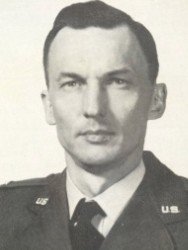
October 8, 1918
–
May 15, 2009
Cemetery:
Saint Stephen Cemetery
Awards Received
-

Distinguished Service Cross
-
Distinguished Service Cross
Service:
United States Army Air ForcesRank:
Captain (Air Corps)Batallion:
72d Bombardment SquadronRegiment:
5th Bombardment Group (H)Division:
13th Air ForceAction Date:
February 9, 1943
Headquarters, U.S. Army Forces in the South Pacific Area, General Orders No. 105 (May 1, 1943)The President of the United States of America, authorized by Act of Congress July 9, 1918, takes pleasure in presenting the Distinguished Service Cross to Captain (Air Corps) Thomas John Classen (ASN: 0-404042), United States Army Air Forces, for extraordinary heroism in connection with military operations against an armed enemy while serving as Pilot of a B-17 Heavy Bomber in the 72d Bombardment Squadron, 5th Bombardment Group (H), THIRTEENTH Air Force, while engaged in a search mission over enemy territory on 9 February 1943, in the South Pacific Area. During this search Captain Classen’s airplane was attacked by eight enemy Zero fighters. The enemy circled at maximum gun range, executing a series of direct assaults. Two of the enemy fighters were shot down and two more were probably destroyed during the initial phase of the air battle, although one engine of the bomber was silenced, ten guns were damaged beyond usefulness, and all members of the crew wounded. Major Classen, blood streaming through a handkerchief gripped in his teeth, directed his crew in the long running flight which continued. After attacking for an hour and a half, the fighters finally gave up the chase, leaving two motors of the bomber silenced and a third damaged. By this time the airplane was flying at an altitude of barely 20 feet above the water. Ordering the removal of all possible gear, Major Classen, by unshakeable tenacity and consummate skill was able, after approximately an hour’s effort to gain an altitude of 800 feet. When a water landing of the disabled airplane was necessitated, he directed preparations with such ability that all of his crew escaped from the wreckage. The group of airmen paddled and drifted in two inflated life rafts through torrid sun and tropical storms for more than 600 miles, until on the sixteenth day they made their way through a difficult coral passage to a group of little-known islands in enemy territory where, upon being recognized as Americans, they received what rest and comforts the war starved native settlement could offer. More than two months after the encounter with the enemy fighters the air crew reached an island occupied by friendly personnel and were returned to their base. Major Classen’s extraordinary determination and skill contributed greatly to the escape and safe return of his entire crew. The personal courage and zealous devotion to duty displayed by Captain Classen throughout this period have upheld the highest traditions of the military service and reflect great credit upon himself, the 13th Air Force, and the United States Army Air Forces.