The President of the United States of America, authorized by Act of Congress, July 2, 1926, takes pleasure in presenting the Distinguished Flying Cross to Warrant Officer (W-1) Wiley L. Cranney (ASN: W-3159096), United States Army, for heroism while participating in aerial flight evidenced by voluntary action above and beyond the call of duty. Warrant Officer Cranney distinguished himself by exceptionally valorous actions while serving as aircraft commander of a lift ship that was called to rescue a long range reconnaissance patrol team in heavy contact, west of Pleiku. After preparation by a light fire team, his first attempt to land was aborted due to an explosion in the landing zone. He initiated a second attempt at the extraction but again aborted, due to an excited, unreachable radio transmission from the team on the ground. As he broke over the area, the team ran from their foxholes toward the landing spot and Warrant Officer Cranney knew that he would have to land immediately to extract the exposed team. Executing a sharp, descending turn, he maneuvered the aircraft to a low hover, allowing the long range reconnaissance patrol team to get on board the ship. Upon departing the landing zone, both the rescue ship and the gunships were receiving intense small arms fire. His actions were in keeping with the highest traditions of the military service and reflect great credit upon himself, his unit and the United States Army.

Sponsored by:

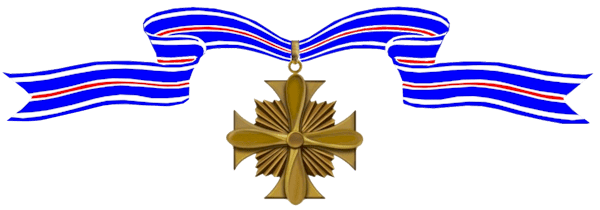
Awards Received
-
Distinguished Flying Cross
-
Distinguished Flying Cross
-
Distinguished Flying Cross
Service:
United States ArmyRank:
Chief Warrant Officer (W-2)Regiment:
1st Aviation BrigadeAction Date:
February 8, 1969
Headquarters, 1st Aviation Brigade, General Orders No. 2545 (June 2, 1969)The President of the United States of America takes pleasure in presenting a Bronze Oak Leaf Cluster in lieu of a Second Award of the Distinguished Flying Cross to Chief Warrant Officer (W-2) Wiley L. Cranney (ASN: W-3159096), United States Army, for heroism while participating in aerial flight evidenced by voluntary actions above and beyond the call of duty while serving with the 189th Aviation Company (Assault Helicopter), 1st Aviation Brigade, in the Republic of Vietnam on 8 February 1969. Chief Warrant Officer Cranney distinguished himself by exceptionally valorous actions while serving as Aircraft Commander of a UH-1H troop carrying helicopter during the extraction of an encircled long range reconnaissance patrol northwest of Dak To. While his aircraft was on short final to the extraction site, it came under enemy automatic weapons fire from all directions. He continued his approach, although the enemy was much closer than had been suspected. Due to high ground obstacles, he could only bring his aircraft to a four foot hover. He maintained a strong and steady hover as the patrol members scrambled aboard. Chief Warrant Officer Cranney’s outstanding flying ability was a great asset to the completion of the mission. His actions were in keeping with the highest traditions of the military service and reflect great credit upon himself, his unit, and the United States Army.
-
Distinguished Flying Cross
Service:
United States ArmyRank:
Chief Warrant Officer (W-2)Regiment:
1st Aviation BrigadeAction Date:
May 7, 1969
Headquarters, 1st Aviation Brigade, General Orders No. 4132 (August 20, 1969)The President of the United States of America, authorized by Act of Congress, July 2, 1926, takes pleasure in presenting a Second Bronze Oak Leaf Cluster in lieu of a Third Award of the Distinguished Flying Cross to Chief Warrant Officer (W-2) Wiley L. Cranney (ASN: W-3159096), United States Army, for heroism while participating in aerial flight evidenced by voluntary actions above and beyond the call of duty while serving with the 189th Aviation Company (Assault Helicopter), 1st Aviation Brigade, in the Republic of Vietnam on 7 May 1969. Chief Warrant Officer Cranney distinguished himself by exceptionally valorous actions while serving as Aircraft Commander of a UH-1H helicopter in an extraction of an allied unit near Ben Het. Previous attempts to enter the landing zone had been futile because of heavy ground fire. He commenced a low approach short of the actual landing zone and hovered his aircraft up to the friendly positions. Intense enemy fire was encountered in the landing zone as he departed. On the next sortie one round struck the rotor head. Chief Warrant Officer Cranney flew to Ben Het, obtained a replacement aircraft, and rejoined the extraction. He made two more sorties into the landing zone under intense hostile fire. Chief Warrant Officer Cranney’s great courage, flying skill and determination were instrumental in the success of the operation. His actions were in keeping with the highest traditions of the military service and reflect great credit upon himself, his unit, and the United States Army.