Edward Crockett graduated from the U.S. Military Academy at West Point, Class of 1950. He retired in 1976 as a U.S. Army Colonel.

Sponsored by:

Edward
Painter
Crockett
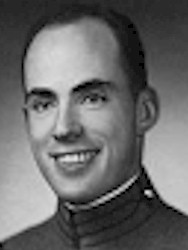
1926-12-18
–
2017-06-01
Born:
Wytheville
,
Virginia
Home:
Kelseyville
,
California
Buried:
Rockville
,
Maryland
Cemetery:
Parklawn Memorial Park and Menorah Gardens
Awards Received
-

Legion of Merit
-
Legion of Merit
-

Silver Star
-
Legion of Merit
United States Military Academy Register of Graduates(Citation Needed) – SYNOPSIS: The President of the United States of America, authorized by Act of Congress, 20 July 1942, takes pleasure in presenting the Legion of Merit to Lieutenant Colonel (Cavalry) Edward Painter Crockett (ASN: 0-62497), United States Army, for exceptionally meritorious conduct in the performance of outstanding services to the Government of the United States with Military Assistance Command, Vietnam, in action against the enemy in the Republic of Vietnam from 1971 to 1972. The singularly distinctive accomplishments of Colonel Crockett and his dedicated contributions in the service of his country reflect the highest credit upon himself and were in keeping with the highest traditions of the United States Army.
-
Legion of Merit
United States Military Academy Register of Graduates(Citation Needed) – SYNOPSIS: The President of the United States of America, authorized by Act of Congress, 20 July 1942, takes pleasure in presenting a Bronze Oak Leaf Cluster in lieu of a Second Award of the Legion of Merit to Colonel (Cavalry) Edward Painter Crockett (ASN: 0-62497), United States Army, for exceptionally meritorious conduct in the performance of outstanding services to the Government of the United States in the Office of the J5, Joint Staff, from 1973 to 1976. The singularly distinctive accomplishments of Colonel Crockett culminate a long and distinguished career in the service of his country and his dedicated contributions reflect the highest credit upon himself and the United States Army.
-
Silver Star
Service:
United States ArmyRank:
First Lieutenant (Armor)Regiment:
5th Regimental Combat TeamDivision:
24th Infantry DivisionAction Date:
April 25, 1951
Headquarters, 24th Infantry Division, General Orders No. 606 (August 23, 1951)The President of the United States of America, authorized by Act of Congress July 9, 1918, takes pleasure in presenting the Silver Star to First Lieutenant (Armor) Edward Painter Crockett (ASN: 0-62497), United States Army, for gallantry in action while serving as a member of Tank Company, 5th Regimental Combat Team, 24th Infantry Division, near Pisi-Gol, Korea, on 25 April 1951. Advance elements of a large enemy task force assaulted the First Battalion of the 5th Regimental Combat Team and the 555th Field Artillery Battalion just as these units were withdrawing from a blocking position and forming a road column to head south. As the enemy opened up from high ground on both sides of the road, many vehicles were damaged and blocked the road. As friendly casualties mounted, the enemy began to deploy in an enveloping movement to annihilate the entire 5th Regimental Combat Team and several other friendly units. These units were covering for the remainder of the Division, which had already been withdrawn to the south, and were assembling to the west of the enemy attack area. Lieutenant Crockett was ordered to attack south to relieve this pressure on the Infantry Battalion and the Field Artillery Battalion. He executed this maneuver with great skill and daring over the rough terrain he was forced to use due to the vehicles which blocked the road. Despite several enemy attempts to launch a general attack, Lieutenant Crockett, continuously exposed to intense fire as he lead the action from the turret of his tank, succeeded in knocking out several strategic enemy positions. Reaching the southern flank of friendly lines, he succeeded in directing intensely accurate fire on an enemy company which repeatedly tried to break through the lines. This enemy company was completely annihilated. The enemy’s psychological advantage, gained through the devastating surprise of his initial attack was eliminated by Lieutenant Crockett’s brilliant defensive leadership. Under the protective fire which he directed, the beleaguered units took care of their wounded and completely reorganized while the remainder of the 5th Regimental Combat Team and other units withdrew over an alternate en route to the west. Once again, the enemy made a savage attack in an attempt to destroy the column. With utter disregard for his own safety, Lieutenant Crockett directed his tanks in firing point-blank into the enemy and also in destroying the abandoned vehicles and equipment. Lieutenant Crockett’s courageous actions and brilliant leadership enabled his regiment and other friendly units to withdraw safely from almost certain annihilation and inflicted severe casualties on the enemy. These actions reflect the highest credit on himself and are in keeping with the highest traditions of the military service and reflect great credit upon himself and the United States Army.