Born Walter Clarke Hyzer, Peter Hyzer graduated from the U.S. Military Academy at West Point, Class of 1937. He retired in 1967 as a U.S. Army Brigadier General.

Sponsored by:

Peter
Clarke
Hyzer
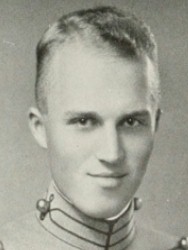
1914-12-25
–
1991-09-16
Born:
Rockville
,
Illinois
Home:
Rockville
,
Illinois
Buried:
Arlington
,
Virginia
Cemetery:
Arlington National Cemetery
Awards Received
-

Legion of Merit
-

Army Distinguished Service Medal
-

Silver Star
-
Legion of Merit
Service:
United States ArmyRank:
Lieutenant Colonel (Corps of Engineers)Batallion:
3d Engineer Combat BattalionDivision:
24th Infantry DivisionAction Date:
1950 – 1951
United States Military Academy Register of Graduates(Citation Needed) – SYNOPSIS: The President of the United States of America, authorized by Act of Congress, 20 July 1942, takes pleasure in presenting the Legion of Merit to Lieutenant Colonel (Corps of Engineers) Peter Clarke Hyzer (ASN: 0-20589), United States Army, for exceptionally meritorious conduct in the performance of outstanding services to the Government of the United States as Commanding Officer, 3d Engineer Combat Battalion, 24th Infantry Division, in Korea, from 1950 to 1951. The singularly distinctive accomplishments of Colonel Hyzer and his dedicated contributions in the service of his country reflect the highest credit upon himself and the United States Army.
-
Army Distinguished Service Medal
Service:
United States ArmyRank:
Brigadier GeneralDivision:
Corps of EngineersAction Date:
September 1962 – February 1967
Department of the Army, General Orders No. 12 (March 17, 1967)The President of the United States of America, authorized by Act of Congress July 9, 1918, takes pleasure in presenting the Army Distinguished Service Medal to Brigadier General Peter Clarke Hyzer (ASN: 0-20589), United States Army, for exceptionally meritorious and distinguished services to the Government of the United States, in a duty of great responsibility, during the period from September 1962 to February 1967.
-
Silver Star
Service:
United States ArmyRank:
Lieutenant Colonel (Corps of Engineers)Batallion:
3d Engineer Combat BattalionDivision:
24th Infantry DivisionAction Date:
August 11, 1950
Headquarters, 24th Infantry Division, General Orders No. 120 (September 5, 1950)The President of the United States of America, authorized by Act of Congress July 9, 1918, takes pleasure in presenting the Silver Star to Lieutenant Colonel (Corps of Engineers) Peter Clarke Hyzer (ASN: 0-20589), United States Army, for gallantry in connection with military operations against an opposing armed force while serving as Commanding Officer of the 3d Engineer Combat Battalion, 24th Infantry Division, on 11 August 1950, along the Naktong River, Korea. Colonel Hyzer, a Korean interpreter, Corporal Johnson, and Private First Class Bolster accompanied a Battalion Patrol to the West bank of the Naktong River and part of the way to its objective, Hill 207. After insuring that the patrol was well on its way and that it was not being followed, Colonel Hyzer decided to return with his group to the East bank of the Naktong River. Upon arriving at the landing site of the West bank of the river Colonel Hyzer’s group discovered one of the boat guards lying beside the boat apparently dead and noted enemy movement in the area. By mutual agreement the group decided to swim the river. When they had swum for about ten yards the enemy brought machine gun and small arms fire upon the group. At this point the interpreter decided he could not make it and turned around to return to the West Bank. Colonel Hyzer, realizing the vital information as to the Battalion’s disposition and the status known by his interpreter, while under heavy enemy small arms fire and at great personal risk, turned around and went to the assistance of the interpreter in an attempt to bring him to the East bank. About this time, Colonel Hyzer noticed that Private Bolster, having become exhausted, was floundering in the water. Releasing his hold upon the interpreter, Colonel Hyzer swam to the assistance of Private Bolster. The intensity of enemy fire and the struggling of Private Bolster made it impossible for Colonel Hyzer to save this man. Colonel Hyzer then swam to the assistance of Corporal Johnson and noted he was apparently capable of reaching the East shore. Colonel Hyzer then turned to go to the assistance of his interpreter and through increasing enemy fire returned to the spot in the river where he had last seen the Korean. Being unable to locate the interpreter at this time Colonel Hyzer then swam through enemy fire to the East bank of the river. Through Colonel Hyzer’s effort and total disregard for his personal safety, the mission of the patrol was accomplished, and the Korean was able to reach a position of safety and prevent a possible source of vital information from falling into enemy hands. This act of conspicuous gallantry on the part of Colonel Hyzer reflects the highest possible credit on himself and the military service.