During World War II, Thomas Lynch became a U.S. Army Air Forces QUADRUPLE ACE, credited with shooting down 20 enemy aircraft in aerial combat, before he was himself shot down and killed on March 8, 1944.

Sponsored by:

Thomas
Joseph
Lynch
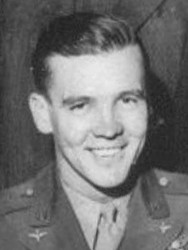
MIA (WWII) KIA
December 9, 1916
–
March 8, 1944
Cemetery:
A.B.M.C. Manila (Wall of the Missing)
Awards Received
-

Distinguished Flying Cross
-
Distinguished Flying Cross
-
Silver Star
-

Distinguished Service Cross
-
Distinguished Flying Cross
-
Distinguished Flying Cross
-
Distinguished Flying Cross
-
Distinguished Flying Cross
-
Distinguished Flying Cross
Service:
United States Army Air ForcesRank:
Captain (Air Corps)Batallion:
39th Fighter SquadronRegiment:
35th Fighter GroupDivision:
5th Air ForceAction Date:
World War II
(Citation Needed) – SYNOPSIS: Captain (Air Corps) Thomas Joseph Lynch (ASN: 0-388066), United States Army Air Forces, was awarded a Fourth Bronze Oak Leaf Cluster in lieu of a Fifth Award of the Distinguished Flying Cross for extraordinary achievement while participating in aerial flight while serving as a P-38 Fighter Pilot of the 39th Fighter Squadron, 35th Fighter Group, FIFTH Air Force, in action against the enemy in aerial combat in the Pacific Theater of Operations during World War II. The skillful and zealous manner in which he has sought out the enemy and destroyed him, his devotion to duty and courage under all conditions serve as an inspiration to his fellow flyers. His actions on all these occasions reflect the highest credit upon himself and the Armed Forces of the United States.
-
Distinguished Flying Cross
Service:
United States Army Air ForcesRank:
Captain (Air Corps)Batallion:
39th Fighter SquadronRegiment:
35th Fighter GroupDivision:
5th Air ForceAction Date:
World War II
(Citation Needed) – SYNOPSIS: Captain (Air Corps) Thomas Joseph Lynch (ASN: 0-388066), United States Army Air Forces, was awarded a Silver Oak Leaf Cluster in lieu of a Sixth Award of the Distinguished Flying Cross for extraordinary achievement while participating in aerial flight while serving as a P-38 Fighter Pilot of the 39th Fighter Squadron, 35th Fighter Group, FIFTH Air Force, in action against the enemy in aerial combat in the Pacific Theater of Operations during World War II. The skillful and zealous manner in which he has sought out the enemy and destroyed him, his devotion to duty and courage under all conditions serve as an inspiration to his fellow flyers. His actions on all these occasions reflect the highest credit upon himself and the Armed Forces of the United States.
-
Silver Star
Service:
United States Army Air ForcesRank:
Second Lieutenant (Air Corps)Batallion:
39th Fighter SquadronRegiment:
35th Fighter GroupDivision:
5th Air ForceAction Date:
World War II
Headquarters, Allied Air Forces in the Southwest Pacific Area, General Orders No. 26 (July 5, 1942)(Citation Needed) – SYNOPSIS: The President of the United States of America, authorized by Act of Congress July 9, 1918, takes pleasure in presenting the Silver Star to Second Lieutenant (Air Corps) Thomas Joseph Lynch (ASN: 0-388066), United States Army Air Forces, for gallantry in action against the enemy while serving as Pilot of a P-38 Lightning Fighter Airplane of the 39th Fighter Squadron, 35th Fighter Group, FIFTH Air Force, in aerial operations in the Southwest Pacific Theater of Operations, in 1942. The gallant actions and dedicated devotion to duty demonstrated by Second Lieutenant Lynch, without regard for his own life, were in keeping with the highest traditions of military service and reflect great credit upon himself and the United States Army Air Forces.
-
Distinguished Service Cross
Service:
United States Army Air ForcesRank:
Captain (Air Corps)Batallion:
39th Fighter SquadronRegiment:
35th Fighter GroupDivision:
5th Air ForceAction Date:
December 27, 1942
Headquarters, U.S. Army Forces in the Far East, General Orders No. 32 (June 15, 1943)The President of the United States of America, authorized by Act of Congress July 9, 1918, takes pleasure in presenting the Distinguished Service Cross to Captain (Air Corps) Thomas Joseph Lynch (ASN: 0-388066), United States Army Air Forces, for extraordinary heroism in connection with military operations against an armed enemy while serving as Pilot of a P-38 Fighter Airplane in the 39th Fighter Squadron, 35th Fighter Group, FIFTH Air Force, in action near Buna, New Guinea, on 27 December 1942. Captain Lynch was leading a patrol flight of four P-38 planes when a formation of eight to ten enemy dive-bombers accompanied by fifteen to twenty fighter aircraft approached. The pilots of his flight were inexperienced and the P-38 as yet untried in combat in this area. Despite the odds, Captain Lynch led his flight in a determined attack. He succeeded in breaking the enemy formation and in preventing the enemy dive-bombers from reaching their objective. He shot down two planes, while others in his flight accounted for five. Because of Captain Lynch’s daring and effective attack, other flights of our aircraft in the vicinity were enabled to attack the scattered enemy, and to shoot down six more and damage another. This engagement greatly heightened the combat spirit of Captain Lynch’s squadron. Captain Lynch’s unquestionable valor in aerial combat is in keeping with the highest traditions of the military service and reflects great credit upon himself, the 5th Air Force, and the United States Army Air Forces.
-
Distinguished Flying Cross
Service:
United States Army Air ForcesRank:
Captain (Air Corps)Batallion:
39th Fighter SquadronRegiment:
35th Fighter GroupDivision:
5th Air ForceAction Date:
World War II
(Citation Needed) – SYNOPSIS: Captain (Air Corps) Thomas Joseph Lynch (ASN: 0-388066), United States Army Air Forces, was awarded a Second Bronze Oak Leaf Cluster in lieu of a Third Award of the Distinguished Flying Cross for extraordinary achievement while participating in aerial flight while serving as a P-38 Fighter Pilot of the 39th Fighter Squadron, 35th Fighter Group, FIFTH Air Force, in action against the enemy in aerial combat in the Pacific Theater of Operations during World War II. The skillful and zealous manner in which he has sought out the enemy and destroyed him, his devotion to duty and courage under all conditions serve as an inspiration to his fellow flyers. His actions on all these occasions reflect the highest credit upon himself and the Armed Forces of the United States.
-
Distinguished Flying Cross
Service:
United States Army Air ForcesRank:
Captain (Air Corps)Batallion:
39th Fighter SquadronRegiment:
35th Fighter GroupDivision:
5th Air ForceAction Date:
World War II
(Citation Needed) – SYNOPSIS: Captain (Air Corps) Thomas Joseph Lynch (ASN: 0-388066), United States Army Air Forces, was awarded a Third Bronze Oak Leaf Cluster in lieu of a Fourth Award of the Distinguished Flying Cross for extraordinary achievement while participating in aerial flight while serving as a P-38 Fighter Pilot of the 39th Fighter Squadron, 35th Fighter Group, FIFTH Air Force, in action against the enemy in aerial combat in the Pacific Theater of Operations during World War II. The skillful and zealous manner in which he has sought out the enemy and destroyed him, his devotion to duty and courage under all conditions serve as an inspiration to his fellow flyers. His actions on all these occasions reflect the highest credit upon himself and the Armed Forces of the United States.
-
Distinguished Flying Cross
Service:
United States Army Air ForcesRank:
Captain (Air Corps)Batallion:
39th Fighter SquadronRegiment:
35th Fighter GroupDivision:
5th Air ForceAction Date:
World War II
(Citation Needed) – SYNOPSIS: Captain (Air Corps) Thomas Joseph Lynch (ASN: 0-388066), United States Army Air Forces, was awarded a Bronze Oak Leaf Cluster in lieu of a Second Award of the Distinguished Flying Cross for extraordinary achievement while participating in aerial flight while serving as a P-38 Fighter Pilot of the 39th Fighter Squadron, 35th Fighter Group, FIFTH Air Force, in action against the enemy in aerial combat in the Pacific Theater of Operations during World War II. The skillful and zealous manner in which he has sought out the enemy and destroyed him, his devotion to duty and courage under all conditions serve as an inspiration to his fellow flyers. His actions on all these occasions reflect the highest credit upon himself and the Armed Forces of the United States.
-
Distinguished Flying Cross
Service:
United States Army Air ForcesRank:
Captain (Air Corps)Batallion:
39th Fighter SquadronRegiment:
35th Fighter GroupDivision:
5th Air ForceAction Date:
World War II
(Citation Needed) – SYNOPSIS: Captain (Air Corps) Thomas Joseph Lynch (ASN: 0-388066), United States Army Air Forces, was awarded the Distinguished Flying Cross for extraordinary achievement while participating in aerial flight while serving as a P-38 Fighter Pilot of the 39th Fighter Squadron, 35th Fighter Group, FIFTH Air Force, in action against the enemy in aerial combat in the Pacific Theater of Operations during World War II. The skillful and zealous manner in which he has sought out the enemy and destroyed him, his devotion to duty and courage under all conditions serve as an inspiration to his fellow flyers. His actions on all these occasions reflect the highest credit upon himself and the Armed Forces of the United States.