Donald Yost became a World War II Marine Corps ACE, credited with shooting down EIGHT enemy aircraft in aerial combat. He retired as a U.S. Marine Corps Brigadier General.

Sponsored by:

Donald
Keith
Yost
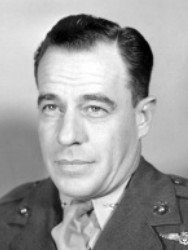
December 16, 1911
–
August 7, 1998
Awards Received
-

Silver Star
-

Distinguished Flying Cross
-

Legion of Merit
-
Silver Star
-
Silver Star
Service:
United States Marine CorpsRank:
MajorRegiment:
Marine Aircraft Group 14Action Date:
December 23 & 24, 1942
The President of the United States of America takes pleasure in presenting the Silver Star to Major Donald Keith Yost (MCSN: 0-5453), United States Marine Corps, for conspicuous gallantry and intrepidity in action as leader of a flight of fighter planes attached to Marine Aircraft Group FOURTEEN, FIRST Marine Aircraft Wing, in combat with enemy Japanese forces in the Solomon Islands Area on 23 and 24 December 1942. Leading his group of four fighters as escort for our dive bombers attacking Japanese land installations at Munda Point, Major Yost daringly intercepted enemy planes attacking the bombers and, despite heavy anti-aircraft fire, destroyed two of the hostile planes and completely disrupted the assault. The following day, he again led his command against the enemy with such outstanding skill and grim determination that ten Zeros were shot down, he, himself, accounting for four of them. His superb leadership and indomitable fighting spirit reflect great credit upon himself, his command, and the United States Naval Service.
-
Distinguished Flying Cross
Heroes U.S. Marine Corps 1861 – 1955 (Jane Blakeney)(Citation Needed) – SYNOPSIS: Major Donald Keith Yost (MCSN: 0-5453), United States Marine Corps, was awarded the Distinguished Flying Cross for extraordinary achievement while participating in aerial flight as Pilot of a Marine Fighter Airplane, in action against enemy Japanese forces in the Pacific War Area during World War II.
-
Legion of Merit
Heroes U.S. Marine Corps, 1861 – 1955: Jane Blakeney(Citation Needed) – SYNOPSIS: Donald Keith Yost (MCSN: 0-5453), United States Marine Corps, was awarded the Legion of Merit for exceptionally meritorious conduct in the performance of outstanding services to the Government of the United States in Korea during the period from 18 October through 18 December 1950.
-
Silver Star
Service:
United States Marine CorpsRank:
Lieutenant ColonelBatallion:
Headquarters Squadron 12Division:
1st Marine Aircraft WingAction Date:
July 29, 1951
The President of the United States of America takes pleasure in presenting a Gold Star in lieu of a Second Award of the Silver Star to Lieutenant Colonel Donald Keith Yost (MCSN: 0-5453), United States Marine Corps, for conspicuous gallantry and intrepidity as a Flight Leader and Pilot of a Plane in Headquarters Squadron TWELVE in action against enemy aggressor forces in Korea on 29 July 1951. Assigned the mission of leading a thirty-plane strike on heavily fortified military installations in the hostile capital of Pyongyang, Korea, Lieutenant Colonel Yost skillfully conducted the flight to the target area despite adverse flying conditions. In the face of intense and accurate, radar controlled anti-aircraft fire, he pressed home dangerous, low-level attacks to inflict maximum destruction on the enemy and, by his courageous example and leadership, inspired the members of the flight to carry out bold runs on the hostile positions. Skillfully employing offensive as well as defensive tactics while coordinating the fire power of his group, he was primarily responsible for demolishing the enemy’s radio station and an adjacent power plant with minimum damage to the aircraft in his group. An aggressive and daring airman, Lieutenant Colonel Yost, by his indomitable fighting spirit and inspiring devotion to duty, inflicted great damage on the enemy before leading the planes safely to base, thereby upholding the highest traditions of the United States Naval Service.