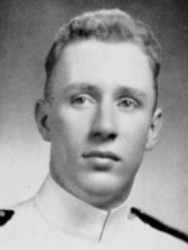
James Powell graduated from the U.S. Naval Academy at Annapolis, Class of 1950. He had the distinction of leading the first “slick wing” Alpha Strike of the Vietnam War. He retired as a U.S. Navy Captain.

Sponsored by:

James
Richard
Powell
Jr.
Home:
Flushing, Long Island
,
New York
Awards Received
-
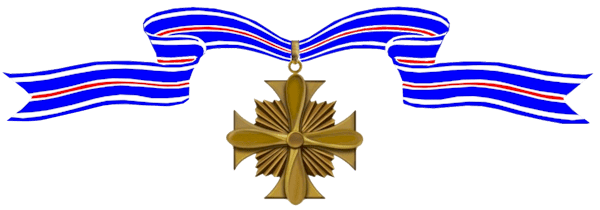
Distinguished Flying Cross
-
Distinguished Flying Cross
-
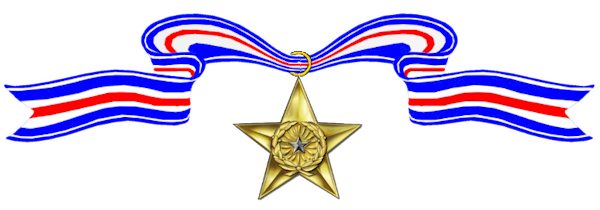
Silver Star
-
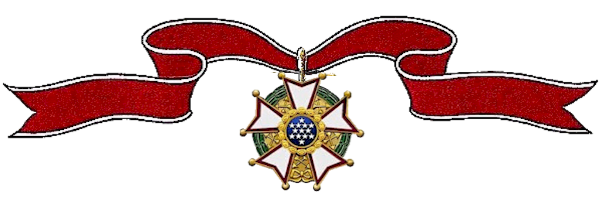
Legion of Merit
-
Distinguished Flying Cross
-
Distinguished Flying Cross
-
Distinguished Flying Cross
Service:
United States NavyRank:
CommanderBatallion:
Attack Squadron 144 (VA-144)Division:
U.S.S. Kitty Hawk (CVA-63)Action Date:
January 20, 1967
The President of the United States of America takes pleasure in presenting a Third Gold Star in lieu of a Fourth Award of the Distinguished Flying Cross to Commander James Richard Powell, Jr. (NSN: 0-533106/1310), United States Navy, for heroism and extraordinary achievement while participating in aerial flight as a pilot of a jet attack aircraft, while serving as Commanding Officer of Attack Squadron ONE HUNDRED FORTY-FOUR (VA-144), embarked in U.S.S. KITTY HAWK (CVA-63), while leading a major Air Wing strike against the North Vietnamese city of Dong Phong Thuong on the afternoon of 20 January 1967. As strike leader for the 24 aircraft strike, Commander Powell planned and led the final in a series of major Air Wing strikes intended to devastate this vital transshipment point. On approaching the target one surface-to-air missile passed through the group but was successfully outmaneuvered. In the target area continuous missile warnings were received but had to be disregarded in order to effect the proper attack coordination required for a successful multi-element attack and minimize exposure to the heavy enemy anti-aircraft artillery fire coming from the target area. Courageously and purposefully leading his attack element in on the last remaining bridge across the Song Len River, Commander Powell rolled his element in to the attack and with precise weapons delivery placed all his bombs on the southern anchorage point despite an enemy missile which pursued him in the attack and ultimately exploded in the target area. His skillful airmanship and aggressive leadership resulted in the severing of this last bridge link to the south of this important transshipment complex. Commander Powell’s astute planning and knowledge of his attack assets were highly instrumental in delivering the final devastating attack on this vital enemy line of communication while exposing the strike group to concentrated enemy fire for a minimal period of time. His personal courage, precision bombing and prosecution of the mission in the face of determined enemy defenses were in keeping with the highest traditions of the United States Naval Service.
-
Distinguished Flying Cross
Service:
United States NavyRank:
CommanderBatallion:
Attack Squadron 144 (VA-144)Division:
U.S.S. Kitty Hawk (CVA-63)Action Date:
December 13, 1966
The President of the United States of America takes pleasure in presenting a Second Gold Star in lieu of a Third Award of the Distinguished Flying Cross to Commander James Richard Powell, Jr. (NSN: 0-533106/1310), United States Navy, for extraordinary achievement while participating in aerial flight as a pilot of an F-4 jet attack aircraft, while attached to and serving with Attack Squadron ONE HUNDRED FORTY-FOUR (VA-144), embarked in U.S.S. KITTY HAWK (CVA-63), in the Republic of Vietnam on 13 December 1966. Commander Powell was assigned as an “Ironhand” element leader in a major Air Wing strike on the Van Dien Vehicle Depot just five miles south of the heavily defended city of Hanoi. He assisted in the planning of the en route tactics to be employed by the “Ironhand” group and modified the original weaponeering of the A-4’s employed on this mission in order to gain the best possible ordnance mix the aircraft was capable of carrying for anti-surface-to-air missile attacks and anti-aircraft artillery suppression, as well as providing en route protection for downed aircraft. En route to the target area he deliberately over-flew known SAM installations that were obscured by clouds in order to detract from the main strike group. In the target area the “Ironhand” element was severely hampered by haze and clouds and was unable to acquire visually the launching sites of any of the several SAMs that were fired at the main strike group. Undaunted, and in the face of some of the heaviest enemy fire experienced to date, Commander Powell diverted to a pre-briefed SAM installation in the target area and on discovering that the site was not occupied made a highly successful rocket attack on an enemy anti-aircraft artillery complex that posed a significant threat to F-4 strike aircraft on their pull-off from the main target. A rocket attack was also made on a warehouse in the target area that resulted in a large secondary explosion and fire. During the entire time in the target area Commander Powell alertly countered enemy fire control radars both electronically and through physical means, thereby enhancing the safety and effectiveness of the main strike group. Although receiving heavy anti-aircraft and continuous missile fire prior to reaching, and in, the target area, there were no losses of strike aircraft. Commander Powell’s personal courage, aggressive leadership and precision rocketry in the face of determined enemy fire were in keeping with the highest traditions of the United States Naval Service.
-
Silver Star
Service:
United States NavyRank:
CommanderBatallion:
Attack Squadron 144 (VA-144)Division:
U.S.S. Kitty Hawk (CVA-63)Action Date:
April 20, 1967
The President of the United States of America takes pleasure in presenting the Silver Star to Commander James Richard Powell, Jr. (NSN: 0-533106/1310), United States Navy, for extraordinary heroism in aerial combat in Jet Aircraft while serving as Commanding Officer of Attack Squadron ONE HUNDRED FORTY-FOUR (VA-144), embarked in U.S.S. KITTY HAWK (CVA-63), on the afternoon of 20 April 1967 during a combat mission against the thermal power plant (west) in the vital North Vietnamese port city of Haiphong. As strike leader of a flight of twenty strike aircraft and eighteen support aircraft, Commander Powell planned the strike against the thermal power plant west of Haiphong, North Vietnam, and personally led the thirteen aircraft strike element, the only aircraft assigned directly on the area. Approaching the target, the strike group encountered heavy anti-aircraft fire and outmaneuvered four enemy surface-to-air missiles. In a remarkable display of disciplined airmanship, Commander Powell led by diving into his attack until all aircraft were in optimum position to effect maximum coordination. This action was taken despite two surface-to-air missiles which passed directly through, but exploded several hundred feet from the flight. In the face of continuous, determined enemy fire, Commander Powell attacked the power plant and personally placed his one 2,000-pound and two 1,0000-pound bombs on a support building, razing it, and damaging the western portion of the boiler-generator house. As a result of this outstanding attack, the power plant was rendered inoperative. By his outstanding professional competence, valiant leadership, aggressive actions and loyal devotion to duty, Commander Powell upheld the highest traditions of the United States Naval Service.
-
Legion of Merit
The President of the United States of America takes pleasure in presenting the Legion of Merit to Captain James Richard Powell, Jr. (NSN: 0-533106/1310), United States Navy, for exceptionally meritorious conduct in the performance of outstanding services to the Government of the United States as Executive Assistant and Naval Aide to the Assistant Secretary of the Navy for Manpower and Reserve Affairs from February 1971 to February 1973. An exceptionally capable manager and leader, Captain Powell has consistently demonstrated a complete grasp of the many functions assigned the office of the Assistant Secretary of the Navy (Manpower and Reserve Affairs). Well versed in the management of civilian and military manpower and in the complexities of the Naval and Marine Corps Reserve, he has provided sound advice and wise counsel in decisions affecting the lives and careers of the sailors, Marines and civilians of the Department of the Navy. He has exhibited a rare appreciation for the long-term implications of various actions critical to the national defense. A tireless worker himself, Captain Powell superbly guided the personal staff of military and civilian personnel. Captain Powell has been especially effective in promoting outstanding working relationships with every segment of the Department of Defense concerned with manpower and reserve matters. His outstanding leadership, sound judgment, and inspiring devotion to duty throughout were in keeping with the highest traditions of the United States Naval Service.
-
Distinguished Flying Cross
Service:
United States NavyRank:
CommanderBatallion:
Attack Squadron 144 (VA-144)Division:
U.S.S. Kitty Hawk (CVA-63)Action Date:
December 24, 1965
The President of the United States of America takes pleasure in presenting the Distinguished Flying Cross to Commander James Richard Powell, Jr. (NSN: 0-533106/1310), United States Navy, for heroism and extraordinary achievement while participating in aerial flight as a pilot of jet aircraft, while attached to and serving with Attack Squadron ONE HUNDRED FORTY-FOUR (VA-144), embarked in U.S.S. KITTY HAWK (CVA-63), during a combat mission on 24 December 1965. Less than two hours prior to launch, Commander Powell, as the division leader of four A-4 aircraft, was assigned a priority special mission of reconnoitering and attacking Ben Thuy, the port facility of Vinh, North Vietnam. He skillfully planned the navigation and weaponeering for the target, then successfully led his flight to the coast-in-point through marginal weather. As pre-planned he then left his flight safely orbiting seven to ten miles at sea and proceeded into the target area alone. Although faced with heavy anti-aircraft fire and poor weather, he successfully located targets of opportunity and relayed them to his waiting flight in reference to pre-briefed positions of prominence. He simultaneously executed a low-level strafing attack in the warehouse area thereby occupying the attention of the anti-aircraft batteries and enabling his flight to commence their attacks from a different direction under the cover of terrain masking and weather. Although faced with a control hydraulic failure and unsafe landing gear indications which were strongly indicative of ground fire damage, Commander Powell, with complete disregard for his own personal safety, completed a successful re-attack of the warehouse area with rockets in company with his division. Commander Powell’s brilliant planning, personal courage, aggressive leadership, and outstanding airmanship were inspirational to his flight and contributed significantly to the successful completion of the mission with no damage to aircraft. His heroic actions under heavy enemy opposition were in keeping with the highest traditions of the United States Naval Service.
-
Distinguished Flying Cross
Service:
United States NavyRank:
CommanderBatallion:
Attack Squadron 145 (VA-145)Division:
U.S.S. Ticonderoga (CVA-14)Action Date:
April 12, 1966
The President of the United States of America takes pleasure in presenting a Gold Star in lieu of a Second Award of the Distinguished Flying Cross to Commander James Richard Powell, Jr. (NSN: 0-533106/1310), United States Navy, for heroism and extraordinary achievement while participating in aerial flight in jet aircraft as a combat pilot of an A-4 aircraft on 12 April 1966, while serving with Attack Squadron ONE HUNDRED FORTY-FIVE (VA-145), embarked in U.S.S. TICONDEROGA (CVA-14). Commander Powell was assigned as strike leader of a group of sixteen A-4 and four F-8 aircraft whose mission was to destroy the Tam Yuan Thong Highway Bridges and Gia Hoa Transshipment and Supply Depot located in the heavily defended Vinh/Ben Thuy complex of North Vietnam. Commander Powell planned the strike in detail and briefed the flight both on the primary target and a weather alternate target. For the weaponeering, the A-4C aircraft were loaded with two 1,000 pound bombs and one 2,000 pound bomb; carrying no external fuel. Expeditiously rendezvousing his 20 strike aircraft and demonstrating precise navigation, he successfully led the flight to the coast-in-point through inclement weather which occasionally forced them to altitudes less than 100 feet. He skillfully maneuvered the entire strike group using terrain masking and cloud layers for deception. Although receiving heavy anti-aircraft and automatic weapons fire and despite continuous surface-to-air missile alerts, there were no losses of strike aircraft. His skillful airmanship and aggressiveness as a leader enabled him to position the entire strike group in such a manner as to permit a highly effective, coordinated strike, while exposing the group to concentrated enemy fire for a minimal period of time. His accurate maneuvering and determined attack resulted in the complete destruction of the primary bridge, the crippling of another bridge, and devastation of the Transshipment Supply Depot. Commander Powell’s imaginative weaponeering, personal courage, aggressive leadership and precision bomber were in keeping with the highest traditions of the United States Naval Service.