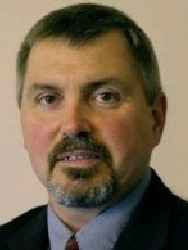
Paul Ratte graduated from the U.S. Coast Guard Academy, New London, Connecticut, Class of 1984.

Sponsored by:

Paul
S.
Ratte
Home:
Mobile
,
Alabama
Awards Received
-
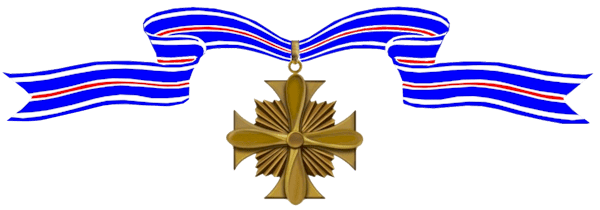
Distinguished Flying Cross
-
Distinguished Flying Cross
-
Distinguished Flying Cross
Service:
United States Coast GuardRank:
Lieutenant CommanderAction Date:
January 22, 1999
The President of the United States of America takes pleasure in presenting the Distinguished Flying Cross to Lieutenant Commander Paul S. Ratte, United States Coast Guard, for extraordinary achievement while participating in aerial flight as Aircraft Commander aboard Coast Guard helicopter 6023 on 22 January 1999. The crew was engaged in the perilous night rescue of six crewmen from the fishing vessel NOWITNA, which was disabled and taking on water in heavy seas 75 miles northwest of Cold Bay, Alaska. Dispatched from St. Paul Island, Alaska, Lieutenant Commander Ratte led his crew on a 200 mile transit through turbulent 45-knot headwinds, 1/2 mile visibility, freezing rain and snow showers. Arriving on scene, Lieutenant Commander Ratte relied entirely on night vision goggles to evaluate the powerless crabbier as darkness, sea spray, and horizontal rain rendered unaided visual impossible. Wind gusts of 60 knots and 30-foot rogue waves were hammering the NOWITNA, which listed and rolled precariously. As Lieutenant Commander Ratte performed an instrument approach to the stricken vessel, CG6023 experienced an Automatic Flight Control System failure. Displaying exceptional situation awareness, he expertly continued a manual descent to a hover. Lieutenant Commander Ratte then skillfully maneuvered the helicopter directly over the heaving deck between the pilothouse antennas and towering foremast. Despite losing visual references, he maintained a stable hover while the flight mechanic attempted to put a trail line on deck between the wildly swaying mast and antennas. Several attempts to deliver a trail line amidships failed as the line repeatedly sailed aft in the wind and eventually got tangled on the ship’s gyrating rigging. Undaunted, Lieutenant Commander Ratte repositioned the helicopter upwind of the violently pitching and rolling ship. With a narrow view of the pilothouse for reference, he maneuvered CG6023 over the vessel’s bow directly in front of the foremast, enabling his flight mechanic to deliver the trail line. One by one, the survivors were hoisted from the hazardous deck. As the third man was to be lifted, the NOWITNA’s bow settled violently into a wave causing the basket to leave the deck prematurely, narrowly missing the ship’s rigging which snagged the dangling trail line and caused it to part. During the final hoist, the only remaining trail line became fouled on the vessel’s mast. Relying solely on crew conning commands, Lieutenant Commander Ratte deftly hovered in a counterclockwise semi-circle to free the trail line and deliver it to the remaining crewman who was quickly lifted from the deck. After nearly an hour of intense hoisting efforts, all six NOWITNA crewmen were safely on board CG6023 and en route Cold Bay, Alaska. Lieutenant Commander Ratte’s actions, aeronautical skill, and valor were instrumental in the rescue of the fishing vessel NOWITNA’s six crewmen. His courage, judgment, and devotion to duty are most heartily commended and are in keeping with the highest traditions of the United States Coast Guard.
-
Distinguished Flying Cross
Service:
United States Coast GuardRank:
Lieutenant CommanderAction Date:
February 3, 1999
The President of the United States of America takes pleasure in presenting a Gold Star in lieu of a Second Award of the Distinguished Flying Cross to Lieutenant Commander Paul S. Ratte, United States Coast Guard, for extraordinary achievement while participating in aerial flight on the night of 3 February 1999 as aircraft commander aboard Coast Guard helicopter CG6017. Responding to a MAYDAY broadcast from the fishing vessel NORTHERN AURORA, Lieutenant Commander Ratte and his crew flew 165 miles to the last known position of the vessel. On scene, CG6017 encountered visibility of 25 yards in heavy ice fog, heavy turbulence, and a 35-knot wind that produced eight-foot seas. Conducting a perilous search in a narrow bay ringed by 4000- foot mountains, Lieutenant Commander Ratte spotted a dim erratic glow in the darkness. He commenced an instrument approach to the water to investigate the source of the light. While conducting a 200-foot hover above the water, and while attempting to reference the surface through bands of thick, vertigo inducing fog, Lieutenant Commander Ratte was able to locate the light source and identify it as a man in a survival suit wielding a flashlight. While positioning the helicopter in a low hover, Lieutenant Commander Ratte as the sole flight crewmember who had visual contact with the light, experienced extreme difficulty keeping the survivor in sight. In addition to the challenges of maintaining contact with the survivor, the entire crew battled disorientating conditions that threatened to cause the pilots to lose control of the helicopter. Using a combination of manual and coupled hover techniques, the crew coordinated their efforts to successfully deliver the rescue basket during a momentary break in the fog. This rescue, in severe weather, required the complete coordination and focus of the entire crew. The high winds, heavy turbulence, darkness, fog and close proximity to dangerous terrain made the entire evolution a demanding rescue with no margin for error. Lieutenant Commander Ratte’s actions, aeronautical skill, and valor were instrumental in the rescue of a person who would have otherwise perished. His courage, judgment, and devotion to duty are most heartily commended and are in keeping with the highest traditions of the United States Coast Guard.