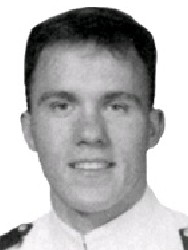
Thomas Cooper graduated from the U.S. Coast Guard Academy, New London, Connecticut, Class of 1994.

Sponsored by:

Thomas
F.
Cooper
Awards Received
-
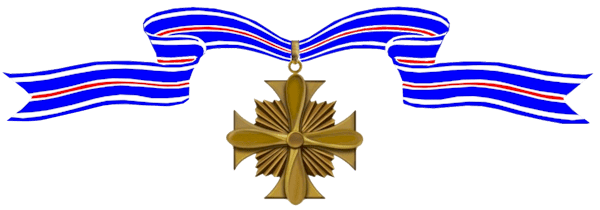
Distinguished Flying Cross
-
Distinguished Flying Cross
Service:
United States Coast GuardRank:
LieutenantAction Date:
August 29 – September 6, 2005
The President of the United States of America takes pleasure in presenting the Distinguished Flying Cross to Lieutenant Thomas F. Cooper, United States Coast Guard, for extraordinary achievement while participating in aerial flight from 29 August to 6 September 2005, while serving as Aircraft Commander aboard Coast Guard HH-65B helicopters in response to Hurricane KATRINA. Demonstrating exceptional aeronautical skill and judgment, and innovative rescue techniques, he saved numerous survivors from treacherous conditions during 15 sorties, totaling over 29 day and night flight hours, including 13 hours as a single pilot. He repeatedly and skillfully pushed the power-limited HU-65B to the very edge of its performance envelope, in close proximity to unlit hazards, despite continuous reports of violence and shots fired, thousands of distressed survivors needing rescue, and the constant threat of midair collision in the highly congested and uncontrolled airspace. As the first aircraft on scene after the storm’s passage, his initial recommendations laid the procedural foundation for the entire air rescue operation. Battling winds in excess of 50 knots, he adeptly hoisted a pregnant woman from a small, constricted balcony, the first rescue in metropolitan New Orleans. Most notably, he completed a pinpoint vertical rescue swimmer pick-up of a 400 pound, non-ambulatory survivor directly from her second story bed through the damaged rafters and roof. In addition, he held a precise hover within five feet of power lines at night to deftly thread the hoist cable through a web of obstructions, saving an elderly couple off a small third story porch. Balancing power limitations against the urgent need to hoist survivors as floodwaters rose; he landed “light” on a semi-rigid rooftop, rescuing 12 trapped people. He kept his crew focused in the face of an overwhelming disaster and the stress of repeated life or death decisions about who to rescue and who to leave behind. He intrepidly continued hoisting and saving lives after being warned by authorities about a toxic cloud of hydrogen sulfide in the area, refusing to abandon the mission. Lieutenant Commander Cooper’s actions, aeronautical skill, and valor were instrumental in the rescue of 146 victims. His courage, judgment and devotion to duty are most heartily commended and are in keeping with the highest traditions of the United States Coast Guard.