Carl Crumpler was interned as a Prisoner of War in North Vietnam after he was shot down on July 5, 1968 and was held until his release on March 14, 1973..

Sponsored by:

Carl
Boyette
Crumpler
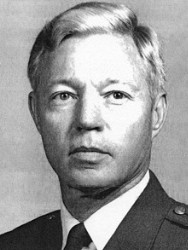
POW (RVN)
July 2, 1927
–
Awards Received
-

Legion of Merit
-
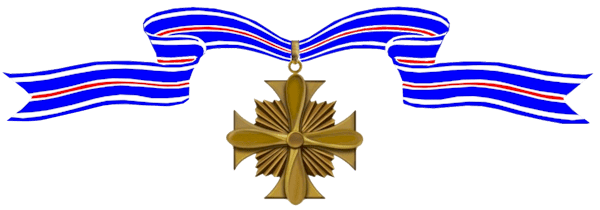
Distinguished Flying Cross
-
Legion of Merit
-

Prisoner of War Medal
-
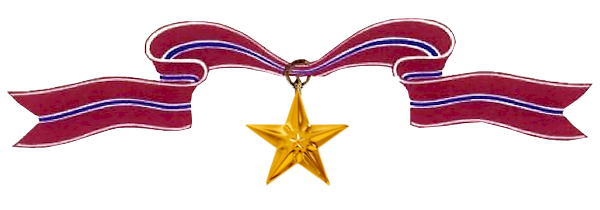
Bronze Star Medal
-
Bronze Star Medal
-
Legion of Merit
Service:
United States Air ForceRank:
ColonelDivision:
Prisoner of War (North Vietnam)Action Date:
August 1970 – February 1973
The President of the United States of America, authorized by Act of Congress, 20 July 1942, takes pleasure in presenting a Bronze Oak Leaf Cluster in lieu of a Second Award of the Legion of Merit to Colonel Carl Boyette Crumpler (AFSN: AO-1857483), United States Air Force, for exceptionally meritorious conduct in the performance of outstanding services to the Government of the United States in dealing with highly classified material while detained as a Prisoner of War in North Vietnam. As a leader and staff advisor, Colonel Crumpler successfully coped with daily problems which required patience, perseverance and at times ingenuity. He performed his duties in an outstanding manner over long periods of time with dedication and unflinching loyalty which reflected great credit upon himself and the United States Air Force.
-
Distinguished Flying Cross
The President of the United States of America, authorized by Act of Congress, July 2, 1926, takes pleasure in presenting the Distinguished Flying Cross to Lieutenant Colonel Carl Boyette Crumpler (AFSN: AO-1857483), United States Air Force, for heroism while participating in aerial flight as an F-4D Aircraft Commander in Southeast Asia on 5 July 1968. On that date, Colonel Crumpler was a member of a flight directed to attack a vital military target in North Vietnam. Without thought of personal safety and with selfless devotion to duty while under extremely heavy hostile fire, Colonel Crumpler successfully silenced four anti-aircraft artillery sites. As he pulled off the target his aircraft received a direct hit from the withering fire of the hostile defenses. Through his professional aerial skill and courage Colonel Crumpler was able to withdraw from the target area. The outstanding professionalism and selfless devotion to duty displayed by Colonel Crumpler reflect great credit upon himself and the United States Air Force.
-
Legion of Merit
Service:
United States Air ForceRank:
ColonelDivision:
Prisoner of War (North Vietnam)Action Date:
July 1968 – July 1971
The President of the United States of America, authorized by Act of Congress, 20 July 1942, takes pleasure in presenting the Legion of Merit to Colonel Carl Boyette Crumpler (AFSN: AO-1857483), United States Air Force, for exceptionally meritorious conduct in the performance of outstanding services to the Government of the United States as a Prisoner of War in North Vietnam from July 1968 to July 1971. His ceaseless efforts, by a continuous showing of resistance to an enemy who ignored all international agreements on treatment of Prisoners of War, in the extremely adverse conditions of the communist prisons of North Vietnam, demonstrated his professional competence, unwavering devotion, and loyalty to his country. Despite the harsh treatment through his long years of incarceration, he continued to perform his duties in a clearly exceptional manner which reflected great credit upon himself and the United States Air Force.
-
Prisoner of War Medal
Service:
United States Air ForceRank:
ColonelDivision:
Prisoner of War (North Vietnam)Action Date:
July 5, 1968 – March 14, 1973
Colonel Carl Boyette Crumpler (AFSN: AO-1857483), United States Air Force, was held as a Prisoner of War in North Vietnam from July 5, 1968 until his release on March 14, 1973.
-
Bronze Star Medal
Service:
United States Air ForceRank:
ColonelDivision:
Prisoner of War (North Vietnam)Action Date:
August 1968
The President of the United States of America, authorized by Executive Order 11046, 24 August 1962, takes pleasure in presenting a Bronze Oak Leaf Cluster in lieu of a Second Award of the Bronze Star Medal with Combat “V” to Colonel Carl Boyette Crumpler (AFSN: AO-1857483), United States Air Force, for heroic actions against an opposing armed force while serving as a Prisoner of War in North Vietnam in August 1968. During this period, Colonel Crumpler, at great risk of his personal safety, cared for two crippled Americans and carried them from the area of capture to a place of safety while under heavy harassment of infuriated and sometimes hysterical villagers. Had it not been for the courage of Colonel Crumpler, these men hay never have reached Hanoi alive. By his courageous actions and humanitarian regard for his fellowman, Colonel Crumpler reflected great credit upon himself and upheld the highest traditions of the United States Air Force.
-
Bronze Star Medal
Service:
United States Air ForceRank:
ColonelDivision:
Prisoner of War (North Vietnam)Action Date:
January 1971 – September 1972
The President of the United States of America, authorized by Executive Order 11046, 24 August 1962, takes pleasure in presenting the Bronze Star Medal with Combat “V” to Colonel Carl Boyette Crumpler (AFSN: AO-1857483), United States Air Force, for heroic achievement as a Prisoner of War while engaged in operations against an opposing armed force in North Vietnam during the period January 1971 to September 1972. In an atmosphere of enemy harassment and brutal treatment, he continued to establish and maintain communications through unusual and ingenious methods, which resulted in American and Allied prisoners presenting a posture of increased resistance to the enemy’s wishes, and, at the same time, improving prisoner morale. By his heroic endeavors and devotion to duty under adverse conditions of his environment, he reflected great credit upon himself and upheld the highest traditions of the United States Air Force.