William Hennig graduated from the U.S. Military Academy at West Point, Class of 1928. He retired with disability in 1964 as a U.S. Army Major General.

Sponsored by:

William
Henry
Hennig
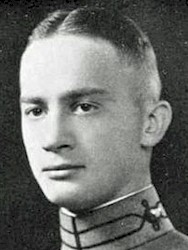
February 22, 1906
–
February 26, 1981
Cemetery:
Evergreen Cemetery
Awards Received
-
Legion of Merit
-
Silver Star
-
Army Distinguished Service Medal
-
Legion of Merit
-
Legion of Merit
Service:
United States ArmyRank:
Colonel (Coast Artillery Corps)Action Date:
1943 – 1945
United States Military Academy Register of Graduates(Citation Needed) – SYNOPSIS: Colonel (Coast Artillery Corps) William Henry Hennig (ASN: 0-17122), United States Army, was awarded the Legion of Merit for exceptionally meritorious conduct in the performance of outstanding services to the Government of the United States as Chief, Military Mission to Guatemala, from 1943 to 1945.
-
Silver Star
Service:
United States ArmyRank:
Colonel (Coast Artillery Corps)Regiment:
10th Anti-Aircraft Artillery GroupAction Date:
October 25 – November 2, 1950
Headquarters, I Corps, General Orders No. 14 (1951)The President of the United States of America, authorized by Act of Congress July 9, 1918, takes pleasure in presenting the Silver Star to Colonel (Coast Artillery Corps) William Henry Hennig (ASN: 0-17122), United States Army, for outstanding gallantry in action against the enemy while Commanding the 10th Anti-Aircraft Artillery Group, near Unsan, Korea, between 25 October 1950 and 2 November 1950. During this period, the 10th Anti-Aircraft Artillery Group and attached artillery battalions were deployed around Unsan with the mission of supporting the 1st Republic of Korea Infantry Division, which held an advanced salient to the north of Unsan. On the afternoon of 25 October 1950 this division made its initial contact with the Chinese Communist forces which immediately launched strong enveloping attacks. A night disengagement and withdrawal was under consideration by elements of the division when Colonel Hennig’s decision to hold all elements of his command in their exposed positions, and the effectiveness of the defensive fires which he personally directed, assisted the supported units in determining to hold their positions and thus avoid the hazards incident to a night withdrawal under enemy attack. During the entire period the enemy aggressively pressed his attack both day and night, but Colonel Hennig’s cool, skillful handling of his units’ fires held the numerically superior enemy in check until the night of 1-2 November 1950 when the division was attacked by Overwhelming numbers of the enemy. Colonel Hennig maintained his command post in Unsan and continued directing defensive fires and coordinating displacement of his units in such a way that an orderly withdrawal, with minimum loss of personnel and equipment, was effected while continuing to inflict maximum destruction on the enemy. Colonel Hennig only withdrew his command post from Unsan after all his units had withdrawn to more tenable positions and the command post itself was under enemy fire and threatened with encirclement. Colonel Hennig’s persistence, cool courage, and professional skill under extremely hazardous and difficult conditions are in the highest traditions of and reflect utmost credit upon the military service of the United States.
-
Army Distinguished Service Medal
Department of the Army, General Orders No. 25 (July 31, 1964)The President of the United States of America, authorized by Act of Congress July 9, 1918, takes pleasure in presenting the Army Distinguished Service Medal to Major General William Henry Hennig (ASN: 0-17122), United States Army, for exceptionally meritorious and distinguished services to the Government of the United States, in a duty of great responsibility, during the period from August 1954 through June 1964.
-
Legion of Merit
Service:
United States ArmyRank:
Colonel (Coast Artillery Corps)Regiment:
10th Anti-Aircraft Artillery GroupAction Date:
September 17, 1950 – February 5, 1952
Department of the Army, General Orders No. 42 (April 23, 1952)The President of the United States of America, authorized by Act of Congress, 20 July 1942, takes pleasure in presenting a Bronze Oak Leaf Cluster in lieu of a Second Award of the Legion of Merit to Colonel (Coast Artillery Corps) William Henry Hennig (ASN: 0-17122), United States Army, for exceptionally meritorious conduct in the performance of outstanding services to the Government of the United States as Commanding Officer, 10th Anti-Aircraft Artillery Group, in Korea, from 17 September 1950 to 5 February 1952. (This award supersedes the award of the Legion of Merit (First Oak Leaf Cluster) to Colonel Hennig, for meritorious service from 17 September to 2 November 1950, published in General Orders 14, Headquarters Far East Command, 23 January 1951.)