Charles Loughlin graduated from the U.S. Naval Academy at Annapolis, Class of 1933. He retired as a U.S. Navy Rear Admiral.

Sponsored by:

Charles
Elliott
Loughlin
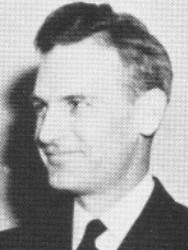
February 19, 1910
–
October 31, 1989
Awards Received
-
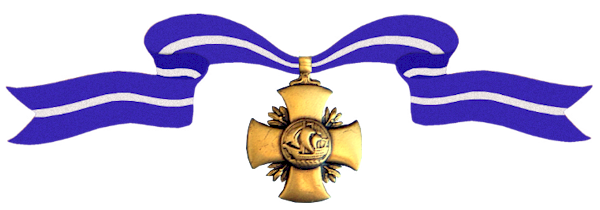
Navy Cross
-
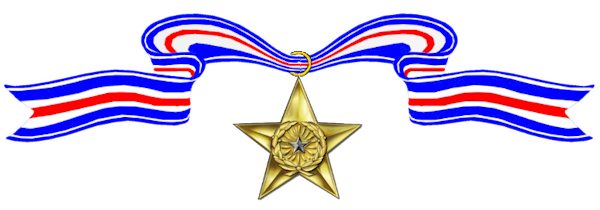
Silver Star
-
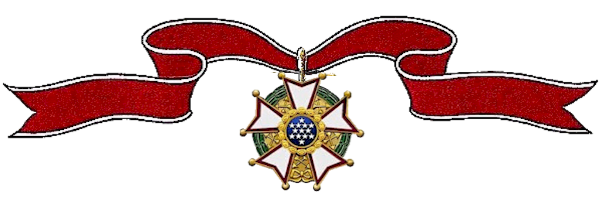
Legion of Merit
-
Legion of Merit
-
Navy Cross
-
Navy Cross
Service:
United States NavyRank:
CommanderDivision:
U.S.S. Queenfish (SS-393)Action Date:
October 27 – December 2, 1944
Commander in Chief Pacific: Serial 01661 (February 25, 1945)The President of the United States of America takes pleasure in presenting a Gold Star in lieu of a Second Award of the Navy Cross to Commander Charles Elliott Loughlin (NSN: 0-72307/1100), United States Navy, for extraordinary heroism in the line of his profession as Commanding Officer of the U.S.S. QUEENFISH (SS-393), on the SECOND War Patrol of that submarine in enemy Japanese-controlled waters in the Pacific War Area, from 27 October to 2 December 1944. A skilled and aggressive leader, Commander Loughlin penetrated strong hostile escort screens to launch repeated attacks against hostile shipping and, by his courage and determination, succeeded in sinking a total of 35,300 tons and in damaging 10,000 tons. His superb ship-handling in evading severe Japanese countermeasures saved his ship from possible disaster and his devotion to duty throughout reflects the highest credit upon Commander Loughlin and the United States Naval Service.
-
Silver Star
Service:
United States NavyRank:
CommanderDivision:
U.S.S. Queenfish (SS-393)Action Date:
December 29, 1944 – January 29, 1945
Commander in Chief Pacific: Serial 03552 (1945)The President of the United States of America takes pleasure in presenting the Silver Star to Commander Charles Elliott Loughlin (NSN: 0-72307/1100), United States Navy, for conspicuous gallantry and intrepidity in action as Commanding Officer of the U.S.S. QUEENFISH (SS-393), during the THIRD War Patrol of that submarine in enemy Japanese-controlled waters in the Formosa Straits and waters adjacent to the China Coast, from 29 December 1944 to 29 January 1945. Skillfully penetrating strong enemy escort screens to launch well-planned and smartly executed torpedo attacks, Commander Loughlin sank an enemy tanker of 10,000 tons and, in conjunction with other submarines of his group, sank a 300-ton enemy patrol craft by gunfire. As Group Commander, he contributed materially to the success of his command in sinking eight enemy ships totaling 60,000 tons and successfully evaded strong enemy anti-submarine measures. His skill, courage and devotion to duty were in keeping with the highest traditions of the United States Naval Service.
-
Legion of Merit
The President of the United States of America takes pleasure in presenting a Gold Star in lieu of a Second Award of the Legion of Merit to Rear Admiral Charles Elliott Loughlin (NSN: 0-72307/1100), United States Navy, for exceptionally meritorious conduct in the performance of outstanding services to the Government of the United States from October 1966 to June 1968 as Commandant, Naval District, Washington, D.C. Exercising outstanding leadership, tact, and judgment, Rear Admiral Loughlin successfully directed and supervised the efforts of the large, diversified complex of naval activities that comprise his command, all of which are dedicated to the mission of Fleet support. Under his command, military-civilian relationships have been enhanced, leading to an increased awareness of the important role played by the Navy in the community. Rear Admiral Loughlin maintained close contact with civilian leaders in his area of coordination with a resultant increase in integrated off-base housing for military personnel. Further, he coordinated the Navy Youth Opportunity Program and Civil Disturbance Plan for his area of command. He established policies which encourage, and has personally fostered, the closest cooperation among the Navy and the other services as well as with civilian groups. By his outstanding leadership, foresight, and keen intellect, Rear Admiral Loughlin has significantly enhanced the material effectiveness of his complex command, and has upheld the highest traditions of the United States Naval Service.
-
Legion of Merit
Service:
United States NavyRank:
Rear AdmiralAction Date:
August 24, 1964 – September 24, 1966
The President of the United States of America takes pleasure in presenting the Legion of Merit to Rear Admiral Charles Elliott Loughlin (NSN: 0-72307/1100), United States Navy, for exceptionally meritorious conduct in the performance of outstanding services to the Government of the United States as Commander Submarine Flotilla SIX from 24 August 1964 to 24 September 1966. As an extremely competent and resourceful leader, Rear Admiral Loughlin exercised military and operational command over a major portion of the Submarine Force, U.S. Atlantic Fleet during a period of unprecedented growth. In particular, he supervised the post construction and post overhaul pre-deployment training, Demonstration and Shakedown Operations (DASO) and tactical load out periods for the Fleet Ballistic Missile Submarines in an exemplary manner. By virtue of dynamic leadership and outstanding professional knowledge, he ensured the successful operation of two SSBN replenishment sites and the effective functioning of off crew support operations at Charleston, South Carolina. Rear Admiral Loughlin further has proven to be a most articulate and impressive spokesman for the Navy. In carrying out all of the foregoing duties, as well as the additional NATO duty of Commander Submarine Force, Eastern Atlantic Area (Designate), Rear Admiral Loughlin has demonstrated the finest degree of judgment and an inspiring devotion to duty which has been fully in keeping with the highest traditions of the United States Naval Service.
-
Navy Cross
Service:
United States NavyRank:
CommanderDivision:
U.S.S. Queenfish (SS-393)Action Date:
August 4 – October 3, 1944
Pacific Fleet Board Awards: Serial 80 (January 5, 1945)The President of the United States of America takes pleasure in presenting the Navy Cross to Commander Charles Elliott Loughlin (NSN: 0-72307/1100), United States Navy, for extraordinary heroism in the line of his profession as Commanding Officer of the U.S.S. QUEENFISH (SS-393), on the FIRST War Patrol of that submarine in enemy Japanese-controlled waters of the Luzon Strait, Philippine Islands, during the period 4 August 1944 to 3 October 1944. Pursuing highly aggressive and tenacious tactics despite strong air and surface opposition, Commander Loughlin penetrated enemy escort screens to launch damaging torpedo attacks against enemy Japanese shipping which resulted in the sinking of a 1,300-ton enemy destroyer, two large tankers, a large freighter and two large transports for a total of 48,000 tons. Participating in the rescue of eighteen British and Australian prisoners of war who were survivors of a Japanese ship which had been sunk, he provided care and treatment for the sick and wounded survivors and skillfully evaded severe countermeasures to bring his ship to port without serious damage. His skill, courage and devotion to duty were in keeping with the highest traditions of the United States Naval Service.