The President of the United States of America takes pleasure in presenting a Second Gold Star in lieu of a Third Award of the Distinguished Flying Cross to Lieutenant Colonel Charles R. Dunbaugh, United States Marine Corps, for heroism and extraordinary achievement in aerial flight while serving as Commanding Officer of Marine Medium Helicopter Squadron THREE HUNDRED SIXTY-FOUR (HMM-364), Marine Aircraft Group Sixteen, First Marine Aircraft Wing in connection with combat operations against the enemy in the Republic of Vietnam. Late on the morning of 6 October 1969, Lieutenant Colonel Dunbaugh launched as Section Leader of a flight of two CH-46 transport helicopters assigned the mission of transporting medical supplies and personnel to An Hoa under extremely adverse weather conditions, including a ceiling of 100 to 200 feet and heavy rains which had grounded flights earlier that morning. While en route, his flight was diverted to Liberty Bridge where four Marines were stranded in a fifty-foot tower by the river which was swollen by monsoon rains. With complete disregard for his own safety, Lieutenant Colonel Dunbaugh resolutely maneuvered his aircraft through torrential rains and winds gusting to twenty knots to the tower which threatened to collapse at any time. Undaunted by the constant threat of hostile fire and the lack of communication with the men on the tower, he boldly maneuvered his CH-46 to hovering positions and adopted other means during the ensuing five hours in an attempt to rescue the endangered Marines. As a last resort, he dropped a line with four life preservers attached into the water for their use should the tower collapse. The Marines immediately grabbed the line and signaled the pilot to tow them ashore. When one of the men lost his grip and began to float downstream, Lieutenant Colonel Dunbaugh skillfully maneuvered his helicopter to match the speed of the river and succeeded in rescuing the Marine. Subsequently receiving an urgent request to evacuate a seriously wounded Marine, he continued to ignore the hazardous weather conditions as he maneuvered at low altitude into an area infested with enemy mines to extract the casualty. He then responded to an emergency request for the retrograde of equipment and ammunition from a flood-stranded element of a Marine regiment and successfully completed the mission. Lieutenant Colonel Dunbaugh’s courage, superior airmanship, and unwavering devotion to duty in the face of great personal danger were in keeping with the highest traditions of the Marine Corps and of the United States Naval Service.

Sponsored by:


Awards Received
-
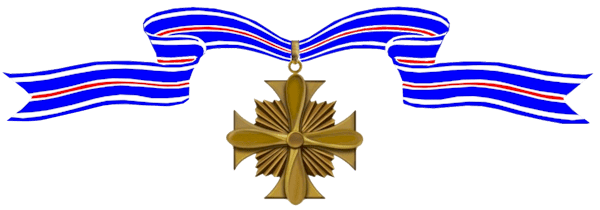
Distinguished Flying Cross
-
Distinguished Flying Cross
-
Distinguished Flying Cross
-
Distinguished Flying Cross
-
Distinguished Flying Cross
-
Distinguished Flying Cross
Service:
United States Marine CorpsRank:
Lieutenant ColonelBatallion:
Marine Medium Helicopter Squadron 364 (HMM-364)Regiment:
Marine Aircraft Group 16Division:
1st Marine Aircraft WingAction Date:
October 6, 1969
-
Distinguished Flying Cross
Service:
United States Marine CorpsRank:
Lieutenant ColonelBatallion:
Marine Medium Helicopter Squadron 364 (HMM-364)Regiment:
Marine Aircraft Group 16Division:
1st Marine Aircraft WingAction Date:
January 29, 1970
The President of the United States of America takes pleasure in presenting a Fourth Gold Star in lieu of a Fifth Award of the Distinguished Flying Cross to Lieutenant Colonel Charles R. Dunbaugh, United States Marine Corps, for heroism and extraordinary achievement in aerial flight while serving as Commanding Officer of Marine Medium Helicopter Squadron THREE HUNDRED SIXTY-FOUR (HMM-364), Marine Aircraft Group Sixteen, First Marine Aircraft Wing in connection with combat operations against the enemy in the Republic of Vietnam. On 29 January 1970, Lieutenant Colonel Dunbaugh launched as Section Leader of a flight of CH-46 transport helicopters assigned the mission of helilifting a Marine squad into an enemy-controlled section of Quang Nam Province. Arriving over the designated location, he commenced a high-speed approach to the selected landing site and, just prior to landing, came under a heavy volume of hostile fire, several rounds of which penetrated the aircraft and damaged the utility hydraulic system to the extent that the ramp was rendered inoperable. During the considerable length of time required by the Marines to climb over the ramp and exit the helicopter, Lieutenant Colonel Dunbaugh resolutely disregarded the fusillade directed at his helicopter and, displaying exceptional composure, relayed the location of the hostile gunners to Cobra aircraft overhead. When the Marines had successfully disembarked to engage the enemy, he coordinated with other aircraft in the area and executed a full power lift off. His heroic and determined actions inspired all who observed him and were instrumental in the completion of the vital mission. Lieutenant Colonel Dunbaugh’s courage, superior aeronautical ability, and steadfast devotion to duty in the face of grave personal danger were in keeping with the highest traditions of the Marine Corps and of the United States Naval Service.
-
Distinguished Flying Cross
Service:
United States Marine CorpsRank:
Lieutenant ColonelBatallion:
Marine Medium Helicopter Squadron 364 (HMM-364)Regiment:
Marine Aircraft Group 16Division:
1st Marine Aircraft WingAction Date:
March 28, 1969
The President of the United States of America takes pleasure in presenting the Distinguished Flying Cross to Lieutenant Colonel Charles R. Dunbaugh, United States Marine Corps, for heroism and extraordinary achievement in aerial flight while serving as Commanding Officer of Marine Medium Helicopter Squadron THREE HUNDRED SIXTY-FOUR (HMM-364), Marine Aircraft Group Sixteen, First Marine Aircraft Wing in connection with combat operations against the enemy in the Republic of Vietnam. On the afternoon of 31 August 1969, Lieutenant Colonel Dunbaugh launched as Section Leader of a flight of two CH-46 transport helicopters assigned the mission of extracting two Marine reconnaissance teams that were heavily engaged in combat with numerically superior North Vietnamese Army forces in the Que Son Mountains south of An Hoa. Arriving over the first of the beleaguered patrols, he found that the Marines were located on the floor of a valley and were receiving fire from all sides. Following air strikes by fixed-wing aircraft, Lieutenant Colonel Dunbaugh, undaunted by the extremely heavy volume of small arms and automatic weapons fire directed at his helicopter from the enemy positions on the surrounding hills, skillfully maneuvered his CH-46 to a landing near the embattled patrol. Ignoring the intense North Vietnamese fire, he fearlessly remained in his dangerously exposed position until all the Marines had climbed aboard and then departed the dangerous area for the An Hoa Combat Base. Returning to the mountainous area, he located the second reconnaissance team in a stream bed below a 100 foot jungle canopy and was informed that the patrol had captured a North Vietnamese Army soldier. While supporting gunships provided cover, Lieutenant Colonel Dunbaugh found an opening in the canopy, lowered his extraction cable, and then skillfully maneuvered his helicopter straight down until the rotor blades were inches from the tree tops. The Marines immediately attached themselves and their prisoner to the cable and signaled that they were ready for the extraction. Expertly lifting the team from the jungle, Lieutenant Colonel Dunbaugh proceeded to An Hoa with the nine men suspended on the cable 120 feet below his aircraft and landed safely at the combat base. Lieutenant Colonel Dunbaugh’s courage, superior airmanship, and unwavering devotion to duty in the face of great personal danger were instrumental in saving the lives of several of his fellow Marines and were in keeping with the highest traditions of the Marine Corps and of the United States Naval Service.
-
Distinguished Flying Cross
Service:
United States Marine CorpsRank:
Lieutenant ColonelBatallion:
Marine Medium Helicopter Squadron 364 (HMM-364)Regiment:
Marine Aircraft Group 16Division:
1st Marine Aircraft WingAction Date:
November 5, 1969
The President of the United States of America takes pleasure in presenting a Third Gold Star in lieu of a Fourth Award of the Distinguished Flying Cross to Lieutenant Colonel Charles R. Dunbaugh, United States Marine Corps, for heroism and extraordinary achievement in aerial flight while serving as Commanding Officer of Marine Medium Helicopter Squadron THREE HUNDRED SIXTY-FOUR (HMM-364), Marine Aircraft Group Sixteen, First Marine Aircraft Wing in connection with combat operations against the enemy in the Republic of Vietnam. On the afternoon of 5 November 1969, Lieutenant Colonel Dunbaugh launched as Division Leader of a flight of four CH-46 transport helicopters assigned the mission of helilifting supplies and elements of one Marine battalion from Antenna Valley to defensive positions around Landing Zone Baldy and elements of another battalion to its command post in the foothills of the Que Son Mountains in Quang Nam Province. Despite a low cloud cover which covered the tops of the mountains and enshrouded the valley, heavy rainstorms, the turbulence created by winds gusting on occasions from 40 to 50 knots per hour, and intense hostile automatic weapons fire directed at his aircraft, he boldly led his Division on repeated flights into landing zones which were only large enough to accommodate one helicopter at a time. Undeterred by the inability of fixed-wing aircraft to support the operation because of the extremely adverse weather, Lieutenant Colonel Dunbaugh skillfully directed the actions of two sections of gunships to provide covering fire for each of the landings and successfully delivered all essential supplies and transported the required ground forces to the designated areas. Upon the receipt of an urgent request to evacuate five wounded Marines from one of the battalions and to deliver two external loads of vitally needed supplies to another isolated ground unit, he resolutely braved the hazardous conditions of maneuvering in the darkness, over rugged terrain, and through continually deteriorating weather to extract the casualties and deliver the supplies. As a result of his heroic and determined actions during the six and one-half hours required to accomplish his missions, his flight successfully transported 440 Marines and delivered in excess of ten tons of supplies. Lieutenant Colonel Dunbaugh’s courage, superior airmanship, and unwavering devotion to duty in the face of great personal danger were in keeping with the highest traditions of the Marine Corps and of the United States Naval Service.
-
Distinguished Flying Cross
Service:
United States Marine CorpsRank:
Lieutenant ColonelBatallion:
Marine Medium Helicopter Squadron 364 (HMM-364)Regiment:
Marine Aircraft Group 16Division:
1st Marine Aircraft WingAction Date:
September 27, 1969
The President of the United States of America takes pleasure in presenting a Gold Star in lieu of a Second Award of the Distinguished Flying Cross to Lieutenant Colonel Charles R. Dunbaugh, United States Marine Corps, for heroism and extraordinary achievement in aerial flight while serving as Commanding Officer of Marine Medium Helicopter Squadron THREE HUNDRED SIXTY-FOUR (HMM-364), Marine Aircraft Group Sixteen, First Marine Aircraft Wing in connection with combat operations against the enemy in the Republic of Vietnam. On 27 September 1969, Lieutenant Colonel Dunbaugh launched as Section Leader of a flight of two CH-46 transport helicopters assigned the mission of rappelling a seven-man Marine reconnaissance team into an area on the western slope of the Que Son Mountains approximately nineteen miles southwest of DaNang, to recover the body of a Marine who had been killed earlier during a fierce fire fight with a large hostile force. Arriving over the designated area, he selected an insertion site on a steep slope, under a dense jungle canopy, and only 200 meters from a trail used as a main enemy infiltration route. Following the completion of air strikes on hostile positions, Lieutenant Colonel Dunbaugh coordinated his approach with the screening smoke of an OV-10 aircraft and the rocket and strafing runs of supporting gunships and was within 1,000 meters of the site when his helicopter came under an extremely heavy volume of enemy fire and sustained battle damage. Undaunted by the intensity of the hostile fire, he resolutely continued his approach and skillfully maneuvered to a hover forty feet above the ground and remained in his precarious position until the reconnaissance team had lowered itself to the zone. Lifting out of the hazardous area, Lieutenant Colonel Dunbaugh established an orbit until the Marines had recovered their fallen comrade and returned to the pick-up site. With complete disregard for his own safety, he again braved the hostile fire as he maneuvered under the cover of fire from supporting aircraft to a hover above the patrol and remained in his dangerously exposed position until the Marines had attached themselves and their fallen comrade to the suspended straps. Expertly executing a slow, vertical lift to avoid the tall trees, he climbed to 150 feet and with the Marines dangling 125 feet below the helicopter, departed the perilous area. Lieutenant Colonel Dunbaugh’s courage, superior airmanship, and unwavering devotion to duty in the face of great personal danger were in keeping with the highest traditions of the Marine Corps and of the United States Naval Service.