The President of the United States of America, authorized by Act of Congress July 9, 1918 (amended by an act of July 25, 1963), takes pleasure in presenting the Silver Star to Major (Field Artillery) Richard H. Marshall (ASN: 0-81697), United States Army, for gallantry in action in connection with military operations involving conflict with an armed hostile force while serving with Headquarters, 7th Squadron, 17th Cavalry, 11th Aviation Brigade, in the Republic of Vietnam on 16 January 1969. Major Marshall distinguished himself by exceptionally valorous actions while serving as aircraft commander of a command and control helicopter on a combat operation. An AH-1G gunship had been shot down, and the aero rifle platoon was returning to the extraction point when they were ambushed and surrounded. Throughout the night as the beleaguered unit fought off the enemy, all extraction attempts were futile as the enemy’s strength increased. Major Marshall arrived in the area, the first of two medevac aircraft, which attempted to extract the wounded, was heavily damaged by .50 caliber anti-aircraft fire, and a crew chief was seriously wounded, forcing them to leave the area. In the early morning hours the besieged unit fought off a human wave assault, depleting their ammunition supply to a critical level. A re-supply aircraft attempted to drop supplies and it too was heavily damaged by the heavy fire, wounding a crewman. Some time later, seven men, who had been separated from the main group, were spotted, and Major Marshall, without hesitation, volunteered to assist in their extraction. Although his aircraft became the target of enemy fire, he skillfully maneuvered the aircraft close to the bank, allowing the personnel to board. The heavily-laden aircraft, now carrying twelve personnel and almost a full load of fuel, twice settled into the swiftly moving river, but calmly and skillfully he nudged the aircraft into translational lift. Later on, he adjusted air strikes to within 100 meters, and gunship strikes to within 20 meters of the friendly positions. With the improving tactical situation, and the rapidly closing darkness, Major Marshall attempted an extraction of the wounded from the tiny landing zone where the friendly forces were located, but thwarted because of the small size of the landing zone and intensity of the enemy fire, he was forced to abort. Finally, two sites were selected along the river, and calm reassuring words rallied the exhausted infantrymen to push ahead to the new extraction points. As the extraction aircraft went in, Major Marshall advised them about the hazards in the area. Despite being low on fuel, he elected to continue the mission until all personnel had been extracted, the last flight being made in total darkness. His actions were in keeping with the highest traditions of the military service and reflect great credit upon himself, his unit and the United States Army.

Sponsored by:

Richard
H.
Marshall

Awards Received
-
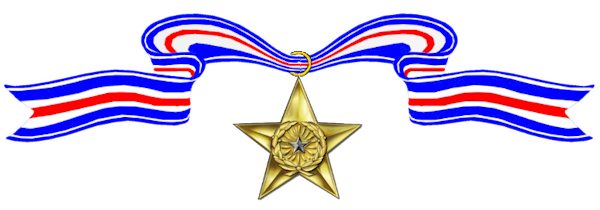
Silver Star
-
Silver Star
Service:
United States ArmyRank:
Major (Field Artillery)Batallion:
7th SquadronRegiment:
17th Cavalry, 11th Aviation BrigadeAction Date:
January 16, 1969
Headquarters, 1st Aviation Brigade, General Orders No. 810 (February 19, 1969)