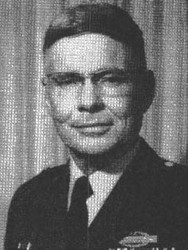
Paul Gorman graduated from the U.S. Military Academy at West Point, Class of 1950. He retired in 1985 as a U.S. Army General.

Sponsored by:

Paul
Francis
Gorman
August 25, 1927
–
Awards Received
-
Legion of Merit
-
Silver Star
-
Distinguished Service Cross
-
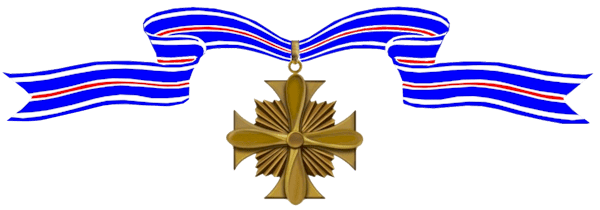
Distinguished Flying Cross
-
Legion of Merit
Service:
United States ArmyRank:
Lieutenant Colonel (Infantry)Action Date:
August 1962 – July 1965
Department of the Army, General Orders No. 29 (August 27, 1965)The President of the United States of America, authorized by Act of Congress, 20 July 1942, takes pleasure in presenting the Legion of Merit to Lieutenant Colonel (Infantry) Paul Francis Gorman (ASN: 0-62379), United States Army, for exceptionally meritorious conduct in the performance of outstanding services to the Government of the United States from August 1962 to July 1965.
-
Silver Star
Service:
United States ArmyRank:
First Lieutenant (Infantry)Batallion:
1st BattalionRegiment:
32d Infantry RegimentDivision:
7th Infantry DivisionAction Date:
May 7, 1952
Headquarters, 7th Infantry Division, General Orders 190 (May 9, 1952)The President of the United States of America, authorized by Act of Congress July 9, 1918, takes pleasure in presenting the Silver Star to First Lieutenant (Infantry) Paul Francis Gorman (ASN: 0-62379), United States Army, for gallantry in action while a member of Company A, 1st Battalion, 32d Infantry Regiment, 7th Infantry Division, in action near Sangmokil, North Korea. During the early morning hours of 7 May 1952, Lieutenant Gorman lead a patrol deep into enemy-held territory. The mission of the patrol was to observe enemy activity, secure information of intelligence interest, and capture a prisoner if possible. Advancing stealthily up the slope of a small hill, Lieutenant Gorman, as point man, was observed and received fire from an enemy armed with a “burp” gun. Lieutenant Gorman was wounded in the hand as a result of this initial burst of fire. Immediately, the enemy soldier was joined by approximately fifteen others, and the patrol began to receive a devastating hail of enemy small-arms fire and grenades. In an effort to withdraw and establish a base of fire at more secure positions, a member of the patrol was wounded. Upon reaching positions of comparative safety, Lieutenant Gorman detected that a member of his patrol was missing. Despite his wound, he and the patrol started up the hill to aid their wounded comrade, when they again were met with a hail of fire. During the course of evacuating the first wounded man of the patrol, three other members were wounded. With utter disregard for his safety, Lieutenant Gorman moved forward aggressively. Exposed to the intense enemy fire, he effectively deployed his men and proceeded in the task of evacuating the wounded. During this exchange of fire, Lieutenant Gorman was gain wounded in the leg and face by grenade fragments. Once the casualties were safely evacuated, Lieutenant Gorman directed the orderly withdrawal of his patrol. Though weak from loss of blood from his numerous wounds, he continued to effectively direct the actions of his patrol. Upon reaching the patrol’s base point, he directed accurate mortar and artillery fire on the enemy’s positions. Not until he was assured that his patrol was secure and the wounded safely evacuated, did he permit himself to be evacuated. The intrepid gallantry displayed by Lieutenant Gorman proved a great inspiration to his men and was directly responsible for the safe return of the patrol. The gallantry displayed by Lieutenant Gorman reflects great credit on himself and is in keeping with the highest traditions of the military service.
-
Distinguished Service Cross
Service:
United States ArmyRank:
Lieutenant Colonel (Infantry)Batallion:
1st BattalionRegiment:
26th Infantry RegimentDivision:
1st Infantry DivisionAction Date:
August 25 – 27, 1966
Headquarters, U.S. Army, Vietnam, General Orders No. 6100 (October 20, 1966)The President of the United States of America, authorized by Act of Congress, July 9, 1918 (amended by act of July 25, 1963), takes pleasure in presenting the Distinguished Service Cross to Lieutenant Colonel (Infantry) Paul Francis Gorman (ASN: 0-62379), United States Army, for extraordinary heroism in connection with military operations involving conflict with an armed hostile force in the Republic of Vietnam, while serving with Headquarters and Headquarters Company, 1st Battalion, 26th Infantry, 1st Infantry Division. Lieutenant Colonel Gorman distinguished himself from 25 to 27 August 1966 while two battalions were on a mission to secure Highway 16 for passage of a large re-supply convoy. When a fifteen-man patrol inadvertently advanced into a Viet Cong base camp and came under intense enemy fire, an entire battalion was committed to their assistance. Lieutenant colonel Gorman prepared his battalion for battle and, upon request, sent his lead company to the relief of the engaged battalion. As the casualties mounted during the intensity of the battle, the acting battalion commander and several other key officers were killed. Realizing the seriousness of the situation, Lieutenant Colonel Gorman committed his second company and assumed command of the combined battalions. His aggressive and courageous leadership turned the tide of battle in favor of the American forces. Later when two companies from a third battalion, separated from their commander, joined the encounter, Lieutenant Colonel Gorman assumed command of these units as well. His presence became the unifying force which transformed the divergent efforts of all these companies into a strong unified command. As the battle progressed into darkness, Lieutenant Colonel Gorman repeatedly exposed himself to the heavy volume of enemy fire and personally inspected his troops, readjusted battle positions and organized the defense for the remainder of the night. At dawn the next day, Lieutenant Colonel Gorman called in artillery and air strikes on insurgent positions to within 50 meters of his own lines. Although one napalm container was accidentally dropped on his command post, burning him and several others. Lieutenant Colonel Gorman, with complete disregard for his personal safety, continued to direct close-in air strikes until the Viet Cong force withdrew. Through his professional knowledge, composure under conditions of great physical and mental stress, and inspired leadership during critical combat conditions, Lieutenant Colonel Gorman brought discipline, organization and command to eight companies of three battalions. Through his courage and determination under fire, he minimized the friendly casualties and contributed immeasurably to the eventual success of the mission. Lieutenant Colonel Gorman’s extraordinary heroism and devotion to duty were in keeping with the highest traditions of the military service and reflect great credit upon himself, his unit, and the United States Army.
-
Distinguished Flying Cross
Service:
United States ArmyRank:
Lieutenant Colonel (Infantry)Division:
1st Infantry DivisionAction Date:
February 22, 1967
Headquarters, 1st Infantry Division, General Orders No. 2453 (April 18, 1967)The President of the United States of America, authorized by Act of Congress, July 2, 1926, takes pleasure in presenting the Distinguished Flying Cross to Lieutenant Colonel (Infantry) Paul Francis Gorman (ASN: 0-62379), United States Army, for heroism while participating in aerial flight in the Republic of Vietnam, on 22 February 1967. On this date, Colonel Gorman was serving as the Assistant Chief of Staff G-3, 1st Infantry Division, and was responsible for the planning and conduct of Operation JUNCTION CITY. On this first morning of Phase I, Colonel Gorman was flying in a Command and Control Helicopter to supervise the deployment of four Infantry battalions by air mobile assault and one infantry battalion by airborne assault. Colonel Gorman was often exposed to intense hostile small arms and automatic weapons ground fire as he ordered his pilot to make several low level passes over the proposed landing zones and suspected Viet Cong troop positions. Responsible for the largest number of preparatory artillery fires and tactical air sorties used on a single operation, Colonel Gorman disregarded his personal safety to coordinate the preparation of the primary landing zones and the insertion of the combat units. He also directed the movement of two artillery battalions to forward fire support bases. When the maneuver elements were successfully on the ground and beginning their assigned missions, Colonel Gorman repeatedly landed in unsecured areas so that he could personally verify the mission limitations and unit boundaries with each individual commander. Returning to the air after each conference, Colonel Gorman ordered his pilot to fly low over the area of operations to fix the Viet Cong positions and mark them for artillery, air strikes and friendly ground units. Lieutenant Colonel Gorman’s actions are in keeping with the finest traditions of the military service and reflect great credit upon himself, the 1st Infantry Division, and the United States Army.