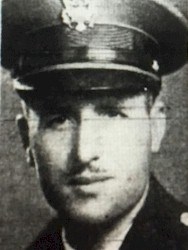
Reed Probst grew up in Midway, Utah, where he received his early education. From 1923 to 1924 he attended and graduated from Brigham Young University. He held leadership positions in the Church of Jesus Christ of the Latter Day Saints (LDS), and was a seminary teacher serving with the Church Board of Education. For several years he taught at the seminary in Bancroft, Idaho, followed by two years of service in the South Cache Seminary. Prior to World War II he was serving as District Chaplain for the Civilian Conservation Corps in Missoula, Montana, before entering military service in 1941. He was commissioned an LDS (Mormon) chaplain and served in the Pacific Theater of Operations during the war, earning a Silver Star, and was honorably discharged as a major. During his combat service he became quite ill, and after the war continued to suffer mental and physical pain. In 1949 he could endure no more and after stabbing his wife to death, he committed suicide, leaving behind three young sons.

Sponsored by:

–
Born:
,
Home:
,
Buried:
,
Cemetery:
Awards Received
-

Silver Star
-
Silver Star
Service:
United States ArmyRank:
Captain (Chaplain’s Corps)Division:
41st Infantry DivisionAction Date:
June 8, 1944
Headquarters, 41st Infantry Division, General Orders No. 40 (1944)The President of the United States of America, authorized by Act of Congress July 9, 1918, takes pleasure in presenting the Silver Star to Captain (Chaplain’s Corps) Reed Gertsch Probst, United States Army, for gallantry in action against the enemy while serving as a Chaplain with the 41st Infantry Division, in action at Biak Island, on 8 June 1944. With severe artillery fire bursting all around him, Chaplain Probst stood in the open without protection and calmly conducted, in a normal manner, funeral services for soldiers killed in action. While the area around the beachhead was smothered with fire, Chaplain Probst moved about without regard for his safety, giving aid and assistance to the wounded. Throughout the battle he never stopped his work among the dead and wounded, except when there were none to care for. This inspiring display of courage won him the admiration and respect of the officers and enlisted men of the regiment in which he served. The gallant actions and dedicated devotion to duty demonstrated by Chaplain Probst, without regard for his own life, were in keeping with the highest traditions of military service and reflect great credit upon himself and the United States Army.