George McClelland attended Gilmer and Marshall elementary schools in Texas, and after high school enrolled in the College of Marshall, where he received his A.A. degree. He then attended Balor University in Waco, Texas, receiving an A.B. degree, followed by a Th.M. from Southwestern Theological Seminary in Fort Worth, and a Th.D. from Central Baptist Theological Seminary in Kansas City, Kansas. He was ordained a Baptist minister in 1927 at the First Baptist Church in Marshall. During World War II he was commissioned a U.S. Army chaplain, earning a Silver Star in the North Africa Theater of Operations on the second day of Operation TORCH, the first American amphibious assault in the European Theater. After the war he served as a minister in Palacios, Fairbury, and Fremont Nebraska, and Immanuel Baptist Church in Wichita, Kansas, for 12 years. He was Resident Interim Pastor of First Baptist Church of Freer in 1976, and in 1977 became Resident Interim Pastor of Beeville in 1978, before returning to Marshall in 1978. He served for the Foreign Mission Board of the Southern Baptist Convention in Teheran in 1973, and in Okinawa, Japan, from 1974 to 1975.

Sponsored by:

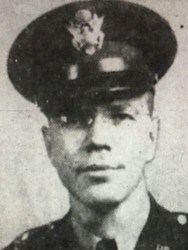
–
Born:
,
Home:
,
Buried:
,
Cemetery:
Awards Received
-

Silver Star
-
Silver Star
Service:
United States ArmyRank:
First Lieutenant (Chaplain’s Corps)Regiment:
7th Infantry RegimentDivision:
3d Infantry DivisionAction Date:
November 10, 1942
Headquarters, 3d Infantry Division, General Orders No. 8 (November 28, 1942)The President of the United States of America, authorized by Act of Congress July 9, 1918, takes pleasure in presenting the Silver Star to First Lieutenant (Chaplain’s Corps) George Donaghey McClelland, United States Army, for gallantry in action while serving as Chaplain with the 7th Infantry Regiment, 3d Infantry Division, in action against the enemy in French Morocco, on 10 November 1942. During the action at Casablanca, French Morocco, Chaplain McClelland displayed extraordinary gallantry when constantly under heavy fire. He went among the wounded and administered to them. Chaplain McClelland continued his efforts at the battalion aid station which was under heavy fire, and assisted the medical personnel caring for the wounded. Chaplain McClelland’s disregard of his personal safety and the example he set was an inspiration to the personnel of the battalion. The gallant actions and dedicated devotion to duty demonstrated by Chaplain McClelland, without regard for his own life, were in keeping with the highest traditions of military service and reflect great credit upon himself and the United States Army.