James Slaton graduated from the U.S. Air Force Academy at Colorado Springs, Colorado, Class of 1974. He retired in 2000 as a U.S. Air Force Colonel.

Sponsored by:

James
Francis
Slaton
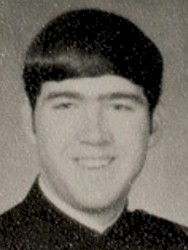
1952-10-23
–
Home:
Spokane
,
Washington
Awards Received
-
Silver Star

Department of the Air Force, United States Central Air Forces, Special Order GA-008 (April 26, 1991)The President of the United States of America, authorized by Act of Congress July 9, 1918 (amended by an act of July 25, 1963), takes pleasure in presenting the Silver Star to Lieutenant Colonel James Francis Slaton, United States Air Force, for gallantry in action while engaged in military operations involving conflict with an armed hostile force as an F-111F Aircraft Commander during combat operations against the Republic of Iraq over the Tuwaitha Nuclear Research Facility on 4 February 1991, in support of Operation DESERT STORM. On that date, Colonel Slaton was the overall mission commander of a 28-ship package consisting of four F-15c’s, four F-4G’s, two EF-111’s, and 18 F-111F’s on an attack to destroy the Tuwaitha Nuclear Research Facility, located on the outskirts of Baghdad. The target was described by the Defense Intelligence Agency as “the most heavily defended facility in the Middle East”, with 19 surface-to-air missile systems and over two hundred anti-aircraft artillery pieces which could be brought to bear on any attacking aircraft. As Colonel Slaton and his weapon systems officer approached the target their aircraft was engulfed by anti-aircraft fire and so many missile launches by Iraqi defenders that the F-4G’s fired all of their homing anti-radiation missiles within the first few minutes of the attack and withdrew. The fire was so intense that all but three of the attacking aircraft either failed to release or turned back. With complete disregard for their safety and with significant risk to own loss of life, Colonel Slaton and his weapons systems officer led the remaining three aircraft below the cloud cover into the very heart of the anti-aircraft artillery where they acquired, attacked, and destroyed three of the critical nuclear component buildings, despite having a weapons system problem which necessitated use of an extremely difficult manual backup delivery mode. By his gallantry and devotion to duty, Colonel Slaton has reflected great credit upon himself and upheld the highest traditions of the United States Air Force.
-
Distinguished Flying Cross

The President of the United States of America, authorized by Act of Congress, July 2, 1926, takes pleasure in presenting the Distinguished Flying Cross with Combat “V” to Lieutenant Colonel James Francis Slaton, United States Air Force, for heroism while participating in aerial flight as an F-111F Aircraft Commander at Ali Al Salem Airfield, Kuwait, on 18 January 1991. On that date, Colonel Slaton led a twelve-aircraft package against the airfield’s hardened aircraft shelters which contained known SCUD missiles. The enemy defenses on this second night of Operation DESERT STORM opened fire soon after Colonel Slaton’s aircraft crossed the border. Once across the border, the weather deteriorated significantly, forcing weapons delivery down to a much lower altitude. Colonel Slaton had to aggressively maneuver his aircraft to avoid barrage antiaircraft artillery and missiles. While holding his aircraft steady for weapons deliver, Colonel Slaton was the only one of eight tasked able to defeat the enemy defenses, and destroy his target. The destruction of the SCUD missiles denied the enemy the capability to inflict conventional and, possibly, chemical weapons upon surrounding friendly nations. The outstanding heroism and selfless devotion to duty displayed by Colonel Slaton reflect great credit upon himself and upheld the highest traditions of the United States Air Force.
-
Distinguished Flying Cross
The President of the United States of America, authorized by Act of Congress, July 2, 1926, takes pleasure in presenting a Bronze Oak Leaf Cluster in lieu of a Second Award of the Distinguished Flying Cross with Combat “V” to Lieutenant Colonel James Francis Slaton, United States Air Force, for heroism while participating in aerial flight as an F-111F Aircraft Commander, at Ali Al Salem Airfield, Kuwait, on 27 February 1991. On that date, Colonel Slaton led a successful attack against the airfield’s hardened aircraft shelters which contained known SCUD surface-to-surface missiles. Despite bad weather conditions and heavy artillery fire, he maneuvered his aircraft to a precise weapons release point. All of his weapons hit the targets directly, destroying the aircraft shelter with large secondary explosions indicating the presence of aircraft or SCUD missiles. Colonel Slaton exhibited superior airmanship, outstanding tactical ability and exceptional courage and leadership during an extremely difficult, demanding combat mission. The outstanding heroism and selfless devotion to duty displayed by Colonel Slaton reflect great credit upon himself and upheld the highest traditions of the United States Air Force.