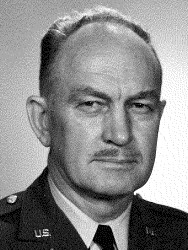
Kenneth Ames grew up in Winnebago, Minnesota, where he received his early education. He attended Sioux Falls (South Dakota) College, and received a Bachelor of Arts degree in Psychology upon graduation in 1937. He received his Bachelor of Divinity degree from Colgate Rochester Divinity School in Rochester, New York, in 1941, and was ordained a Baptist minister. While in college he served interim pastorates. He entered military service during World War II, and was commissioned a U.S. Army chaplain. After the war he continued in military service, including service in the Office of the Army Chief of Chaplains at the Pentagon. After studies at the Army War College in 1959-60, he became advisor to the Chief of Chaplains of the Korean Army. His last assignment was as Command Chaplain of the Military District of Washington, D.C., and he retired in 1965 as a U.S. Army colonel. In civilian life, he served the American Baptist National Ministries from 1965 to 1970, and held several interim pastorates. In 1975 he retired to Salem, Oregon, where he remained active in Calvary Baptist Church until his death.

Sponsored by:

–
Born:
,
Home:
,
Buried:
,
Cemetery:
Awards Received
-

Silver Star
-
Silver Star
Service:
United States ArmyRank:
Captain (Chaplain’s Corps)Regiment:
168th Infantry RegimentDivision:
34th Infantry DivisionAction Date:
World War II
Headquarters, 34th Infantry Division, General Orders No. 36 (1943)The President of the United States of America, authorized by Act of Congress July 9, 1918, takes pleasure in presenting the Silver Star to Chaplain (Chaplain’s Corps) Kenneth Lydle Ames (ASN: 0-429249), United States Army, for gallantry in action against the enemy while serving as a Chaplain with the 168th Infantry Regiment, 34th Infantry Division, in the vicinity of Tunisia, North Africa, during World War II. Chaplain Ames, with utter disregard for his own personal safety, continually went into the most forward position of the Infantry Regiment upon his own initiative and under heavy enemy artillery and mortar fire, to recover the bodies of men who had been killed in action. In spite of the fact that the enemy-held commanding terrain with complete observation, and at times approached as close as 500 yards, Chaplain Ames worked faithfully during the entire period evacuating and burying the dead. On many occasions, because of a particularly concentrated barrage, Chaplain Ames returned under cover of darkness to perform his mission, often working far into the night. Chaplain Ames’ outstanding courage and bravery in the face of great danger were exemplary and a distinct credit to the Armed Forces of the United States.