Van Bond graduated from the U.S. Military Academy at West Point, Class of 1931. He retired in 1966 as a U.S. Army Major General

Sponsored by:

Van
Hugo
Bond
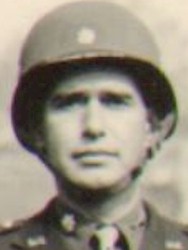
1908-04-30
–
1987-10-27
Born:
Gardner
,
Tennessee
Home:
Cheyenne
,
Wyoming
Buried:
Clarksville
,
Tennessee
Cemetery:
Greenwood Cemetery
Awards Received
-

Silver Star
-
Legion of Merit
-
Legion of Merit
-
Silver Star
-
Silver Star
-

Army Distinguished Service Medal
-
Silver Star
-
Silver Star
Service:
United States ArmyRank:
Lieutenant Colonel (Infantry)Batallion:
3d BattalionRegiment:
39th Infantry RegimentDivision:
9th Infantry DivisionAction Date:
World War II
Headquarters, 9th Infantry Division, General Orders No. 96 (1943)(Citation Needed) – SYNOPSIS: The President of the United States of America, authorized by Act of Congress July 9, 1918, takes pleasure in presenting a Bronze Oak Leaf Cluster in lieu of a Second Award of the Silver Star to Lieutenant Colonel (Infantry) Van Hugo Bond (ASN: 0-18601), United States Army, for gallantry in action in connection with combat operations against the enemy while serving as Commanding Officer of 3d Battalion, 39th Infantry Regiment, 9th Infantry Division in the Mediterranean Theater of Operations, in 1943. The gallant actions and dedicated devotion to duty demonstrated by Lieutenant Colonel Bond, without regard for his own life, were in keeping with the highest traditions of military service and reflect great credit upon himself and the United States Army.
-
Legion of Merit
Service:
United States ArmyRank:
Major GeneralAction Date:
December 1960 – December 1962
Department of the Army, General Orders No. 17 (April 12, 1963)The President of the United States of America, authorized by Act of Congress, 20 July 1942, takes pleasure in presenting a Bronze Oak Leaf Cluster in lieu of a Second Award of the Legion of Merit to Major General Van Hugo Bond (ASN: 0-18601), United States Army, for exceptionally meritorious conduct in the performance of outstanding services to the Government of the United States as Chief, United States Joint Military Assistance Advisory Group, Korea (Provisional), United States Forces, Korea, from December 1960 to December 1962. General Bond’s forceful and decisive leadership revitalized the Joint Military Assistance Advisory Group and made it one of the most effective and important organizations of its kind. Through his sound judgment, and vigorous and skillful diplomacy, he provided effective liaison between the Commander, United States Forces, Korea and the Republic of Korea Ministry of National Defense, insuring Korea’s continued military preparedness through implementation of the Won Defense Budget and the Country (Korea) Logistics Improvement Plan. Under his able direction, United States Annual financial aid to Korea was effectively administered to build, train, and supply the Free World’s second largest standing army. He supervised the Military Assistance Program in training Korean soldiers, technicians, and administrators; in stimulating Korea’s self-sufficiency through a program of encouragement and assistance to local industry; and in instructing civilians in modern agricultural methods. As a result of his dedicated devotion to duty and significant efforts, Korean economy and military preparedness were greatly strengthened. General
Bond’s distinguished performance of duty throughout this period represents outstanding achievement in the most cherished traditions of the United States Army and reflects the utmost credit upon himself and the military service. -
Legion of Merit
Service:
United States ArmyRank:
Colonel (Infantry)Regiment:
39th Infantry RegimentDivision:
9th Infantry DivisionAction Date:
October 8, 1944 – January 26, 1945
The President of the United States of America, authorized by Act of Congress, 20 July 1942, takes pleasure in presenting the Legion of Merit to Colonel (Infantry) Van Hugo Bond (ASN: 0-18601), United States Army, for exceptionally meritorious conduct in the performance of outstanding services to the Government of the United States as Regimental Commander, 39th Infantry Regiment, 9th Infantry Division, from 8 October 1944 to 26 January 1945. While commanding the troops holding a very vulnerable point on the Ardennes salient, Colonel Bond prevented the enemy from breaking through to flank the Duren Area by skillfully and ingeniously employing his troops and by constantly supervising their activity. In a period of extremely adverse weather conditions, Colonel Bond formulated plans that maintained the health and morale of the men in his command in a high state. The outstanding initiative, aggressiveness and ability to cope with every situation displayed by Colonel Bond won the wholehearted respect and admiration of the men in his command and reflect the highest credit upon himself and the armed forces of the United States.
-
Silver Star
Service:
United States ArmyRank:
Colonel (Infantry)Regiment:
39th Infantry RegimentDivision:
9th Infantry DivisionAction Date:
October 13, 1944
Headquarters, 9th Infantry Division, General Orders No. 113 (July 2, 1945)The President of the United States of America, authorized by Act of Congress July 9, 1918, takes pleasure in presenting a Third Bronze Oak Leaf Cluster in lieu of a Fourth Award of the Silver Star to Colonel (Infantry) Van Hugo Bond (ASN: 0-18601), United States Army, for gallantry in action against the enemy on 13 October 1944 while Commanding the 39th Infantry Regiment, 9th Infantry Division in the vicinity of Vossenack, Germany. During the advance against strongly defended enemy positions, Colonel Bond learned that a gap existed between the two assault battalions of his Regiment. Realizing that infiltrating enemy troops were threatening the vital supply lines, he promptly exposed himself to heavy enemy artillery, mortar, and small arms fire to reconnoiter the terrain and formulate a tactical plan. Observing that his troops were in need of covering fire, he personally registered one of the supporting mortars on the enemy emplacements and then quickly relayed the important information to the other guns. He directed an entire platoon of mortars in laying a devastating barrage on the enemy and then launched a renewed attack, inflicting heavy losses on the enemy. Colonel Bond’s bold and fearless leadership resulted in the complete rout of the enemy and contributed materially to the re-establishing of contact between the two battalions.
-
Silver Star
Service:
United States ArmyRank:
Lieutenant Colonel (Infantry)Batallion:
3d BattalionRegiment:
39th Infantry RegimentDivision:
9th Infantry Division, Attached to the 1st Infantry DivisionAction Date:
World War II
Headquarters, 1st Infantry Division, General Orders No. 52 (September 27, 1943), Amended G.O. 59 (1943)The President of the United States of America, authorized by Act of Congress July 9, 1918, takes pleasure in presenting a Second Bronze Oak Leaf Cluster in lieu of a Third Award of the Silver Star to Lieutenant Colonel (Infantry) Van Hugo Bond (ASN: 0-18601), United States Army, for gallantry in action while serving as Commanding Officer of the 3d Battalion, 39th Infantry Regiment, 9th Infantry Division, while temporarily attached to the 1st Infantry Division, in action against the enemy in Sicily, in July and August 1943. During a critical engagement with the enemy, Colonel Bond repeatedly demonstrated the highest qualities of leadership and bravery. He personally led attacks in the face of heavy enemy artillery and mortar fire and constantly placed himself in the most exposed positions when he felt that by so doing he could better direct the efforts of his men. Colonel Bond’s keen tactical judgment, coolness under fire, and able leadership assisted materially in his battalion’s successes. His gallant actions and dedicated devotion to duty, without regard for his own life, were in keeping with the highest traditions of military service and reflect great credit upon himself and the United States Army.
-
Army Distinguished Service Medal
Service:
United States ArmyRank:
Major GeneralDivision:
XXI CorpsAction Date:
January 1963 – July 1966
Department of the Army, General Orders No. 36 (August 19, 1966)The President of the United States of America, authorized by Act of Congress July 9, 1918, takes pleasure in presenting the Army Distinguished Service Medal to Major General Van H. Bond (ASN: 0-18601), United States Army, for exceptionally meritorious and distinguished services to the Government of the United States, in a duty of great responsibility as Commanding General, TWENTY-FIRST Corps, during the period January 1963 to July 1966.
-
Silver Star
Service:
United States ArmyRank:
Lieutenant Colonel (Infantry)Batallion:
3d BattalionRegiment:
39th Infantry RegimentDivision:
9th Infantry DivisionAction Date:
August 4, 1943
Headquarters, 9th Infantry Division, General Orders No. 83 (September 27, 1943)The President of the United States of America, authorized by Act of Congress July 9, 1918, takes pleasure in presenting the Silver Star to Lieutenant Colonel (Infantry) Van Hugo Bond (ASN: 0-18601), United States Army, for conspicuous gallantry and intrepidity in action while serving with the 39th Infantry Regiment, 9th Infantry Division. During the attack of the 39th Infantry against strongly held enemy positions in the vicinity of Troina, Sicily, on 4 August 1943, Lieutenant Colonel Bond, Commanding the 3d Battalion, which was spearheading the assault of the Regiment, exhibited outstanding gallantry in action. Moving forward at the head of the attacking echelon of his battalion, Lieutenant Colonel Bond personally supervised the maneuvering of his troops. When the position held by his assault company in the vicinity of Hill 1190 was being relentlessly counter-attacked by the enemy, seeing that their position was in danger of being overrun by the surging enemy troops, and with complete disregard for personal safety, he moved to a forward observation post where he could observe enemy emplacements and direct counter-battery. Although the observation post was under constant direct hostile artillery, machine gun and small arms fire, he refused to leave his position and was able to locate and bring fire on the enemy gun positions. The resultant fire silenced the guns and enabled the company to bring their weapons into play smashing the counter-attack. Lieutenant Colonel Bond’s personal courage, coolness and bravery were an inspiration to the men of his command and are outstanding examples of the highest ideas of the military service.