Douglas Starr graduated from the U.S. Military Academy at West Point, New York, Class of 1967. He retired in 1992 as a U.S. Army Colonel.

Sponsored by:

Douglas
Holland
Starr
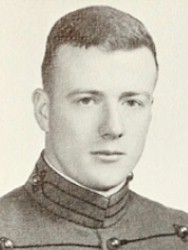
Born:
,
Nebraska
Home:
Mt. Clemens
,
Michigan
Awards Received
-

Silver Star
-
Silver Star
-
Silver Star
Service:
United States ArmyRank:
Captain (Armor)Batallion:
1st SquadronRegiment:
11th Armored Cavalry RegimentAction Date:
December 15, 1969
Headquarters, II Field Force Vietnam, General Orders No. 1202 (March 28, 1970)The President of the United States of America, authorized by Act of Congress July 9, 1918 (amended by an act of July 25, 1963), takes pleasure in presenting the Silver Star to Captain (Armor) Douglas Holland Starr, United States Army, for gallantry in action while engaged in military operations involving conflict with an armed hostile force on 15 December 1969 while serving as Commanding Officer with Troop B, 1st Squadron, 11th Armored Cavalry Regiment, in the Republic of Vietnam. On this date Captain Starr received a call from a beleaguered friendly force. He immediately organized his men, directing them to the contact area. Despite a heavy volume of small arms and rocket propelled grenades, Captain Starr led his men against the well-concealed hostile force. Although several of his men were wounded and several vehicles were severely damaged, he continued to expose himself to the intense enemy fire, coordinating the movement of the infantry and armor groups. Captain Starr’s actions were in keeping with the highest traditions of the military service and reflect great credit upon himself, his unit and the United States Army.
-
Silver Star
Service:
United States ArmyRank:
Captain (Armor)Batallion:
1st SquadronRegiment:
11th Armored Cavalry RegimentAction Date:
September 7, 1969
Headquarters, II Field Force Vietnam, General Orders No. 1911 (May 16, 1970)The President of the United States of America, authorized by Act of Congress July 9, 1918 (amended by an act of July 25, 1963), takes pleasure in presenting a Bronze Oak Leaf Cluster in lieu of a Second Award of the Silver Star to Captain (Armor) Douglas Holland Starr, United States Army, for gallantry in action while engaged in military operations involving conflict with an armed hostile force on 7 September 1969 while serving as commanding officer of Troop B, 1st Squadron, 11th Armored Cavalry Regiment, in the Republic of Vietnam. On this date as Troop B was moving through a rubber plantation, it began to receive rocket propelled grenade and automatic weapons fire from an estimated battalion of North Vietnamese soldiers. Captain Starr formed his troop on line and assaulted the heaviest volume of enemy fire. When a tank was hit by a rocket propelled grenade, he immediately dismounted his vehicle, despite the deadly hail of enemy fire and ran to the flaming tank, aiding the medics to remove the crew members. As a troop of reinforcements arrived, Captain Starr assumed control of them and coordinated the evacuation of wounded personnel. Realizing the importance a prisoner of war would have in relation to intelligence information, he again disregarded his own safety by leaving his vehicle to take a wounded North Vietnamese soldier to the medical evacuation site. During the course of the battle Captain Starr’s vehicle struck an anti-tank mine, wounding him. Despite the painful wounds, he refused medical treatment or evacuation and continued to lead his troops. As a result of the action great numbers of enemy were killed and wounded as well as numerous weapons and equipment captured. Captain Starr’s actions were in keeping with the highest traditions of the military service and reflect great credit upon himself, his unit and the United States Army.